Physicochemical Characterization of Soils Supporting Non-Bt Cotton Cultivation under Different Moisture Regimes in North Maharashtra
 , Prem KumarGautam1 and Amanulla Khan2
 1Department of Botany, G. T. Patil Arts, Commerce and Science College, Nandurbar Maharashtra, India.
2Department of Botany, Anjuman Islam Janjira Degree College of Science, Murud Janjira Raigad, Maharashtra, India.
CorrespondingAuthorE-mail:sandipmarathe4u@gmail.com
DOI : http://dx.doi.org/10.13005/bbra/3538
Download this article as:

Soil physicochemical properties play a crucial role in determining crop productivity and sustainability, particularly under varying moisture regimes. The present study evaluates and compares key soil parameters under irrigated and non-irrigated non-Bt cotton cultivation systems in the Vertisol regions of North Maharashtra. Soil samples were analyzed for pH, electrical conductivity (EC), organic carbon (OC), and calcium carbonate (CaCO₃) using standard analytical procedures. The results revealed that most soils in both irrigated (75.8%) and non-irrigated (81.0%) conditions were neutral to moderately alkaline (pH 7.01-8.00), suitable for cotton cultivation, with only slight increases in alkalinity under irrigated systems (12.1%). Electrical conductivity values remained within non-saline limits; however, non-irrigated soils showed a higher proportion (34.1%) in the upper EC range (0.51-0.60 mmhos/cm), indicating possible salt accumulation due to limited leaching. Organic carbon content was predominantly moderate (0.31-0.40%), observed in 72.8% of irrigated and 66.0% of non-irrigated soils, suggesting comparable fertility status across systems. Calcium carbonate content ranged mainly between 4.51-6.50%, confirming the calcareous nature of the soils, with minor variation between irrigation regimes. The findings indicate that irrigation practices exert limited influence on soil physicochemical properties, while inherent soil characteristics and agro-ecological conditions play a dominant role. The study provides important insights for sustainable soil management and optimized non-Bt cotton cultivation in semi-arid regions.
KEYWORDS:Calcium Carbonate; Electrical Conductivity; Non Bt Cotton; Organic Carbon; pH
Introduction
Cotton has been cultivated in India since ancient times, and the country was historically recognized as a global source of superior-quality lint. At present, cotton remains one of the most important commercial crops in India, cultivated across more than nine states and covering approximately 8.68 million hectares.1-3India grows four cultivated species of cotton, of which two are diploid species (Gossypium arboreum and Gossypium herbaceum) and two are tetraploid species (G. hirsutum and G. barbadense).4In addition, intra-specific hybrids derived from G. hirsutum are extensively cultivated in the central and southern cotton-growing regions of the country.5
The diploid species, commonly referred to as “desi cotton,” historically contributed approximately 25-30% of national cotton production. However, these varieties are characterized by lower yield potential, limited responsiveness to improved agronomic practices, and comparatively coarse and shorter fiber length.6,7Despite these limitations, desi cotton remains popular among economically marginal farmers due to its low seed cost. In contrast, tetraploid cotton varieties currently account for over 70% of national cotton production, with nearly equal contributions from varieties and hybrids.8These cultivars produce finer-quality fiber suitable for the textile industry and can yield up to 800 kg ha⁻¹ under favorable agronomic conditions, although this remains substantially lower than average yields reported in countries such as the United States.9,10The area under desi cotton cultivation has declined rapidly across India, including Maharashtra, following the introduction of high-yielding hybrid and genetically modified (GM) cotton varieties.11,12
Bt cotton, engineered to express Bacillus thuringiensis toxins, with the objective of reducing pesticide use and enhancing crop productivity. While initial adoption was rapid, subsequent evaluations by various agencies, including the Monitoring and Evaluation Committee (MEC), have highlighted mixed outcomes influenced by agronomic, ecological, and management factors.13The debate surrounding GM crops in India has intensified, particularly in the context of farmer indebtedness and suicides, with contrasting interpretations offered by biotechnology companies and critics such as Vandana Shiva, who attribute these crises to globalization, commercialization of agriculture, and technology-intensive farming systems.11,14
Cotton is widely regarded as a classic example of the “pesticide treadmill,” wherein farmers increasingly rely on chemical inputs to manage evolving pest resistance.15,16Although Bt cotton was promoted as an effective solution against major pests such as the American bollworm, resistance development and secondary pest outbreaks have undermined its long-term effectiveness. Additional concerns include the circulation of spurious and unapproved Bt seeds, reflecting weaknesses in seed quality regulation and enforcement mechanisms.17,18While India’s regulatory framework focuses largely on seed approval and certification, inadequate oversight at the point of sale has resulted in widespread cultivation of unauthorized Bt varieties in several regions.19
The ecological implications of Bt cotton cultivation extend beyond target pests, potentially affecting soil health, non-target organisms, and agroecosystem stability of particular concern is the impact on beneficial insect populations, including Lepidopteran species that play key roles in maintaining ecological balance.20In response to these challenges, the Government of India initiated field trials of non-Bt cotton varieties, with reports indicating that approximately 1.5 million hectares were sown with non-Bt cotton during the Kharif season across the country (Ministry of Agriculture and Farmers Welfare.21
In North part of the Maharashtra, including the districts of Dhule, Jalgaon, and Nandurbar, is characterized by alluvial “black cotton soils,” traditionally known for their suitability for cotton cultivation.22 Soil nutrient assessments in this region indicate medium levels of nitrogen, low to medium phosphorus availability, and high potassium content, with organic carbon levels in the medium range. While copper levels are generally adequate, deficiencies of manganese, molybdenum, and zinc have been reported.23Soil fertility, defined as the capacity of soil to supply essential nutrients in appropriate proportions for plant growth is governed by complex biochemical cycles and influenced by factors such as moisture availability, pH, temperature, and electrical conductivity.24,25
Plants require at least sixteen essential elements for growth, broadly classified into macronutrients and micronutrients. The availability and uptake of these nutrients depend not only on their presence in the soil but also on favorable physicochemical conditions such as soil pH, electrical conductivity, moisture status, and organic matter content. These factors regulate nutrient solubility, mobility, and root absorption processes. In cotton cultivation systems, irrespective of genotype, sustained productivity is largely determined by balanced nutrient availability, appropriate irrigation practices, and maintenance of optimal soil conditions. Therefore, evaluation of soil physicochemical properties is critical for understanding nutrient dynamics and improving crop performance under different management regimes.1,26
Given the ongoing controversies surrounding Bt cotton performance and its potential impacts on soil health, the present study was undertaken to evaluate and compare the physical and chemical properties of soils under irrigated and non-irrigated non-Bt cotton cultivation. A quantitative assessment is conducted on selected farms across Nandurbar, Dhule, and Jalgaon districts, where non-Bt cotton has been cultivated continuously for more than five years.27This study aims to provide empirical insights into soil health dynamics under different irrigation regimes, contributing to informed decision-making for sustainable cotton production in northern Maharashtra.28,29
Materials and Methods
The present study was carried out over a multi-year period to assess soil health parameters under irrigated and non-irrigated cotton cultivation systems in northern Maharashtra. The study area comprised three major cotton-growing districtsJalgaon, Dhule, and Nandurbarlocated in the northern part of Maharashtra, India.25The soils of the region are predominantly black cotton soils, well known for their high clay content and suitability for cotton cultivation.30,31
For the present investigation, a total of 120 farmers were selected from 12 villages across the three districts using a random sampling approach to ensure representative coverage. A structured and pre-tested questionnaire was designed and administered to collect detailed information on soil type, cropping pattern, cotton variety grown, use of chemical fertilizers, availability and method of irrigation, and yield performance.32
Soil samples were collected from the selected farms following standard soil sampling protocols. From each field, soil was collected from the rhizosphere zone of both irrigated and non-irrigated cotton plants. Sampling was carried out by excavating soil up to a depth of approximately 20 cm around the plant root zone.33 Five sub-samples were collected randomly from each field at about 15 cm from the plant base and within a sampling core dimension of approximately 15 cm height and 7 cm diameter. These sub-samples were pooled, thoroughly mixed, and homogenized to form a composite sample representing each field.33The collected soil samples were air-dried, sieved, and subjected to quantitative analysis of key physicochemical parameters, including soil pH, electrical conductivity (EC), organic carbon content, and calcium carbonate (CaCO₃) content.34The generated data were subsequently compiled and analyzed to evaluate variations in soil health under different irrigation regimes and management practices.35
Results
The physicochemical properties of soils under irrigated and non-irrigated non-Bt cotton cultivation were comparatively evaluated to determine the influence of moisture regimes on soil health. The analysis focused on key parameters including soil pH, electrical conductivity (EC), organic carbon (OC), and calcium carbonate (CaCO₃). The results are presented as percentage distributions across defined ranges and interpreted to highlight variations attributable to irrigation practices.
Soil pH
The distribution of soil pH (Table 1; Figure 1) indicates that most soils in both irrigated (75.8%) and non-irrigated (81.0%) systems fall within the neutral to moderately alkaline range (7.01-8.00), which is considered suitable for cotton cultivation. A higher proportion of irrigated soils (12.1%) was observed in the alkaline range (8.01-9.00) compared to non-irrigated soils (6.2%), suggesting a tendency toward increased alkalinity under irrigation. However, the variation between the two systems remains limited, indicating that irrigation has not significantly altered soil reaction in the study area.
Table 1: Distribution of soil pH in irrigated and non-irrigated non-Bt cotton fields
| Soil pH range | Irrigated (%) | Non-irrigated (%) |
| 6.00 – 7.00 | 12.1 | 12.8 |
| 7.01 – 8.00 | 75.8 | 81.0 |
| 8.01 – 9.00 | 12.1 | 6.2 |
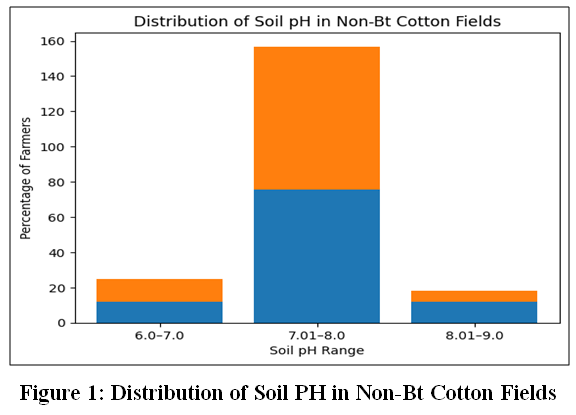 |
Figure 1: Distribution Of Soil PH In Non-Bt Cotton Fields
|
Electrical Conductivity (EC):Electrical conductivity data (Table 2; Figure 2) show that soils under both systems remain within non-saline limits.
Table 2: Electrical conductivity of soils under irrigated and non-irrigated non-Bt cotton
| EC range (mmhos/cm) | Irrigated (%) | Non-irrigated (%) |
| 0.29 – 0.39 | 30.3 | 19.1 |
| 0.40 – 0.50 | 45.5 | 46.8 |
| 0.51 – 0.60 | 24.2 | 34.1 |
A significant difference was observed in the lower (0.29-0.39) and higher (0.51-0.60) EC ranges between irrigated and non-irrigated fields. Non-irrigated soils showed relatively higher EC values in the upper range, which may be attributed to reduced leaching under rainfed conditions. Nevertheless, EC values across both systems remained within non-saline limits suitable for cotton cultivation.
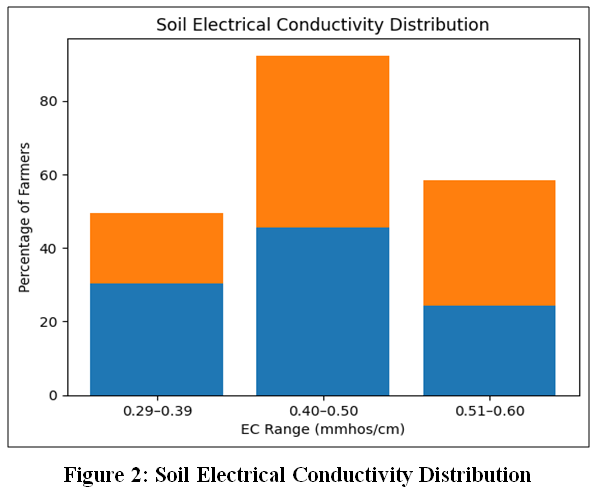 |
Figure 2: Soil Electrical Conductivity Distribution
|
Organic Carbon Content:The organic carbon status (Table 3; Figure 3) reveals that most soils in both irrigated (72.8%) and non-irrigated (66.0%) systems fall within the moderate range (0.31- 0.40%).
Table 3: Organic carbon content (%) of soils under non-Bt cotton cultivation
| Organic Carbon (%) | Irrigated (%) | Non-irrigated (%) |
| < 0.20 | 3.0 | 2.1 |
| 0.21 – 0.30 | 24.2 | 31.9 |
| 0.31 – 0.40 | 72.8 | 66.0 |
Most soils in both systems had moderate organic carbon levels (0.31-0.40%). No significant difference was observed at the lower end (<0.20%). However, a relatively higher proportion of non-irrigated fields exhibited organic carbon in the 0.21-0.30% range, possibly due to slower decomposition rates and reduced organic matter loss.
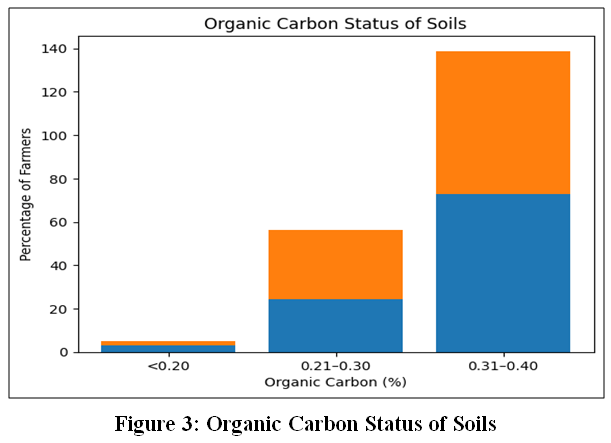 |
Figure 3: Organic Carbon Status Of Soils
|
3.4 Calcium Carbonate Content:The distribution of calcium carbonate (Table 4; Figure 4) confirms the calcareous nature of the soils, with most samples in both irrigated (63.7%) and non-irrigated (72.3%) systems falling within the 4.51-6.50% range.
Table 4: Calcium carbonate (%) content in irrigated and non-irrigated non-Bt cotton soils
| CaCO₃ range (%) | Irrigated (%) | Non-irrigated (%) |
| 2.50 – 4.50 | 24.2 | 14.9 |
| 4.51 – 6.50 | 63.7 | 72.3 |
| 6.51 – 8.50 | 9.1 | 12.8 |
| 8.51 – 10.50 | 3.0 | – |
No major differences were observed in calcium carbonate content across most categories, except in the lower range (2.50 – 4.50%), where irrigated fields showed a higher proportion. The soils exhibited moderate calcareous characteristics typical of black cotton soils of northern Maharashtra.
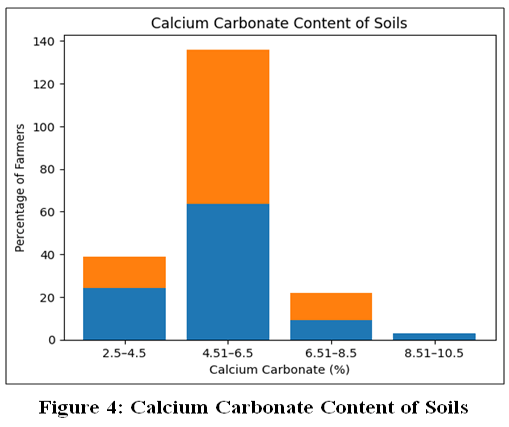 |
Figure 4: Calcium Carbonate Content of Soils
|
Discussion
The present investigation provides a comparative evaluation of soil health parameters under irrigated and non-irrigated non-Bt cotton cultivation systems in the Vertisol-dominated regions of northern Maharashtra. The predominance of neutral to moderately alkaline soil pH (7.01 – 8.00) across both systems indicates that the soils remain within the optimal range for cotton growth, as cotton generally performs well under slightly alkaline conditions. The marginally higher proportion of irrigated fields exhibiting pH values in the upper alkaline range (8.01 – 9.00) may be attributed to the continuous application of irrigation water containing dissolved salts and bicarbonates, which over time can enhance alkalinity. However, the overall similarity in pH distribution suggests that irrigation practices in the study area have not yet caused substantial soil reaction shifts, reflecting a relatively stable chemical environment for crop production.
Electrical conductivity (EC) values across both irrigated and non-irrigated systems remained within non-saline limits, confirming the suitability of these soils for sustained cotton cultivation. Interestingly, a comparatively higher percentage of non-irrigated soils fell within the upper EC range (0.51-0.60 mmhos/cm). This pattern may be associated with limited natural leaching under rainfed conditions, leading to gradual salt accumulation in the root zone. In contrast, irrigated fields showed a greater proportion in the lower EC range, possibly due to periodic flushing of soluble salts through irrigation events. These findings highlight the complex interaction between irrigation management and salt dynamics in Vertisols, where both excessive and insufficient water regimes can influence salt distribution differently.
Organic carbon (OC) content was predominantly moderate (0.31-0.40%) in both systems, indicating a reasonably stable level of soil fertility and biological activity. The slightly higher proportion of non-irrigated soils within the lower OC range (0.21-0.30%) may reflect slower biomass incorporation or limited residue management under rainfed agriculture. Nevertheless, the absence of substantial differences suggests comparable organic matter management practices among farmers in both systems. Similarly, calcium carbonate (CaCO₃) distribution confirmed the calcareous nature of black cotton soils, with most samples falling within the 4.51-6.50% range. Minor variations between irrigated and non-irrigated fields were observed in the lower CaCO₃ category, yet overall patterns remained consistent with the inherent pedogenic characteristics of Vertisols in the region. Collectively, the results indicate that irrigation practices have influenced certain physicochemical properties to a limited extent; however, the intrinsic soil properties and regional agro-ecological conditions continue to play a dominant role in determining soil health under cotton cultivation.
Conclusion
The present study demonstrates that soils under irrigated and non-irrigated non-Bt cotton cultivation in northern Maharashtra exhibit comparable physicochemical characteristics, with only minor variations across parameters. Soil pH in both systems remained predominantly within the neutral to moderately alkaline range (7.01-8.00), while electrical conductivity values were within non-saline limits, though relatively higher EC was observed in a greater proportion of non-irrigated soils. Organic carbon content was largely moderate (0.31-0.40%) in both systems, with slightly lower values more frequent under non-irrigated conditions. Calcium carbonate distribution confirmed the calcareous nature of soils, with no substantial differences attributable to irrigation practices. Findings indicate that irrigation has a limited influence on the selected soil physicochemical properties, and that inherent soil characteristics play a dominant role in determining soil conditions under non-Bt cotton cultivation. These results suggest that both irrigated and rainfed systems maintain soil properties within ranges suitable for cotton growth; however, site-specific soil management practices remain essential for sustaining long-term soil health and productivity.
Acknowledgement
The author is sincerely thanks all the farmers respondent of Nandurbar, Dhule and Jalgaon district for their invaluable support during this study. Special thanks to Prof. Dr. Vipul J. Somani for his guidance throughout the research. Author also thankful Management, Principal and HOD NTVS’s G.T. Patil Arts, Commerce, and A. I. J. D. C. Murud for continue encouragement and support.
Funding Sources
The author(s) received no financial support for the research, authorship, and /or publication of this article.
Conflict of interest
The authors do not have any conflict of interest.
Data Availability Statement
This statement does not apply to this article.
Ethics Statement
This research did not involve human participants, animal subjects, or any material that requires ethical approval.
Informed Consent Statement
This study did not involve human participants, and therefore, informed consent was not required.
Clinical Trial Registration
This research does not involve any clinical trials.
Permission to reproduce material from other sources
Not Applicable.
Author Contributions
- Sandeep Marathe: Conceptualization, Methodology, Writing – Original Draft, Resources, Supervision.
- Prem Kumar Gautam: Conceptualization, Supervision, Resources.
- Amanulla Khan: Data Collection, Data Curation, Formal Analysis, Validation, Visualization, Writing.
References
- Khan A. Metabolics of phenolics in plant’s. In: Recent Interdisciplinary Studies in Agriculture, Forestry and Allied Sciences. Pangaea Geographical Association, India; 2022. doi:https://doi.org/10.5281/zenodo.8022206
CrossRef - Khan A, Ansari SA. Efficiency in Cotton Production Across the States in India. BKAP. 2023;(Of). doi:10.18805/BKAP624
CrossRef - Zulfiqar F, Thapa GB. Determinants and intensity of adoption of “better cotton” as an innovative cleaner production alternative. Journal of Cleaner Production. 2018;172:3468-3478. doi:10.1016/j.jclepro.2017.09.024
CrossRef - Fang L, Gong H, Hu Y, et al. Genomic insights into divergence and dual domestication of cultivated allotetraploid cottons. Genome Biol. 2017;18(1):33. doi:10.1186/s13059-017-1167-5
CrossRef - Parekh MJ, Kumar S, Zala HN, et al. Development and validation of novel fiber relevant dbEST-SSR markers and their utility in revealing genetic diversity in diploid cotton (Gossypium herbaceum and G. arboreum). Industrial Crops and Products. 2016;83:620-629. doi:10.1016/j.indcrop.2015.12.061
CrossRef - Parekh MJ, Kumar S, Fougat RS, Zala HN, Pandit RJ. Transcriptomic profiling of developing fiber in levant cotton (Gossypium herbaceum L.). Funct Integr Genomics. 2018;18(2):211-223. doi:10.1007/s10142-017-0586-4
CrossRef - Sagar MR, Kumar S, Patidar D, Sakure AA. Morphological, physico-biochemical and marker-based diversity of desi cotton (Gossypium herbaceum L.) germplasm. Journal of King Saud University – Science. 2022;34(8):102336. doi:10.1016/j.jksus.2022.102336
CrossRef - Ramaswami B, Murugkar M, Shelar M. Product Proliferation in India’s Cotton Seed Market: Are There Too Many Varieties? Journal of Agricultural & Food Industrial Organization. 2009;7(1). doi:10.2202/1542-0485.1256
CrossRef - Constable GA, Bange MP. The yield potential of cotton (Gossypium hirsutum L.). Field Crops Research. 2015;182:98-106. doi:10.1016/j.fcr.2015.07.017
CrossRef - Veit D. Cotton. In: Fibers. Springer International Publishing; 2022:93-188. doi:10.1007/978-3-031-15309-9_5
CrossRef - Gutierrez AP. Hybrid Bt Cotton:A Stranglehold on Subsistence Farmers in India. Current Science. 2018;115(12):2206. doi:10.18520/cs/v115/i12/2206-2210
CrossRef - Gutierrez AP, Kenmore PE, Ponti L. Hybrid Bt cotton is failing in India: cautions for Africa. Environ Sci Eur. 2023;35(1):93. doi:10.1186/s12302-023-00804-6
CrossRef - Turnbull C, Lillemo M, Hvoslef-Eide TAK. Global Regulation of Genetically Modified Crops Amid the Gene Edited Crop Boom – A Review. Front Plant Sci. 2021;12:630396. doi:10.3389/fpls.2021.630396
CrossRef - Krimsky S. The GMO Deception: What You Need to Know about the Food, Corporations, and Government Agencies Putting Our Families and Our Environment at Risk. Skyhorse Publishing Company, Incorporated; 2014.
- Deguine JP, Ferron P, Russell D. Sustainable Pest Management for Cotton Production: A Review. In: Lichtfouse E, Navarrete M, Debaeke P, Véronique S, Alberola C, eds. Sustainable Agriculture. Springer Netherlands; 2009:411-442. doi:10.1007/978-90-481-2666-8_27
CrossRef - Stone GD, Flachs A. The ox fall down: path-breaking and technology treadmills in Indian cotton agriculture. The Journal of Peasant Studies. 2018;45(7):1272-1296. doi:10.1080/03066150.2017.1291505
CrossRef - Subramanian A. Sustainable agriculture and GM crops: the case of Bt cotton impact in Ballari district of India. Front Plant Sci. 2023;14:1102395. doi:10.3389/fpls.2023.1102395
CrossRef - Zhao JH, Ho P, Azadi H. Benefits of Bt cotton counterbalanced by secondary pests? Perceptions of ecological change in China. Environ Monit Assess. 2011;173(1-4):985-994. doi:10.1007/s10661-010-1439-y
CrossRef - Kole C, Pandey S, Yasin JK, et al. Benefits, concerns, and sustainable alternatives to genetically modified crops from a global and Indian perspective. The Plant Genome. 2025;18(4):e70154. doi:10.1002/tpg2.70154
CrossRef - Yasin S, Asghar HN, Ahmad F, Ahmad Zahir Z, Waraich EA. Impact of Bt -cotton on soil microbiological and biochemical attributes. Plant Production Science. 2016;19(4):458-467. doi:10.1080/1343943X.2016.1185637
CrossRef - Ibrahim M, Ahmad F, Nawaz H, Aslam M, Shad MA. Studies on correlations between soil chemistry and bacterial population in rhizosphere of Bt and non-Bt cotton and characterization of rhizobacteria. Journal of Taibah University for Science. 2020;14(1):1463-1474. doi:10.1080/16583655.2020.1826177
CrossRef - Walke N, Obi Reddy GP, Maji AK, Thayalan S. GIS-based multicriteria overlay analysis in soil-suitability evaluation for cotton (Gossypium spp.): A case study in the black soil region of Central India. Computers & Geosciences. 2012;41:108-118. doi:10.1016/j.cageo.2011.08.020
CrossRef - Malo SK, Rahaman S, Saha S. Assessment of Soil Fertility Status Using Soil Nutrient Index (SNI) With Special Reference to pH, SOC, Ec, N, P, K and S of Jabalpur Block in Jabalpur District, M.P, India. rrijm. 2023;8(12):114-126. doi:10.31305/rrijm.2023.v08.n12.017
CrossRef - Kumar S, Gopinath KA, Sheoran S, et al. Pulse-based cropping systems for soil health restoration, resources conservation, and nutritional and environmental security in rainfed agroecosystems. Front Microbiol. 2023;13:1041124. doi:10.3389/fmicb.2022.1041124
CrossRef - Patil MB, Shaikh MS, Khan PA. Conservational studies on Chlorophytum borivilianum (safed musli) in Nandurbar district, Maharashtra India. 2015;1(6). doi:https://doi.org/10.5281/zenodo.7558989
- Hernandez LE, Ruiz JM, Espinosa F, Alvarez‐Fernandez A, Carvajal M. Plant nutrition challenges for a sustainable agriculture of the future. Physiologia Plantarum. 2024;176(6):e70018. doi:10.1111/ppl.70018
CrossRef - Idowu OJ, Sultana S, Darapuneni M, Beck L, Steiner R, Omer M. Tillage Effects on Cotton Performance and Soil Quality in an Irrigated Arid Cropping System. Agriculture. 2020;10(11):531. doi:10.3390/agriculture10110531
CrossRef - Amanulla Khan. Reshaping Plant Science: The Power of AI and Cutting-Edge Technologies. Advances in Bioresearch. 2025;1(Special Issue 1):89-100. doi:10.5281/ZENODO.15375154
- Singh RJ, Ahlawat IPS, Singh S. Effects of transgenic Bt cotton on soil fertility and biology under field conditions in subtropical inceptisol. Environ Monit Assess. 2013;185(1):485-495. doi:10.1007/s10661-012-2569-1
CrossRef - Sandeep A. Marathe, Amanulla Khan. Pest Incidence in Bt Cotton: Evaluating the Impact of Pink Bollworm in Nandurbar, Maharashtra. Advances in Bioresearch Vol 16 (4) July 2025: 474-478. doi: 10.15515/abr.0976-4585.16.4.474478
- Sengupta A, Thangavel M. Analysis of the Effects of Climate Change on Cotton Production in Maharashtra State of India Using Statistical Model and GIS Mapping. Caraka Tani J Sustain Agric. 2023;38(1):152. doi:10.20961/carakatani.v38i1.64377
CrossRef - Rashid MH, Shirazy B, Ibrahim M, Shahidullah S. Cropping Systems and their Diversity in Khulna Region. Bangladesh Rice J. 2018;21(2):203-215. doi:10.3329/brj.v21i2.38207
CrossRef - Raina TK, Kumar Salgotra R, Dey T, Singh B, Sharma S, Johar P. Assessment of Physicochemical Properties of Rhizosphere Soil Samples from Basmati and Non-basmati Rice Growing Areas of Jammu Region, Jammu and Kashmir, India. JEAI. Published online December 21, 2021:200-209. doi:10.9734/jeai/2021/v43i1130773
CrossRef - Lallaouna R, Ababsa N, Chenchouni H. Soil physicochemical properties and soil fertility indicators of two cropping systems under semiarid climate conditions. Environmental Advances. 2025;21:100663. doi:10.1016/j.envadv.2025.100663
CrossRef - Sangita Changdeo Dandwate. Analysis of soil samples for its physicochemical parameters from Sangamner city. GSC Biol and Pharm Sci. 2020;12(2):123-128. doi:10.30574/gscbps.2020.12.2.0243
CrossRef
 PlumX:
 Views: 682 Views
  PDF Downloads:
230
PDF Downloads:
230 Accepted on: 22-05-2026
Second Review by: Dr. Kapil Gupta
Final Approval by: Dr. Wagih Ghannam