Diabetic Distress Among Individuals with Type 1 and Type 2 Diabetes Mellitus: Prevalence and Associated Factors

Department of Humanities, Shaki Branch of Azerbaijan State Pedagogical University, Shaki, Azerbaijan, Doctor of Medical Sciences, Honored Doctor of the Republic of Azerbaijan, Endocrinologist at Shaki “Alyans” Clinic, Shaki, Azerbaijan.
Corresponding Author E-mail: tofiqhekim@mail.ru
Download this article as:
ABSTRACT:The article provides information about a research study conducted with the aim of investigating the prevalence of diabetic distress (DD) in people with diabetes mellitus (DM). The study included 2547 patients aged 18–75 years with type 1 and type 2 diabetes. Individuals across different age groups, diabetic distress, its occurrence frequency, and severity were studied. The occurrence of DD in relation to age, types of diabetes, duration of diabetes, and target levels of glycemia and HbA1c was examined. The study showed that in people with diabetes mellitus (DM), the prevalence of diabetic distress (DD) occurs at varying levels of intensity. Among the diabetic participants included in the study, 26.8% had mild and non-problematic DD, 33.1% had moderate DD, and 40.1% had severe DD. An increase in the prevalence of severe DD was noted with age and longer duration of diabetes. Among people with diabetes, severe DD was observed in relation to emotional burden (30.8%) and treatment regimen (42.0%). In diabetic individuals with high glycemia and HbA1c, an increase in moderate-to-severe and severe forms of DD was observed, along with a rise in diabetic complications and cardiovascular risk.
KEYWORDS:Diabetic Distress; Diabetes Distress Scale (DDS-17); Glycated Hemoglobin; Type 1 Diabetes Mellitus; Type 2 Diabetes Mellitus
Introduction
Diabetes mellitus (DM) represents an acute medical and social problem and is observed across all age groups and segments of the population. According to data released by the International Diabetes Federation (IDF) in 2025, 589 million people worldwide aged 20–79 are living with diabetes, accounting for 11.1% of the global population in this age group.1,2
In individuals with DM, diabetic distress (DD) is an emotional state characterized by mood disturbances, fear, irritability, feelings of guilt, general weakness, or a sense of exhaustion associated with the necessity of managing diabetes. Although diabetic distress shares certain similarities with depression, it is not considered clinical depression. This is because DD represents a specific form of emotional exhaustion arising from the failure to achieve expected outcomes related to diabetes and its treatment. Diabetic distress develops precisely on the basis of chronic stress.
Studies show that a significant level of diabetic distress (DD) is observed in the majority of individuals with diabetes. In both patients with T1DM and T2DM, DD is detected with varying degrees of intensity.3,4 Psychological status has a direct impact on physical indicators. Elevated levels of glycaemia and glycated haemoglobin (HbA1c) are accompanied by increased DD scores. Thus, psychological exhaustion not only affects mood but also worsens glycaemic control and increases the risk of developing diabetes-related complications. Diabetic distress is more frequently identified in individuals receiving insulin therapy as well as in those experiencing recurrent hypoglycaemic episodes. Daily insulin injections and dose calculations repeatedly remind individuals of their illness. Abnormal blood glucose levels, in turn, cause disappointment and generate a sense of helplessness in the individual.5
The aim of the present study is to investigate the association of diabetic distress (DD) in individuals with diabetes with age, types of diabetes, duration of diabetes, and levels of glycaemia and HbA1c.
Materials and Methods
The study included 2547 patients with type 1 diabetes mellitus and type 2 diabetes mellitus (T2DM) who received outpatient treatment at the “Alyans” Clinic in Shaki during the period 2019–2025. The patients’ age ranged from 18 to 75 years, and the duration of diabetes varied from 6 months to 30 years. Among the patients with diabetes mellitus, 141 individuals (5.5%) had type 1 diabetes, while 2,406 (94.5%) had type 2 diabetes. According to age, individuals with diabetes were divided into five groups: Group I included 47 patients aged 18–29 years (1.8%); Group II included 98 patients aged 30–39 years (3.9%); Group III included 579 patients aged 40–49 years (22.7%); Group IV included 896 patients aged 50–59 years (35.2%); and Group V included 927 patients aged 60 years and older (36.4%).
To assess problems and concerns related to diabetes in individuals with diabetes, the Diabetes Distress Scale (DDS-17) was used. Each of the 17 items on the DDS-17 was rated on a scale from 1 (no problem) to 6 (serious problem), depending on the severity of the distress experienced.6
Diabetes-related distress on the DDS-17 was evaluated across four domains:
Emotional burden – feelings of frustration with diabetes, fatigue, and perceived excessive workload;
Physician-related distress – lack of support in healthcare and feelings of misunderstanding in interactions with the physician;
Regimen-related distress – difficulties with diet, medication adherence, glucose monitoring, and self-management;
Interpersonal distress – lack of sufficient attention and support from family and the surrounding environment.
The total score for diabetic distress (TDD) was calculated by summing the responses to all 17 items on the DDS-17 and dividing by the number of items (17). Similarly, scores for the four domains (subscales) were calculated by summing the responses within each domain and dividing by the number of items in that domain. Distress was interpreted as follows: <2.0 – no or minimal distress; 2.0–2.9 – moderate clinically significant distress; ≥3.0 – high distress (requiring intervention).
When the distinction between diabetic distress (DD) and depression was unclear, or depression was suspected, the PHQ-9 scale was used to rule out depression. Statistical analyses were performed using variance and discriminant (χ²-Pearson) methods.
Individuals with severe mental disorders, acute cardiovascular, acute liver, or kidney diseases, those undergoing scheduled dialysis, and patients with oncological diseases were excluded from the study.
Results
In Group I, among 47 patients aged 18–29 years, T1DM was observed in 41 (87.2%), while T2DM or MODY was noted in 6 (12.8%). In Group II, among 98 patients aged 30–39 years, 83 (84.7%) had T1DM and 15 (15.3%) had T2DM. In Group III, out of 579 patients aged 40–49 years, 53 (9.2%) were diagnosed with T1DM and 526 (90.8%) with T2DM. In Group IV, of 896 patients aged 50–59 years, 84 (9.4%) had T1DM and 812 (90.6%) had T2DM. In Group V, among 927 patients aged 60 years and older, T1DM was recorded in 69 (7.4%) and T2DM in 858 (92.6%). T1DM was predominant in Groups I and II, whereas T2DM prevailed in Groups III–V (p<0,001; Table 1).
Table 1: Distribution of individuals with diabetes by age and diabetes type
| Diabetes Types | I | II | III | IV | V |
| Aged 18–29 years (n=47) | Aged 30-39 years
(n=98) |
Aged 40-49 years
n=579 |
Aged 50-59 years
(n=896) |
Aged 60 and older | |
| T1DM
n=330 |
41
(87,2%) |
83
(84,7%) |
53
(9,2%) |
84
(9,4%) |
69
(7,4%) |
| T2DM
n=2217 |
6
(12,8%) |
15
(15,3%) |
526
(90,8%) |
812
(90,6%) |
858
(92,6%) |
| Total: n= 2547 | χ 2= 719,7; p <0,001* | ||||
Note: *— Rejects the null hypothesis *-“0”
Of the 2547 patients included in the study, 683 (26.8%) were found to have mild or asymptomatic DD; 844 (33.1%) had moderate DD, and 1020 (40.1%) presented with a very severe form of DD requiring additional intervention (Figure 1).
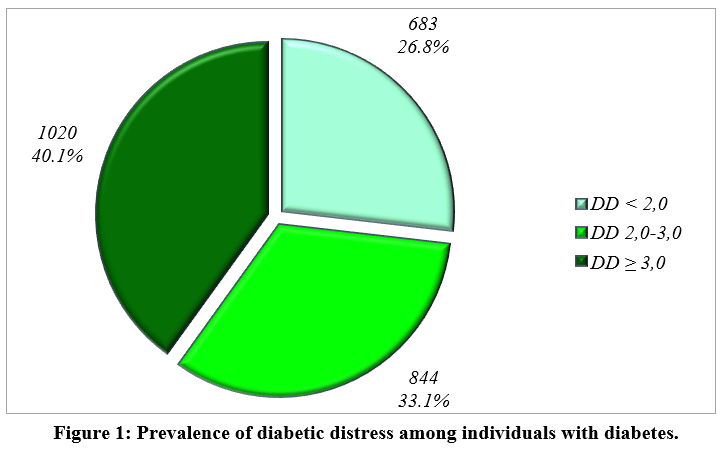 |
Figure 1: Prevalence of diabetic distress among individuals with diabetes.
|
When analyzing DD according to diabetes types, among 330 individuals with T1DM, 89 (27%) had DD < 2.0, 110 (33.3%) had DD 2.0–2.9, and 131 (39.7%) had DD ≥ 3.0. Among 2217 individuals with T2DM, mild or asymptomatic DD was identified in 594 (26.8%), moderate DD in 734 (33.1%), and a severe form of DD in 889 (40.1%). No significant difference was found in the prevalence of DD between diabetes types (Table 2). Similarly, no significant differences were noted in the detection of DD between males and females.
Table 2: Detection of diabetic distress by diabetes type
| Indicators | T1DM
(n=330) |
T2DM
(n=2217) |
| DD < 2,0 (n=683) | 89 (27%) | 594 (26,8%) |
| DD 2,0-3,0 (n=844) | 110 (33,3%) | 734 (33,1%) |
| DD ˃ 3,0 (n=1020) | 131 (39,7%) | 889 (40,1%) |
| χ2; p | χ 2=0,019; p=0,990 | |
With increasing age, a decrease was observed in the number of patients with mild or asymptomatic DD (DD < 2.0). An increase in moderate DD was most frequently detected in the 30–39 and 40–49 age groups. Severe forms of DD reached their maximum levels in the 50–59, and 60 years and older. The number of individuals with asymptomatic DD was higher in the younger age groups (Table 3). Statistically significant differences were noted between age groups regarding the detection of moderate and severe DD as age increased (p < 0.001).
Table 3: Detection of diabetic distress by age group
| Indicators | I | II | III | IV | V |
| Aged 18-29
(n=47) |
Aged 30-39
(n=98) |
Aged 40-49
(n=579) |
Aged 50-59
(n=896) |
Aged 60 ≤ | |
| DD < 2,0 | 38 (80,9%) | 43 (43,9%) | 175 (30,2%) | 229 (25,6%) | 198 (21,4%) |
| DD 2,0-3,0 | 7 (14,9%) | 36 (36,7%) | 221 (38,2%) | 282 (31,5%) | 298 (32,1%) |
| DD ˃ 3,0 | 2 (4,3%) | 19 (19,4%) | 183 (31,6%) | 385 (43,0%) | 431 (46,5%) |
| χ2;p | χ 2=133,0; p < 0,001* | ||||
Note: *— Rejects the null hypothesis *-“0”
With the increase in the duration of diabetes, the risk of developing diabetes complications and cardiovascular diseases, including DD, increases. A significant rise in DD was observed in individuals with diabetes relative to the duration of the disease. Marked differences were identified when comparing individuals with a diabetes duration of < 5 years to those with a duration of > 10 years (p < 0.001). No fundamental difference in moderate DD was noted between individuals with a disease duration of 6–10 years and those with a duration exceeding 10 years (Table 4).
Table 4: Detection of diabetic distress by duration of diabetes
| Indicators | Disease duration |
χ 2,p |
||
| ≤ 5 years
(n=174) |
6-10 years
(n=1014) |
˃ 10 years
(n=1359) |
||
| DD< 2,0 | 119 (68,4%) | 238 (23,5%) | 326 (24,0%) | χ 2 =176
p < 0,001* |
| DD 2,0-3,0 | 43 (24,7%) | 349 (34,4%) | 452 (33,3%) | |
| DD ˃ 3,0 | 12 (6,9%) | 427 (42,1%) | 581 (42,8%) | |
Note: *— Rejects the null hypothesis *-“0”
Analysis of distress across four subscales revealed that the detection of DD in two items—A and C—was notably higher than in items B and D. Regarding emotional burden (feelings of burnout, fatigue, and being overwhelmed by diabetes), moderate DD was identified in 34.1% and severe DD in 30.8% of cases. Concerning the treatment regimen-related distress (difficulties with diet, medication adherence, glucose monitoring, and self-management), moderate DD was found in 25.4% and severe DD in 42.0% (Table 5). Statistically significant differences were noted between the groups (p < 0.001).
Table 5: Evaluation of diabetic distress across four subscales
| Diabetic Distress Subscales (4 Domains) | DD < 2,0
(n=683) |
DD 2,0-3,0
(n=844) |
DD ˃ 3,0
(n=1020) |
χ2,p |
| A. Emotional Burden (n=673) (Feelings of burnout, fatigue, and being overwhelmed by diabetes)
|
71 (10,4%) | 288
(34,1%) |
314 (30,8%) | χ2=203,1
p < 0,001* |
| B. Physician-Related Distress (n=470) (Lack of sufficient healthcare support and feelings of being misunderstood by the physician)
|
139 (20,4%) | 181
(21,4%) |
150 (14,7%) | |
| C. Treatment Regimen-Related Distress (n=918) (Difficulties with diet, medication adherence, glucose monitoring, and self-management)
|
276 (40,4%) | 214
(25,4%) |
428 (42,0%) | |
| D. Interpersonal Distress (n=486) (Lack of sufficient care and support from family and the social environment)
|
197 (28,8%) | 161
(19,1%) |
128 (12,5%) |
Note: *— Rejects the null hypothesis *-“0”
The state observed in people with diabetes where HbA1c<7% (53 mmol/mol) is maintained, and where severe or frequent hypoglycemia has no impact on health or quality of life, is considered the glycemic target. Out of the 2547 individuals included in the study, 653 (25.6%) had glycemia at target with HbA1c < 7% (53 mmol/mol), while 1894 (74.4%) had HbA1c ≥ 7% (53 mmol/mol). Therefore, it was observed that for the majority of patients included in the study, glycemia was not at target for a long period. Specifically, the fact that HbA1c was higher than 7% (53 mmol/mol) led to an increase in the number of patients with DD.
Among the 653 people whose glycemia and HbA1c were at target, mild or asymptomatic DD was noted more frequently in 435 (66.6%), moderate DD in 120 (18.4%), and severe DD in 98 (15%). Among the 1894 patients with HbA1c ≥ 7% (53 mmol/mol), mild or asymptomatic DD < 2.0 was observed in 248 (13.1%), moderate DD 2.0–3.0 in 724 (38.2%), and severe DD > 3.0 in 922 (48.7%) (Table 6). At the same time, in 60%–80% of cases among people with HbA1c ≥ 7% (53 mmol/mol), diabetic macro- and microangiopathies, and even symptoms of ‘diabetic foot’ syndrome, were detected.
Table 6: Detection of diabetic distress based on HbA1c levels
| Indicators | HbA1c < 7% (53mmol/mol)
(n=653) |
HbA1c ≥ 7% (53mmol/mol)
(n=1894) |
χ 2,p |
| DD < 2,0 | 435 (66,6%) | 248 (13,1%) | χ 2=713,9
p < 0,001* |
| DD 2,0-3,0 | 120 (18,4%) | 724 (38,2%) | |
| DD ˃ 3,0 | 98 (15,0%) | 922 (48,7%) |
Note: *— Rejects the null hypothesis *-“0”
Statistically significant differences (p < 0.001) were identified in the biochemical parameters of individuals with mild or asymptomatic DD compared to those with moderate or severe DD. Specifically, metabolic profiling validated that worsening distress scores linearly correlate with a profound elevation in mean fasting glucose (8.5 ± 1.2 mmol/L vs. 5.5 ± 0.4 mmol/L) and LDL cholesterol levels (6.5 ± 0.2 mmol/L vs. 3.1 ± 0.1 mmol/L), shifting the atherogenic index from a baseline of 2.5 ± 0.05 up to a critical value of 4.8 ± 0.15 (Table 7). Conversely, no statistically significant clinical variations were noted in mean systolic (135 ± 3.5 mmHg) and diastolic (80 ± 1.5 mmHg) blood pressure indicators among the severe distress group (p > 0.01). This further confirms that distress influences clinical outcomes through emotional mechanisms.
Table 7: Biochemical and hemodynamic parameters in individuals with diabetic distress
| Indicators | DS < 2,0
(n=683) |
DS 2,0-3,0
(n=844) |
DS ≥ 3,0
(n=1020) |
P |
| HbA1c, %, mmol/mol | 6,1±0,05 | 7±0,05 | 8,1±0,05 | <0,001* |
| Glucose, mmol/L | 5,5±0,4 | 7,5±0,4 | 8,5±1,2 | <0,001* |
| Total Cholesterol, mmol/L | 4,5±0,1 | 5,1±0,1 | 5,2±0,5 | <0,001* |
| Triglycerides, mmol/L | 1,37±0,01 | 1,7±0,03 | 1,7±0,05 | <0,001* |
| HDL-C (High-Density Lipoprotein), mmol/L | 1,4±0,05 | 1,3±0,05 | 1,1±0,03 | <0,001* |
| LDL-C (Low-Density Lipoprotein), mmol/L | 3,1±0,1 | 3,8±0,02 | 6,5±0,2 | <0,001* |
| Atherogenic Index | 2,5±0,05 | 3,5±0,05 | 4,8±0,15 | <0,001* |
| SBP (Mean Systolic Blood Pressure) | 125,5±3,5 | 135,5±3,5 | 135±3,5 | 0,015* |
| DBP (Mean Diastolic Blood Pressure) | 84,4±1,5 | 85,8±1,5 | 80±1,5 | 0,026* |
| Heart Rate (BPM) | 70±1,9 | 78,0±1,8 | 78±1,7 | 0,002* |
Note: 1. Statistical significance of the differences was calculated using the Student’s t-test with Bonferroni correction.
*— Rejects the null hypothesis *-“0”
Discussion
Unlike clinical depression, diabetic distress (DD) occupies a specific clinical position, reflecting the heavy emotional burden that a chronic illness imposes on human life. In this field, the studies by Polonsky et al and Fisher et al are considered highly commendable.5,6 The “PAID” (Problem Areas in Diabetes) survey developed by Polonsky and colleagues is regarded by physicians and psychologists worldwide as the “gold standard” for detecting diabetic distress and evaluating its severity.
In our study, alongside general data obtained via the DDS-17 scale, distinct results were observed in two out of the four subscales (emotional burden and regimen-related distress); consequently, it is recommended that psychotherapy be conducted in conjunction with the optimization of diabetes treatment. To exclude clinical depression in people with diabetes mellitus (DM) exhibiting DD, analyses were performed in accordance with the research of Snoek et al.7 Since moderate and severe forms of DD are of primary clinical significance, priority was given to their detection. Individuals suspected of having depression were referred for psychiatric consultation.
The research of Perrin et al was conducted solely on individuals only with T2DM and showed a predominance of moderate (DD 2.0–3.0) and high (DD > 3.0) distress levels.8 However, in our study, no significant difference was identified between the DD screening results of individuals with T1DM and T2DM diabetes.
It has been observed that HbA1c>7% in people with diabetes is accompanied by severe distress (DD > 3.0) as well as challenges in treatment management.3 Hessler et al demonstrated in their research that DD is elevated in individuals whose glycemia and HbA1c levels exceed target values.9 In our study, in individuals with HbA1c>7% (53 mmol/mol)—namely those whose glycemia was consistently outside the target range—we observed the development of diabetes complications, metabolic dysfunction, and initials increased risk of cardiovascular diseases alongside moderate and high DD. The American Diabetes Association (ADA) recommendations indicate that as the duration of diabetes increases, diabetic distress develops alongside diabetes complications (diabetic macro- and microangiopathies).2 Failure to assess distress in a timely manner leads to sleep disorders, depression, and even dementia.
Conclusion
Among the individuals with diabetes included in the study, mild or asymptomatic DD was detected in 26.8%, moderate DD in 33.1%, and severe DD in 40.1% of cases. An increase in the prevalence of severe DD was noted in association with advancing age and a longer duration of diabetes. Severe DD was specifically observed in relation to emotional burden (30.8%) and regimen-related distress (42.0%). The distinct biochemical divergence further confirms that advanced diabetic distress progressively influences metabolic and glycemic outcomes through specialized neuro-emotional and chronic stress mechanisms rather than acute systemic hemodynamic alterations. Furthermore, in individuals with elevated HbA1c levels, a higher incidence of moderate and severe DD was identified, alongside an increase in diabetic complications and cardiovascular risks.
Acknowledgement
The author expresses sincere gratitude to the staff of “Alyans” Clinic in Shaki for their assistance in data collection and support during the research process.
Funding Sources
The author(s) received no financial support for the research, authorship, and/or publication of this article.
Conflict of Interest
The authors do not have any conflict of interest.
Data Availability Statement
This statement does not apply to this article.
Ethics Statement
This study was conducted in accordance with ethical standards for research involving human participants and complied with the principles of medical research ethics. The study was authorized by Alyans Clinic (Shaki, Azerbaijan). This research did not involve animal subjects or any material requiring formal ethical committee approval.
Informed Consent Statement
Informed consent was obtained from all individual participants included in the study.
Clinical Trial Registration
This research does not involve any clinical trials.
Permission to reproduce material from other sources
Not Applicable.
Author Contributions
The sole author was responsible for the conceptualization, methodology, data collection, analysis, writing, and final approval of the manuscript.
References
- International Diabetes Federation. IDF Diabetes Atlas. 11th ed. Brussels: International Diabetes Federation; 2025. Available at: https://diabetesatlas.org.
- American Diabetes Association. Standards of Medical Care in Diabetes—2025. Diabetes Care. 2025;48(Suppl 1).
- Mammadhasanov R.M., Mehdiyev T.V. Diabetes Mellitus: Training Manual. Baku; 2017:274–286.
- Dedov I.I., Melnichenko T.A. (eds.). Endocrinology: National Guide. Moscow: GEOTAR-Media; 2025:549–560.
- Polonsky W.H., Anderson B.J., Lohrer P.A., et al. Assessment of diabetes-related distress. Diabetes Care. 1995;18(6):754-760. https://doi.org/10.2337/diacare.18.6.754
CrossRef - Fisher L., Hessler D.M., Polonsky W.H., Mullan J. When is diabetes distress clinically meaningful? Establishing cut points for the Diabetes Distress Scale. Diabetes Care. 2012;35(2):259-264. https://doi.org/10.2337/dc11-1572
CrossRef - Snoek F.J., Bremmer M.A., Hermanns N. Constructs of depression and distress in diabetes: Time for an appraisal. Lancet Diabetes & Endocrinology. 2015;3(6):450-460. https://doi.org/10.1016/S2213-8587(15)00135-7
CrossRef - Perrin N.E., Davies M.J., Robertson N., Snoek F.J., Khunti K. The prevalence of diabetes distress in people with type 2 diabetes: A systematic review and meta-analysis. Diabetic Medicine. 2017;34(11):1508-1520. https://doi.org/10.1111/dme.13448
CrossRef - Hessler D.M., Fisher L., Polonsky W.H., Johnson N., Hinnerberg A. Diabetes distress is linked with worsening diabetes management over time. Diabetic Medicine. 2019;36(9):1181-1187. https://doi.org/10.1111/dme.13944
CrossRef
Abbreviations
DM: Diabetes Mellitus
DD: Diabetic Distress
HbA1c: Glycated Hemoglobin
DDS-17: Diabetes Distress Scale
T1DM: Type 1 Diabetes Mellitus
T2DM: Type 2 Diabetes Mellitus
MODY: Maturity-Onset Diabetes of the Young
Accepted on: 17-05-2026
Second Review by: Dr. Amritlal Mandal
Final Approval by: Dr. Ali Mohamed Elshafei