Development of Molecular Markers for Clinical and Non-Clinical Diagnostics and Identifications: A Comprehensive Review
 , Deepak Raghuwanshi1, Gayatri Batham1, Kajal Singh3 , Neelima Uikey1, Anubhuti Minare4, Susan Manohar2 and Rajkumar Garg1
 1Department of Biosciences, Barkatullah University, Bhopal, India
2Department of Zoology, Govt. M.G.M. P.G. College, Itarsi, India
3Department of Zoology, SarojiniNaidu Govt. Girls P.G. Autonomous College, Bhopal, India
4Department of Zoology and Applied Aquaculture, Barkatullah University, Bhopal, India
Corresponding Author E-mail:nikishamohobiya@gmail.com
DOI : http://dx.doi.org/10.13005/bbra/3525
Download this article as:

Molecular markers have revolutionized biological sciences and diagnostics by enabling rapid, sensitive, and specific detection of nucleic acid variations. Early hybridization- and protein polymorphism-based approaches, such as RFLP and isozyme analysis, led rise to PCR-based systems including RAPD, AFLP, SSR (microsatellites), and SCAR markers. Subsequent advancements introduced single-nucleotide polymorphisms (SNPs) and, more recently, sequence-level, high-throughput technologies like next-generation sequencing (NGS). In parallel, innovations in isothermal amplification (LAMP), precise quantification (digital PCR), and CRISPR-based diagnostics (SHERLOCK, DETECTR, and related systems) have extended molecular marker applications from centralized laboratories to point-of-care and field settings. This review outlines the historical development, principal marker types, analytical workflows, clinical and non-clinical applications (including forensics, species identification, food authenticity, and conservation), along with the advantages, limitations, regulatory issues, and emerging trends that shape the future of molecular marker technologies.
KEYWORDS:Co-dominant Markers; Dominant Markers; mi-RNA; Pathogenic and Non-Pathogenic Microbes; PCR; RT-PCR; Transcriptome
Introduction
Molecular markers, or biomarkers, are now at the forefront of contemporary diagnosis, prognosis, and identification in a variety of domains thanks to the quick development of molecular biology tools. Specific, quantifiable biological traits, such as changes in DNA, RNA, proteins, or metabolites, are known as molecular markers. These traits can be utilized to identify pathogenic or normal processes or forecast how a treatment will work.1 By offering insights at the basic genetic and cellular level, with unprecedented precision sensitivity, and speed, these markers represent a paradigm change from conventional techniques, which frequently rely on low-sensitivity culture or subjective observation. The classification of molecular biomarkers based on their molecule type, along with their representative markers and key clinical and non-clinical applications, is presented in (Table 1).
Table 1: Classification and Overview of Molecular Markers
| S.No. | Marker Class | Molecule Type | Representative Marker Types | Primary Clinical & Non-Clinical Applications |
| 1. | DNA- Based | DNA Sequence | SNPs, Haplotypes, Microsatellites (SSRs), VNTRs, DNA Methylation (Epigenetic) | Pharmacogenomics, Disease risk assessment, Forensic identification, Paternity testing, Cancer susceptibility. |
| 2. | RNA-Based (Transcriptomics) | RNA Transcripts | mRNA (Coding RNA), MicroRNAs (miRNAs), lncRNA, circRNA | Liquid biopsy (Non-invasive monitoring), Tumor subtype classification, Prognosis/Recurrence monitoring, Inflammatory states. |
| 3. | Protein-Based (Proteomics) | Proteins & Peptides | Circulating Proteins (Enzymes, Receptors, Hormones), Post-Translational Modifications (PTMs) | Monitoring tissue damage (e.g., Troponin), Inflammatory states, Prediction of therapeutic Response (e.g., Receptor Status), Classical clinical chemistry |
| 4. | Metabolite-Based (Metabolomics) | Small Molecules | Lipids, Amino Acids, Sugars, Organic Acids | Identifying metabolic dysregulation (e.g., in Diabetes or liver disease), Food authenticity, Drug toxicity studies, Diagnosis of inborn errors of metabolism. |
The utilization of genetic markers in clinical settings has become essential to precision medicine practice. Molecular diagnostics are used in oncology to precisely identify cancer subtypes, ascertain the mutational status of important genes (such as KRAS or EGFR), and forecast patient response to targeted therapies, all of which help to inform customized treatment regimens.2 For infectious diseases, methods such as real-time Polymerase Chain Reaction (qPCR) allow for the quick and early identification of pathogens, including non-culturable or picky organisms like viruses and some bacteria.3 This is essential for prompt intervention, particularly in high-risk situations like sepsis.4 They are also crucial for tracking the recurrence of diseases and detecting inherited disorders.
Molecular markers are equally effective tools for non-clinical identification and diagnosis outside of the clinical context. Highly polymorphic markers, such as Short Tandem Repeats (STRs), are the foundation of DNA fingerprinting used in forensic science for paternity testing and criminal identification.5 DNA-based markers make it easier to characterize genetic variation in agricultural and animal research and allow for extremely effective Marker-Assisted Selection (MAS) for better qualities like disease resistance and quality.6
This comprehensive review examines the development and evolution of molecular markers, spanning early techniques such as Restriction Fragment Length Polymorphism (RFLP) to advanced high-throughput platforms like Next-Generation Sequencing (NGS). It emphasizes their underlying principles, applications in both clinical and non-clinical diagnostics and identification, and evaluates current challenges along with emerging future prospects in the field.
Review Methodology
This evaluation was based on a thorough review of peer-reviewed articles, books, and scientific reports on molecular markers and diagnostic tools. Relevant literature published between 2000 and 2025 was gathered from scientific databases such as PubMed, Scopus, Web of Science, and Google Scholar using keywords like “molecular markers,” “PCR,” “next-generation sequencing,” “CRISPR diagnostics,” “precision medicine,” and “biomarker applications.” Articles on the clinical and non-clinical applications of molecular markers were considered. The collected research were critically assessed and categorized into four categories: marker categorization, diagnostic applications, technological improvements, and future prospects.
Historical Background of Molecular Diagnostics
The major shortcomings of conventional diagnostic techniques and the scientific advances of the late 20th century are the foundation for the creation and usage of molecular markers (DNA, RNA, or protein-based indicators) in diagnostics. By incorporating molecular biology tools into clinical and non-clinical laboratory practice to examine the basic genetic material and its products, molecular diagnostics became an important topic.7
The limitations of traditional diagnostic techniques and the scientific developments of the late 20th century were the main causes of the rise of molecular diagnostics. While traditional, phenotypic approacheswhich evaluated observable traits were foundational to early biological and medical diagnosis, they presented significant limitations that spurred the search for more precise tools.
The reliance on Microbial Culture for infectious disease diagnosis, for instance, introduced significant delays in treatment initiation, often taking days or weeks for results (e.g. for Mycobacterium tuberculosis). Furthermore, its reliance on organism viability made it susceptible to false-negative outcomes in the case of fastidious or non-viable pathogens, particularly following prior antibiotic exposure. Similarly, traditional Morphologic Analysis in pathology, though crucial, often lacked the specificity necessary to differentiate subtle or early-stage diseases and was incapable of predicting individual patient responses to targeted therapies. The comparison between conventional methods and molecular diagnostics, highlighting the advantages of molecular markers, is depicted in Figure 1. Even early Biochemical Assays frequently failed to achieve the high sensitivity required for the early detection of disease-causing compounds present at extremely low concentrations.
This urgent need for faster, more sensitive, and more precise diagnostic tools, combined with groundbreaking discoveries, drove the molecular revolution. The discovery of the DNA double helix and the invention of the Polymerase Chain Reaction (PCR),8,9 Specific synthesis of DNA in vitro via a polymerase-catalyzed chain reaction, was transformative. PCR, by exponentially amplifying a particular nucleic acid sequence from a minute sample, offered unprecedented high sensitivity and specificity, making it possible to detect low-concentration pathogens and minimal residual disease in cancer. This technical speed, especially with real-time PCR (qPCR), dramatically reduced turnaround time to mere hours,10 which is essential for time-sensitive interventions in critical conditions like sepsis.11
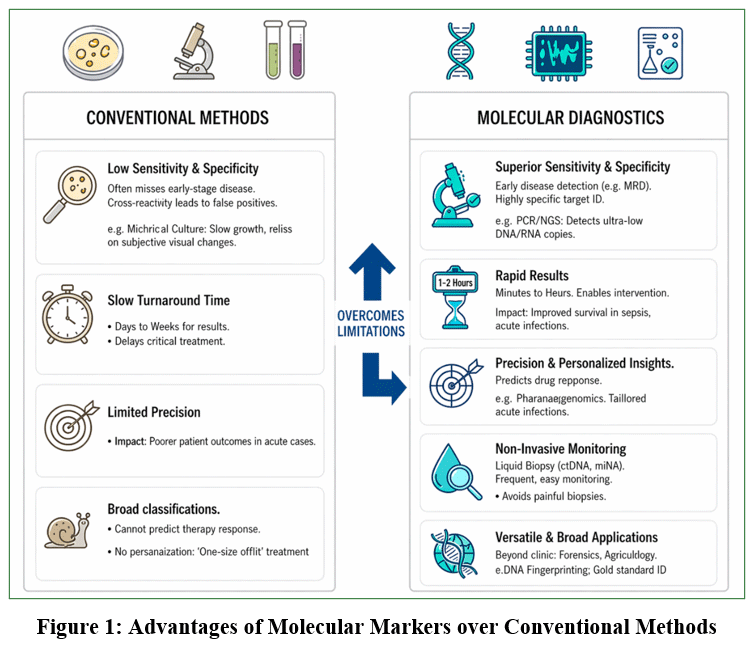 |
Figure 1: Advantages of Molecular Markers over Conventional Methods.
|
Crucially, the Human Genome Project (HGP) and the subsequent development of Next-Generation Sequencing (NGS) technologies fuelled the explosion in the discovery of genetic markers such as Single Nucleotide Polymorphisms (SNPs).12 This allowed molecular diagnostics to examine a patient’s distinct genetic profile and the molecular features of their illness (e.g.BRCA1/2 mutations or antibiotic resistance genes.13 This capability forms the core of Personalized Medicine (Precision Medicine), ensuring that treatment is tailored to the individual patient’s molecular profile. Thus, the definitive shift toward molecular marker-based diagnostics represents a critical evolution, resolving the constraints of traditional methods and directly enabling enhanced speed, accuracy, and personalization in clinical and non-clinical decision-making.
Classification and Technology of Molecular Markers
Molecular markers arefundamentally classified based on the type of molecule they detect and the resulting biological information they provide. These molecules span the central dogma of biology, reflecting an individual’s stable genetic blueprint (DNA), the dynamic state of gene expression (RNA), and the ultimate functional machinery (Proteins and Metabolites).
DNA-Based Markers (Genomics and Epigenomics)
DNA based markers targets variations in the genetic material itself, providing the most stable and heritable information. Some of the DNA based markers are described as:
Single Nucleotide Polymorphisms (SNPs) and Haplotypes
Single base pair alterations in the DNA sequence are known as SNPs. They are the most typical type of genetic variation and are highly prevalent, making them highly suitable for large-scale association studies.
Application: Identifying disease predisposition (e.g., risk alleles in complex diseases like cardiovascular disease), and Pharmacogenomics (predicting individual drug metabolism and efficacy). Haplotypes (blocks of linked SNPs) are used for high-resolution genetic mapping.
Microsatellites (SSRs) and Variable Number Tandem Repeats (VNTRs):
These are short, repetitive DNA sequences (1 to 60 base pairs approx) that show high levels of polymorphism due to variations in the number of repeats inherited.
Application: Their high variability creates them the primary markers for DNA fingerprinting in forensic science and paternity testing, as well as for identifying instability in cancer (e.g., Microsatellite Instability in colorectal cancer).
Epigenetic Markers (Methylation, Histone Modification):
These markers represent heritable changes in gene expression that occur without altering the primary DNA sequence. The most commonly studied is DNA methylation, typically occurring at CpG islands.
Application: Diagnosing early-stage cancers (e.g., hypermethylation of tumor suppressor genes) and understanding complex conditions like autoimmune diseases, as these patterns are often cell-type and disease-specific.
RNA-Based Markers (Transcriptomics)
RNA markers provide a snapshot of genes that are actively expressed at a particular time, making them highly sensitive to dynamic physiological and pathological changes.
Coding RNA (mRNA Expression Profiling):
These markers measure the abundance of messenger RNA (mRNA), which is transcribed from genes and serves as the template for protein synthesis.
Application: Evaluating global Gene Expression Profiles via techniques like RNA Sequencing (RNA-Seq) to classify tumour subtypes, determine prognosis, or diagnose inflammatory conditions by identifying differentially expressed genes (DEGs).
Non-Coding RNA (miRNA, lncRNA, circRNA):
These are RNA molecules with a functionalrole that do not code for proteins yet are vital in regulating gene expression.
MicroRNAs (miRNAs), in particular, are small non-coding RNAs that are remarkably stable in biofluids (blood, urine) as they are encapsulated in exosomes.
Application: They are emerging as powerful, non-invasive biomarkers in “liquid biopsies” for monitoring tumor recurrence and progression, such as circulating miRNAs in cancer or cardiovascular disease.
Protein and Metabolite Markers (Proteomics and Metabolomics)
These markers represent the functional output of the cellular processes, reflecting the ultimate biological state and ongoing molecular activity.
Circulating Proteins and Post-Translational Modifications (PTMs):
Protein biomarkers (enzymes, hormones, receptors, antibodies) are the classic form of clinical markers (e.g., PSA for prostate cancer).
Application: Monitoring inflammatory states, tissue damage (e.g., Troponin in heart attack), and predicting response to therapy (e.g., receptor status in breast cancer). Analyzing PTMs (like phosphorylation or glycosylation) can differentiate between active and inactive protein states, offering superior diagnostic value.
Small Molecule Metabolites:
Metabolites are the low-molecular-weight end products of cellular processes (e.g., lipids, amino acids, sugars). Metabolomics provides a functional readout of the cell’s physiology.
Application: Identifying metabolic dysregulation associated with diseases like Type 2 diabetes, fatty liver disease, and neurodegenerative disorders. Metabolite profiles are highly sensitive to environmental factors, diet, and disease stage.
Clinical Applications of Molecular Markers
Molecular markers have transformed clinical by providing direct readouts of genotype and pathogen identity with high specificity and sensitivity. In oncology, predictive and pharmacogenetic biomarkers such as BRAF and EGFRsupport targeted therapies and companion diagnostics, marking a shift toward personalized approaches in patient management.12-14Successful clinical implementation requires robust analytical and clinical validation, standardized workflows, and innovative clinical trial designs-such as basket and umbrella trials-that stratify patients by molecular profiles.15,16
Precision Medicine and Oncology
The emergence of precision medicine has significantly expanded the role of molecular markers in disease diagnosis and therapeutic decision making. The integration of omics-based technology has allowed for more accurate disease characterization and focused treatment options.17,18 Molecular markers such as EGFR, HER2, and KRAS mutations in cancers have become predictive and prognostic tools guiding the use of targeted therapeutics.19,20 Beyond oncology, the use of molecular and immunologic markers has also expanded into nephrology, infectious diseases, and metabolic disorders, enhancing predictive and preventive healthcare strategies.21,22 Enabling technologies particularly NGS, molecular imaging, and liquid biopsy have accelerated biomarker discovery and translation from bench to bedside.23,24 These advances align with India’s growing interest in integrating omics-driven diagnostics into public health and personalized therapy frameworks, though challenges persist regarding cost, infrastructure, and regulatory standardization.25 As a result, molecular markers have become the cornerstone of predictive, preventive, and personalized medicine, bridging basic molecular biology and clinical implementation to achieve precision-based healthcare worldwide.
Infectious Disease Diagnosis
Recent advancements further demonstrate the expanding clinical application of molecular marker. Next-generation sequencing (NGS) technologies are becoming crucial in tackling antimicrobial resistance (AMR), allowing for faster pathogen identification, resistance gene profiling, and better clinical decision-making in infectious disease management. Recent studies has demonstrated the efficacy of metagenomic sequencing methods for the quick detection of multidrug-resistant organisms and the monitoring of evolving resistance mechanisms.26 Similarly, CRISPR-based diagnostic systems like SHERLOCK and DETECTR have evolved as very sensitive and quick instruments for nucleic acid detection, showing tremendous potential for infectious disease diagnosis, point-of-care diagnosis, and outbreak surveillance.27These technologies provide great specificity with minimum instrumentation needs, making them appropriate for both centralized laboratories and field-based diagnostic purposes.
Non-Clinical Applications of Molecular Markers
In addition to clinical diagnostics, molecular markers are significant in forensic research, biodiversity conservation, species authentication, agriculture, and food authenticity. Highly polymorphic markers including Short Tandem Repeats (STRs), microsatellites, and Variable Number Tandem Repeats (VNTRs) are widely employed in DNA fingerprinting, paternity testing, and criminal investigations.5 Molecular markers in agriculture and aquaculture make it easier to analyze genetic diversity, characterize germplasm, use marker-assisted selection, and authenticate species for conservation and breeding projects.6
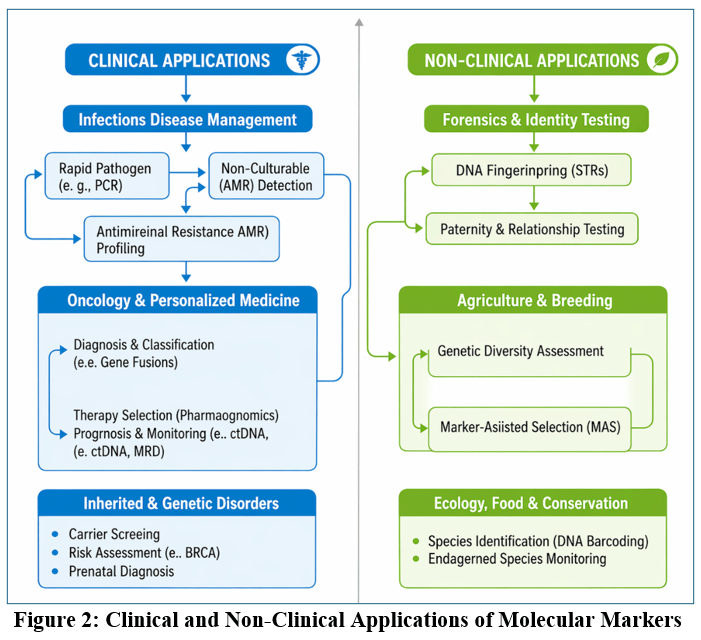 |
Figure 2: Clinical and Non-Clinical Applications of Molecular Markers
|
Sequence Characterized Amplified Region (SCAR) markers continue to play an important role in species authentication, medicinal plant identification, food quality assessment, and biodiversity conservation, especially in resource-constrained environments where high-throughput sequencing may not be possible.28,29
These applications highlight the molecular marker technology’ broad utility outside of healthcare and clinical diagnostics. Figure 2 summarizes the most common clinical and non-clinical applications for molecular markers.
Limitations and Challenges of Molecular Diagnostics
Despite substantial advances in molecular diagnostics, a number of difficulties remain to prevent the widespread adoption of molecular marker technologies. Although high-throughput sequencing and liquid biopsy platforms are very promising, they still have challenges with consistency, clinical value validation in non-oncological applications, and equitable worldwide accessibility.30,31 Recent studies in India have identified difficulties in laboratory infrastructure, validation standards, experienced staff, and resource allocation that impede molecular diagnostic readiness despite the growing usage of genetic medicine.32 These limitations highlight the need for increased standardization, regulatory harmonization, cost, and accessibility in order to successfully integrate molecular diagnostics into normal healthcare systems around the world.
Future Directions and Research Priorities
The future is focused on integration, accessibility, and robust validation.
Multi-omics and AI: Prioritizing the integration of multi-omics data (genomics, proteomics, etc.) with Artificial Intelligence (AI) and Machine Learning (ML) to identify novel, highly predictive diagnostic panels and guide complex therapeutic decisions.33
Technological Democratization: Developing rapid, low-cost Point-of-Care (POC) devices and scaling Single-Cell Analysis (SCA) to resolve cellular heterogeneity in tissues like tumors.34
Standardization and Clinical Utility: Establishing harmonized global protocols for data processing and conducting large-scale prospective trials to prove that new tests lead to improved patient outcomes.34,35
Conclusion
The development of molecular markers has completely changed diagnostic and identification systems by converting laborious laboratory processes into quick, precise, and portable technologies that may be used in forensics, food authentication, agriculture, healthcare, and biodiversity conservation. Since there isn’t a single molecular marker or technology that works for every diagnostic application, the best methods are chosen based on factors like sensitivity, scalability, cost, infrastructure availability, and regulatory constraints. In order to increase diagnostic accuracy and accessibility, future developments are anticipated to concentrate on integrating CRISPR-based detection systems, isothermal amplification, microfluidics, artificial intelligence-assisted analysis, and user-friendly sequencing technologies. Furthermore, for molecular diagnostics to be widely adopted globally, more attention must be paid to standardization, affordability, and application in low-resource situations. Overall, advancements in molecular marker technologies will improve precision medicine, disease surveillance, and biological research, establishing molecular diagnostics as an essential component of future healthcare and scientific innovation.
Acknowledgement
The authors would like to thank Department of Biosciences, Barkatullah University, Bhopal for providing all the required facilities. The authors are also grateful to the IT department and central library for providing all IT related information and technical support and publication resources.
Funding Sources
The author(s) received no financial support for the research, authorship, and/or publication of this article.
Conflict of Interest:
The authors do not have any conflict of interest.
Data Availability Statement
This statement does not apply to this article.
Ethics Statement
This research did not involve human participants, animal subjects, or any material that requires ethical approval.
Informed Consent Statement
This study did not involve human participants, and therefore, informed consent was not required.
Clinical Trial Registration
This research does not involve any clinical trials.
Permission to reproduce material from other sources
Not Applicable.
Author Contributions
- Nikisha Mahoviya: Conceived the idea for this review, organized the overall structure of the manuscript, and served as the corresponding author.
- Deepak Raghuwanshi: Literature search, compiled, and organized the relevant studies.
- Gayatri Batham: Literature search, compiled, and organized the relevant studies.
- Kajal Singh: Contributed to the literature search, drafting, and preparation of the manuscript.
- Neelima Uikey: Literature search, Assisted in drafting.
- Anubhuti Minare: Contributed to the literature search, drafting, and preparation of the manuscript.
- Susan Manohar: Assisted in drafting and organizing the manuscript.
- Rajkumar Garg: Supervised provided intellectual input, and critically revised the review for important academic content.
References
- Sharma PK. Molecular markers: mini review. Plant Cell Biotechnol. Biol. 2017;18:181-189.
- Morshed MG, Lee MK, Jorgensen D, Isaac-Renton JL. Molecular methods used in clinical laboratory: prospects and pitfalls. FEMS Immunology & Medical Microbiology. 2007;49(2):184-191.
CrossRef - Liu Q, Jin X, Cheng J, Zhou H, Zhang Y, Dai Y. Advances in the application of molecular diagnostic techniques for the detection of infectious disease pathogens. Molecular Medicine Reports. 2023;27(5):104.
CrossRef - Assiri KA, Alrasis MS, Mashlawi AI, Alayda MH,Aljndbai AM. Role of molecular markers in identifying genetic disorders. International Journal Of Community Medicine And Public Health. 2024;11(9):3712–3715.
CrossRef - Asif Raheem M, Aslam MM, Faisal M, Izhar N, Iqbal RK. Molecular Markers as a Diagnostic Tool. Middle East Journal of Applied Science & Technology. 2019;2(3):87-94.
- Thilakarathna MKS, Karunathilaka RIS, Gunawardana GA, Jayasooriya RGPT. Use of molecular biology techniques for animal identification and traceability. University of Colombo Review. 2022;3(2).
CrossRef - Lederman L. Molecular Diagnostics. BioTechniques. 2005;38(5):679–681.
CrossRef - Watson JD, Crick FHC. Molecular structure of nucleic acids: a structure for deoxyribose nucleic acid. 1953;171(4356):737-738. https://doi.org/10.1038/171737a0
CrossRef - Mullis K, Faloona F, Scharf S, Saiki R, Horn G, Erlich H. Specific enzymatic amplification of DNA in vitro: the polymerase chain reaction. Cold Spring HarbSymp Quant Biol. 1986;51Pt 1:263-73. doi: 10.1101/sqb.1986.051.01.032. PMID: 3472723.
CrossRef - Alamri AM, Alkhilaiwi FA, Ullah Khan N. Era of molecular diagnostics techniques before and after the COVID-19 pandemic. Current Issues in Molecular Biology. 2022;44(10):4769-4789.
CrossRef - Niesters HG. A Brief History of the Development of Diagnostic Molecular-Based Assays. In Encyclopedia of Virology. 2020:22-26. Elsevier.
CrossRef - Dietel M, Sers C.Personalized medicine and development of targeted therapies: the upcoming challenge for diagnostic molecular pathology. A review. 2006;448(6):744-755.
CrossRef - Anderson JE, Hansen LL, Mooren FC, et al. Methods and biomarkers for the diagnosis and prognosis of cancer and other diseases: towards personalized medicine. Drug Resistance Updates.2006;9(4-5), 198-210.
CrossRef - Ong FS, Das K, Wang J, Vakil H, Kuo JZ, Blackwell WL. Personalized medicine and pharmacogenetic biomarkers:Progress in molecular oncology testing. ExpertReview of Molecular Diagnostics, Taylor & Francis.2012;12(6):593–602.
CrossRef - Jürgensmeier JM, Eder JP, Herbst RS.New strategies in personalized medicine for solid tumours: Molecular markers and clinical trial designs. Clinical Cancer Research.2014;20(18):4421–4429.
CrossRef - Gonzalez de Castro D, Clarke PA, Workman P. Personalized cancer medicine: Molecular diagnostics, predictive biomarkers, and drug resistance. Clinical Pharmacology & Therapeutics,Wiley. 2013;93(3):252–259.
CrossRef - Molla G, Bitew M. Revolutionizing personalized medicine: synergy with multi-omics data generation, main hurdles, and future perspectives. Biomedicines. 2024:12(12), 2750.
CrossRef - Zamperla MG, Barbi V, Negri S, Atlante S, Gaetano C. Omics medicine: what the clinicians should know. European Journal of Internal Medicine. 2026:106759.
CrossRef - Mehta S, Shelling A, Muthukaruppan A, et al. Predictive and prognostic molecular markers for cancer medicine. Therapeutic advances in medical oncology. 2010: 2(2), 125-148.
CrossRef - Duffy MJ, O’Donovan N,Crown J. Use of molecular markers for predicting therapy response in cancer patients. Cancer treatment reviews. 2011: 37(2), 151-159.
CrossRef - AlDoughaim M, AlSuhebany N, AlZahrani M, et al. Cancer biomarkers and precision oncology: a review of recent trends and innovations. Clinical Medicine Insights: Oncology. 2024:18, 11795549241298541.
CrossRef - Hu T, Liu CH, Lei M, et al. Metabolic regulation of the immune system in health and diseases: mechanisms and interventions. Signal Transduction and Targeted Therapy. 2024:9(1), 268.
CrossRef - Anees M, Sherry C, Park HY, et al. Liquid biopsy biomarkers for early detection of gastrointestinal cancers: Current landscape and emerging technologies. Clinical and Translational Medicine. 2026:16(3), e70594.
CrossRef - Bhaskar S, Umrao S, Lee H, et al. Critical Review: Point of Care Molecular Cancer Diagnostics. Lab on a Chip.(2026)
CrossRef - Kant S, Deepika Roy S. Integrative Multi-Omics and Artificial Intelligence: A New Paradigm for Systems Biology. OMICS: A Journal of Integrative Biology. 2025:29(12), 576-587.
CrossRef - Van Belkum A. Next generation sequencing as a panacea for antibiotic susceptibility testing: yea or nay?. Frontiers in Public Health. 2025:13, 1650925.
CrossRef - Kostyusheva A, Brezgin S, Babin Y, et al. CRISPR-Cas systems for diagnosing infectious diseases. Methods. 2022:203, 431-446.
CrossRef - Jin B, Jiang FS, Yu J, et al.[Study on sequence characterized amplified region (SCAR) markers in Dendrobium candidum]. Zhong Yao Cai. 2010 Mar;33(3):343-6. Chinese. PMID: 20681295.
- Pradhan L, Parida P, Pradhan D, et al. Recent advances in molecular markers in deciphering genetic diversity of wild and crop species for conservation and food security. Plants. 2026:3, 137. https://doi.org/10.1007/s44372-026-00592-2
CrossRef - Ziegler A, Koch A, Krockenberger K, Großhennig A. Personalized medicine using DNA biomarkers: A review. Human Genetics, Springer. 2012;131(10):1627–1638.
CrossRef - Jameson JL, Longo DL. Precision medicine—personalized, problematic, and promising. New England Journal of Medicine. 2015;372(23):2229–2234.
CrossRef - Dwivedi S, Purohit P, Misra R, et al. Diseases and molecular diagnostics: A step closer to precision medicine. Indian Journal of Clinical Biochemistry, Springer. 2017;32(4):374–398.
CrossRef - Abik M, Baichoo S. Integrative multi-omics and machine learning/deep learning approaches in cancer knowledge discovery: a scoping review. Cancer Treatment and Research Communications. 2026:101136.
CrossRef - Salih S, Elliyanti A, Alkatheeri A, AlYafei F. The role of molecular imaging in personalized medicine. Journal of Personalized Medicine. 2023;13(1):74.
CrossRef - Weiskirchen S, Weiskirchen R. Unraveling the future: hot topics shaping molecular diagnostics today. Expert Review of Molecular Diagnostics.2025;25(4):111–116.
CrossRef
 PlumX:
 Views: 1316 Views
  PDF Downloads:
294
PDF Downloads:
294 Accepted on: 01-06-2026
Second Review by: Dr. Sajuti Sarkar
Final Approval by: Dr. Mohammad Fareed