Antibacterial Activity of Curcuma caesia Roxb. Rhizome Extracts
 and Saurav Somnath Gaikwad2*
 1Department of Microbiology, Shrimati Vimlaben Khimji Tejookaya Arts, Science and Commerce College, (Affiliated to S. P. Pune University, Pune), Nashik, India
2P.G. Department of Botany, K.S.K.W. Arts, Science and Commerce College, (Affiliated to S. P. Pune University, Pune) CIDCO Nashik, India
Corresponding Author E-mail:Saurav.botany01@gmail.com
DOI : http://dx.doi.org/10.13005/bbra/3545
Download this article as:

The increasing emergence of antibiotic-resistant bacterial pathogens has intensified the search for effective natural antimicrobial agents. Curcuma caesia Roxb. (black turmeric) is a medicinal plant traditionally used in Indian ethnomedicine for the treatment of infectious diseases. The present study aimed to evaluate the antibacterial activity of C. caesia rhizome extracts prepared using different solvents. Rhizomes were shade-dried, powdered, and extracted using methanol, chloroform, petroleum ether, and distilled water. Antibacterial activity was assessed against Escherichia coli, Streptococcus pneumoniae, Bacillus sp., Pseudomonas aeruginosa, and Klebsiella pneumoniae using the agar well diffusion method. Among all extracts, the methanolic extract exhibited the highest antibacterial activity, with zones of inhibition ranging from 16.3 ± 0.5 mm to 21.4 ± 0.7 mm, followed by chloroform and aqueous extracts, while petroleum ether extract showed minimal activity. Gram-positive bacteria were more susceptible than Gram-negative bacteria. These findings suggest that Curcuma caesia may serve as a promising natural source for the development of antibacterial agents.
KEYWORDS:Antibacterial activity; Curcuma caesia; Phytochemicals; Rhizome extract; Turmeric
Introduction
Medicinal plants have been an integral part of traditional healthcare systems worldwide and continue to be a vital source of bioactive compounds used in modern medicine. Among these, plants of the genus Curcuma (family: Zingiberaceae) are widely recognized for their extensive pharmacological properties, including antimicrobial, anti-inflammatory, antioxidant, and anticancer activities.1 One such lesser known but increasingly studied species is Curcuma caesia Roxb., commonly known as black turmeric. Indigenous to India, particularly the north-eastern and central regions, black turmeric has been traditionally used in various ethnomedicinal practices.2 Curcuma caesia is a perennial herb characterized by bluish-black rhizomes with a pungent aroma and distinctive dark purplish coloration internally.3
The plant thrives in tropical climates and is often cultivated in small-scale rural settings for medicinal use. Unlike its widely known counterpart, Curcuma longa (yellow turmeric), black turmeric is less explored scientifically, particularly in terms of its antimicrobial properties, despite its traditional use in treating infections, wounds, and skin ailments.4 The rhizome of C. caesia contains a complex mixture of bioactive secondary metabolites such as essential oils, curcuminoids, alkaloids, flavonoids, tannins, and phenolic compounds.5 These constituents are known to play critical roles in the plant’s defence mechanisms and therapeutic activities. Among them, curcumin analogues and volatile oils such as camphor, ar-turmerone, and 1,8 cineole are believed to contribute significantly to its antimicrobial potential.6
The increasing incidence of multidrug-resistant bacterial strains poses a global health crisis and has necessitated the search for alternative antimicrobial agents. In this context, natural products derived from plants are gaining attention as potential sources of novel antibacterial compounds.7 The antibacterial efficacy of plant-derived extracts lies in their diverse chemical structures and unique mechanisms of action, which may differ from conventional antibiotics and reduce the chances of resistance development.8,9 Several Curcuma species have been shown to have antibacterial properties in earlier research. For example, Curcuma longa and Curcuma zedoaria have shown significant inhibitory effects against both Gram-positive and Gram-negative bacteria.10,11
However, limited literature is available on the antibacterial activity of C. caesia, particularly using different solvent extracts targeting human pathogenic bacteria. A systematic study of its rhizome extracts could provide valuable insights into its spectrum of antibacterial activity and pave the way for its inclusion in alternative medicine and pharmaceutical applications.12 The antibacterial activity of plant extracts is frequently assessed using standard microbiological procedures such broth dilution, agar well diffusion, and disk diffusion. These tests provide quantitative and qualitative information on the antibacterial potential by assisting in the determination of the zone of inhibition, minimum inhibitory concentration (MIC), and minimum bactericidal concentration (MBC) (CLSI, 2020).Such investigations are essential not only for validating traditional claims but also for identifying promising leads for drug development.
In addition to their antibacterial properties, extracts from C.caesia have shown other significant pharmacological effects. Studies have reported C.caesia have demonstrated anti-inflammatory, antioxidant, analgesic, antiasthmatic, and cytotoxic activities.13 These properties make black turmeric a promising candidate for integrated approaches in treating infections, especially where inflammation and oxidative stress are associated with microbial pathogenesis.14 Moreover, the utilization of C. caesia in rural and tribal communities reflects its ethnopharmacological relevance. Traditional healers in regions like Madhya Pradesh, Odisha and Assam have used its rhizome paste for treating wounds, boils, and skin infections.15 The validation of these practices through scientific research would strengthen the bridge between traditional knowledge and modern therapeutics. Despite its promising pharmacological profile, the commercialization and broader medicinal use of C. caesia face several challenges, including overharvesting, habitat loss, and limited cultivation. Conservation strategies and sustainable utilization plans are urgently needed to protect this valuable medicinal resource while promoting its potential applications in healthcare.16,17 The purpose of this study is to use different solvent systems to examine the antibacterial activity of Curcuma caesia Roxb. rhizome extracts against specific harmful bacterial strains. By analyzing the comparative efficacy of different extracts, the study seeks to identify the most potent antibacterial fractions contribute to the ongoing efforts to develop plant-based antimicrobial agents. Furthermore, such research supports the documentation and preservation of traditional medicinal knowledge, while adding to the scientific understanding of underutilized plant species.
Materials and Methods
Plant materials
Fresh rhizomes of Curcuma caesia Roxb. were collected in December 2024 from Sinnar Taluka, Nashik District, Maharashtra, India. The plant material was identified and authenticated using standard regional flora.
Preparation of extracts
The dried rhizomes were powdered using a mechanical grinder. The powdered material was subjected to extraction using appropriate solvents. The extract was filtered and concentrated for further analysis.
Antibacterial activity
The effects of various plant extracts on the several bacterial strains were assayed by Agar well diffusion method. Bacterial strains grown on nutrient agar at 37oC for 18 h were suspended in a saline solution (0.85% NaCl) and adjusted to a turbidity of 0.5 MacFarland standards (108 CFU/ml). The suspension was used to inoculate 90-mm-diameter petri plates. Wells (diameter 0.5 mm) were punched in the agar and filled with 10μml. The plates were incubated in air at 37oC for 24hr. Antibacterial activities were evaluated by measuring the inhibition zone diameters. Specific antibiotic was used as a control for the extracts. The bacteria used were E.coli, Streptococcus pneumonia, Bacillus sp., Pseudomonas aeruginosa and Klebsiella pneumonia.
Results
The rhizome extracts of Curcuma caesia exhibited varying degrees of antibacterial activity against all tested bacterial strains. The antibacterial efficacy depended on both the extraction solvent and the bacterial species examined. The inhibition zones obtained for different extracts are presented in Table 1. Among all the extracts tested, the methanolic extract demonstrated the highest antibacterial activity against all bacterial strains, with inhibition zones ranging from 16.3 ± 0.5 mm to 21.4 ± 0.7 mm. The maximum inhibition was observed against Bacillus sp. (21.4 ± 0.7 mm), followed by Streptococcus pneumoniae (20.1 ± 0.5 mm). The lowest activity of the methanolic extract was recorded against Pseudomonas aeruginosa (16.3 ± 0.5 mm). The chloroform extract showed moderate antibacterial activity, producing inhibition zones ranging from 12.1 ± 0.3 mm to 16.8 ± 0.5 mm. Similar to the methanolic extract, the highest activity was observed against Bacillus sp. while comparatively lower activity was recorded against Pseudomonas aeruginosa.
The aqueous extract exhibited lower antibacterial activity than methanol and chloroform extracts, with inhibition zones ranging from 10.4 ± 0.2 mm to 13.2 ± 0.4 mm. Petroleum ether extract showed the least antibacterial activity against all tested bacterial strains, with inhibition zones between 7.6 ± 0.2 mm and 10.2 ± 0.3 mm.
The standard antibiotic exhibited superior antibacterial activity compared with all plant extracts, producing inhibition zones ranging from 21.8 ± 0.5 mm to 25.1 ± 0.4 mm. Nevertheless, the methanolic extract showed considerable antibacterial potential, particularly against Gram-positive bacteria. Overall, Gram-positive bacteria (Bacillus sp. and Streptococcus pneumoniae) were more susceptible to the extracts than Gram-negative bacteria (Escherichia coli, Pseudomonas aeruginosa, and Klebsiella pneumoniae). The results indicate that methanol is a more effective solvent for extracting antibacterial constituents from Curcuma caesia rhizomes.
Table 1: Antibacterial activity of Curcuma caesia Roxb. rhizome extracts
| Bacterial strain | Methanol extract (mm) | Chloroform extract (mm) | Aqueous extract (mm) | Petroleum ether extract (mm) | Standard antibiotic (mm) |
| Escherichia coli | 18.2 ± 0.6 | 13.4 ± 0.4 | 11.1 ± 0.3 | 8.3 ± 0.2 | 22.5 ± 0.5 |
| Streptococcus pneumoniae | 20.1 ± 0.5 | 15.2 ± 0.6 | 12.4 ± 0.4 | 9.1 ± 0.3 | 24.3 ± 0.6 |
| Bacillus sp. | 21.4 ± 0.7 | 16.8 ± 0.5 | 13.2 ± 0.4 | 10.2 ± 0.3 | 25.1 ± 0.4 |
| Pseudomonas aeruginosa | 16.3 ± 0.5 | 12.1 ± 0.3 | 10.4 ± 0.2 | 7.6 ± 0.2 | 21.8 ± 0.5 |
| Klebsiella pneumoniae | 17.6 ± 0.6 | 13.0 ± 0.4 | 11.6 ± 0.3 | 8.7 ± 0.2 | 23.4 ± 0.6 |
Values are expressed as mean ± standard deviation (n = 3). Zone of inhibition includes diameter of the well (5 mm).
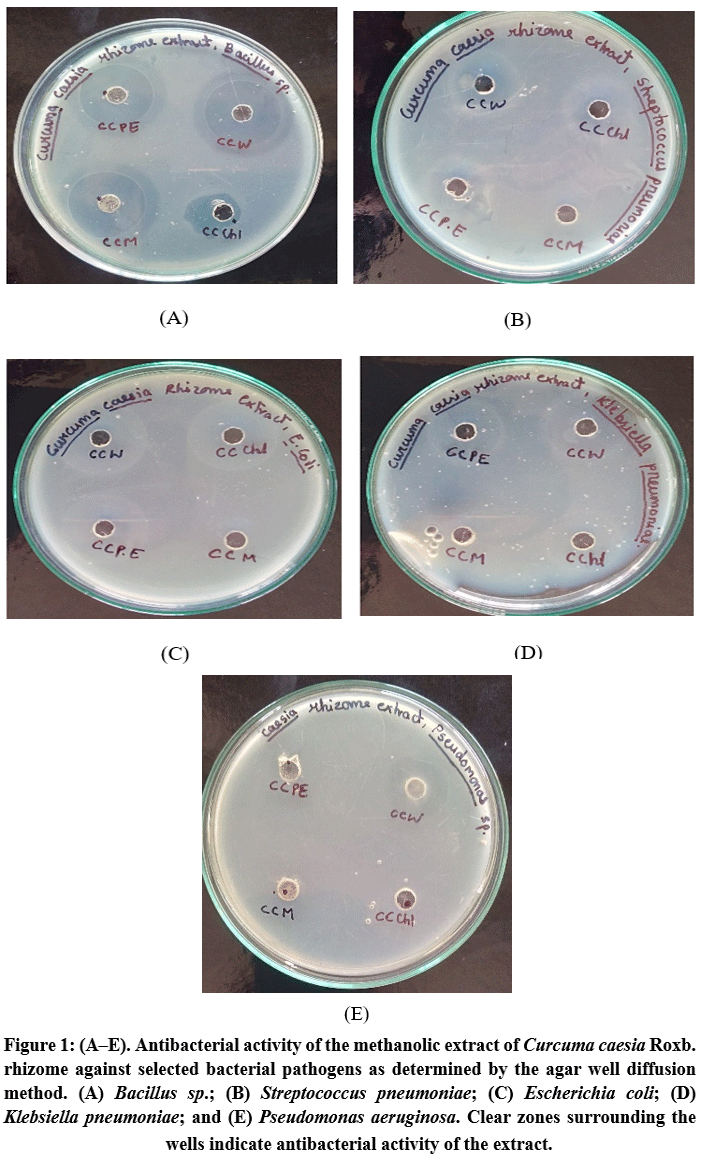 |
Figure 1: (A–E). Antibacterial activity of the methanolic extract of Curcuma caesia Roxb. rhizome against selected bacterial pathogens as determined by the agar well diffusion method.
|
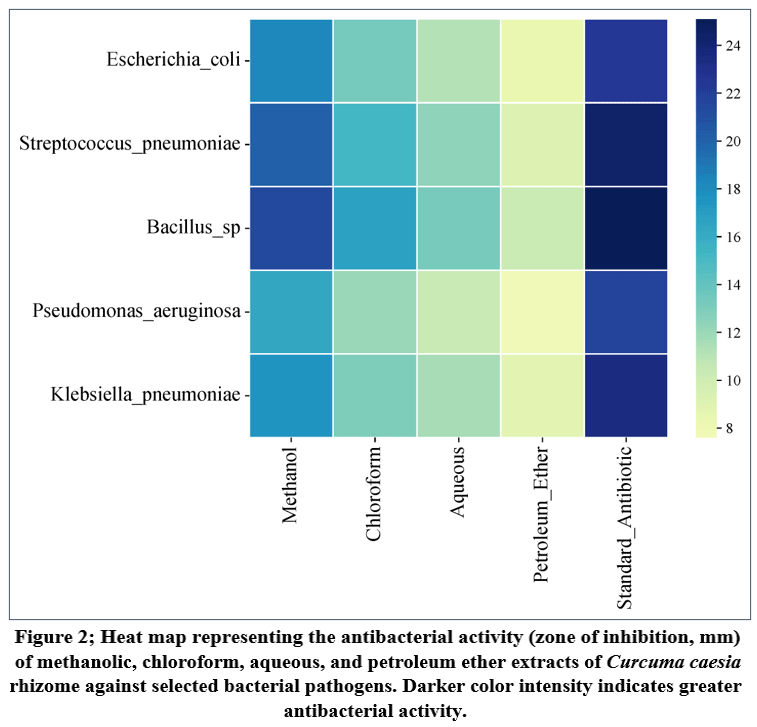 |
Figure 2: Heat map representing the antibacterial activity (zone of inhibition, mm) of methanolic, chloroform, aqueous, and petroleum ether extracts of Curcuma caesia rhizome against selected bacterial pathogens.
|
Discussion
The antibacterial activity of Curcuma caesia Roxb. rhizome extracts obtained using different solvents was evaluated against selected pathogenic bacterial strains. A clear variation in antibacterial response was observed depending on the solvent used and the bacterial species tested. Among all extracts, the methanolic extract demonstrated the strongest antibacterial activity, producing prominent zones of inhibition against both Gram-positive (Streptococcus pneumoniae and Bacillus sp.) and Gram-negative (Escherichia coli, Pseudomonas aeruginosa, and Klebsiella pneumoniae) bacteria. Methanol is known for its efficiency in extracting polar bioactive compounds such as phenolics, flavonoids, and curcuminoids, which possess well-documented antimicrobial properties. Similar observations have been reported in earlier studies on Curcuma species, where methanolic extracts exhibited superior antibacterial efficacy.18,19 The chloroform extract showed moderate antibacterial activity, particularly against Gram-positive bacteria. This activity may be attributed to the presence of terpenoids and essential oil constituents such as camphor and turmerones, which are known to disrupt bacterial cell membranes and interfere with metabolic processes.20,21,28 The aqueous extract exhibited mild antibacterial activity, which supports the traditional use of water-based preparations in ethnomedicine, although the extraction efficiency of bioactive compounds is comparatively lower. The petroleum ether extract showed minimal antibacterial activity, indicating that highly non-polar compounds may contribute less to antimicrobial action. A notable observation was the higher susceptibility of Gram-positive bacteria compared to Gram-negative bacteria. This difference is primarily due to the outer lipopolysaccharide membrane present in Gram-negative bacteria, which restricts the penetration of antimicrobial compounds.22,27 Overall, the antibacterial activity observed in this study corroborates the traditional medicinal use of C. caesia rhizomes in treating microbial infections. The synergistic action of multiple phytochemicals present in the extracts may enhance antibacterial efficacy while reducing the likelihood of resistance development. These findings suggest that Curcuma caesia holds promise as a natural antibacterial agent and warrants further investigation. Comparative studies on related Curcuma species have also demonstrated significant antibacterial potential associated with the presence of phenolics, flavonoids, terpenoids, and essential oils. Curcuma longa and Curcuma zedoaria have been reported to exhibit antimicrobial activity against both Gram-positive and Gram-negative bacteria due to curcuminoids and volatile oil constituents.23 Similarly, essential oil extracted from Curcuma caesia leaves showed strong antimicrobial and antioxidant properties attributed to compounds such as camphor, ar-turmerone, and 1,8-cineole.24-26 The comparatively higher antibacterial activity observed in methanolic extracts in the present study may therefore be associated with enhanced extraction of polar phytochemicals, including flavonoids and phenolic compounds. These findings collectively support the medicinal significance of Curcuma species as potential sources of natural antimicrobial agents.
Conclusion
The present investigation confirms that Curcuma caesia Roxb. rhizome possesses considerable antibacterial activity against selected pathogenic bacterial strains. Among the different solvent extracts, the methanolic extract exhibited the highest antibacterial potential, followed by chloroform and aqueous extracts, while petroleum ether extract showed the least activity. The enhanced efficacy of polar extracts highlights the significant role of phytochemicals such as phenolics, flavonoids, and curcuminoids in antibacterial action. Gram-positive bacteria were found to be more sensitive than Gram-negative bacteria, which may be attributed to differences in cell wall architecture. The results provide scientific support for the traditional use of black turmeric in the treatment of infections and emphasize its potential as a natural alternative to synthetic antimicrobial agents.
In view of the global challenge posed by antimicrobial resistance, Curcuma caesia emerges as a valuable medicinal plant with promising therapeutic relevance. However, further studies involving minimum inhibitory concentration, toxicity evaluation, and isolation of active constituents are necessary to explore its full pharmaceutical potential. Conservation and sustainable utilization strategies are also essential to protect this medicinally important species.
Acknowledgement
Authors would like to express their sincere gratitude to the Principals, of respective colleges for provided necessary laboratory facilities.
Funding Sources
The author(s) received no financial support for the research, authorship, and/or publication of this article.
Conflict of Interest
The authors do not have any conflict of interest.
Data Availability Statement
This statement does not apply to this article.
Ethics Statement
This research did not involve human participants, animal subjects, or any material that requires ethical approval.
Informed Consent Statement
This study did not involve human participants, and therefore, informed consent was not required.
Clinical Trial Registration
This research does not involve any clinical trials.
Permission to reproduce material from other sources
Not Applicable.
Author Contributions
Sadhana Yashwant More: Conceptualization, Methodology, Data Collection, Analysis.
Saurav Somnath Gaikwad: Original Draft, Analysis, Writing, Resources.
References
- Borah A, Paw M, Gogoi R, et al. Chemical composition, antioxidant, anti-inflammatory, anti-microbial and in vitro cytotoxic efficacy of essential oil of Curcuma caesia leaves: An endangered medicinal plant of North East India. Industrial Crops and Products. 2019;129:448-454. https://doi.org/10.1016/j.indcrop.2018.12.035
CrossRef - Bhardwaj AK, Kashyap K, Hait M, Bera SK, Dewangan H. Physicochemical characterization of rhizome of Curcuma caesia Roxb. ES Food and Agroforestry. 2023;11:813. https://doi.org/10.30919/esfaf813
CrossRef - Chanda S, Rakholiya K, Nair R. Antibacterial activity of Curcuma caesia Roxb. against multidrug-resistant human pathogens. Asian Pacific Journal of Tropical Biomedicine. 2011;1.140-145 https://doi.org/10.13040/IJPSR.0975-8232.13(12).1000-10
- Cowan MM. Plant products as antimicrobial agents. Clinical Microbiology Reviews. 1999;12(4):564-582. https://doi.org/10.1128/cmr.12.4.564
CrossRef - Das K, Tiwari RKS, Shrivastava DK. Techniques for evaluation of medicinal plant products as antimicrobial agents: Current methods and future trends. Journal of Medicinal Plants Research. 2010;4(2):104-111. https://doi.org/10.5897/JMPR09.030
- Devi HP, Mazumder PB, Devi LP. Antioxidant and antimutagenic activity of Curcuma caesia Roxb. rhizome extracts. Toxicology Reports. 2015;2:423-428. https://doi.org/10.1016/j.toxrep.2014.12.018
CrossRef - Ghosh A. Evaluation of antibacterial properties of (Z)-7-methoxy-1,5-dihydrobenzo[c]oxepine isolated from Curcuma caesia Roxb. Journal of Plant Science Research. 2020;36:1-7.
CrossRef - Gogoi R, Loying R, Sarma N, Munda S, Lal M. Ethnopharmacological importance of Curcuma caesia Roxb. in North-East India. Journal of Ethnopharmacology. 2018;214:178-190.
- Ibrahim NN, Wan Mustapha WA, Sofian-Seng NS, et al. Medicinal properties and biological activities of Curcuma caesia Roxb.: A comprehensive review. Evidence-Based Complementary and Alternative Medicine. 2023;2023:7006565. https://doi.org/10.1155/2023/7006565
CrossRef - Juariah S, Bakar FI, Bakar MF, Endrini S, Mohamad A. Antibacterial activity of red ginger and black turmeric extracts against Klebsiella pneumoniae. Tropical Journal of Natural Product Research. 2023;7(8):1-7. https://doi.org/10.26538/tjnpr/v7i8.14
CrossRef - Julsing MK, Quax WJ, Kayser O. The engineering of medicinal plants. In: Kayser O, Quax WJ, eds. Medicinal Plant Biotechnology. Wiley-VCH. 2007:1 29. https://doi.org/10.1002/9783527619771.ch1
CrossRef - Lawand RV, Gandhi SV. Comparison of Curcuma caesia Roxb. with other commonly used Curcuma species by HPTLC. Journal of Pharmacognosy and Phytochemistry. 2013;2(4):126-131.
- Mozartha M, Diansyah MY, Merdekawati LE. Comparison of antibacterial activity of Curcuma longa and Curcuma zedoaria. Journal of Health and Dental Sciences. 2021;1(2):175-187. https://doi.org/10.54052/jhds.v1n2.p175-187
CrossRef - Sahu PK, Giri DD, Singh R, et al. Therapeutic and medicinal uses of turmeric (Curcuma longa): A review. Journal of Pharmacognosy and Phytochemistry. 2010;1:86-95.
- Sharma P, Bajaj S, Fuloria S, Porwal O, Fuloria NK. Ethnomedicinal and pharmacological uses of Curcuma caesia: A review. Pharmacognosy Reviews. 2017;11:1-7.
- Yadav RN, Agarwala M. Phytochemical analysis of some medicinal plants. Journal of Phytology. 2011;3(12):10-14.
- Ahmed S, Khan TH, Ahmad M. Antimicrobial activity of medicinal plant extracts: A review. International Journal of Pharmaceutical Sciences Review and Research. 2016;38:130-135.
CrossRef - Cushnie TPT, Lamb AJ. Recent advances in understanding the antibacterial properties of flavonoids. International Journal of Antimicrobial Agents. 2011;38(2):99-107.
CrossRef - Daglia M. Polyphenols as antimicrobial agents. Current Opinion in Biotechnology. 2012;23(2):174-181.
CrossRef - Harborne AJ. Phytochemical Methods: A Guide to Modern Techniques of Plant Analysis. Springer Science & Business Media. 1998.
- Hemaiswarya S, Kruthiventi AK, Doble M. Synergism between natural products and antibiotics. Phytomedicine. 2008;15(8):639-652.
CrossRef - Khameneh B, Iranshahy M, Soheili V, Fazly Bazzaz BS. Review on plant antimicrobials. Pharmaceutical Biology. 2019;57(1):114-126.
CrossRef - Mittal AK, Chisti Y, Banerjee UC. Synthesis of metallic nanoparticles via biological routes. Biotechnology Advances. 2013;31(2):346-356.
CrossRef - Nostro A, Germano MP, D’Angelo V, Marino A, Cannatelli MA. Extraction methods and bioautography for evaluation of medicinal plant antimicrobial activity. Letters in Applied Microbiology. 2000;30(5):379-384.
CrossRef - Pandey A, Tripathi S. Concept of standardization, extraction and phytochemical screening strategies. Journal of Pharmacognosy and Phytochemistry. 2014;2(5):115-119.
- Saleem M, Nazir M, Ali MS, et al. Antimicrobial natural products: An update on future antibiotic drug candidates. Natural Product Reports. 2010;27(2):238-254.
CrossRef - Saxena M, Saxena J, Pradhan A. Phytochemistry of medicinal plants. Journal of Pharmacognosy and Phytochemistry. 2012;1(6):168-182.
- Savoia D. Plant-derived antimicrobial compounds: Alternatives to antibiotics. Future Microbiology. 2012;7(8):979-990.https://doi.org/10.2217/fmb.12.68
CrossRef
 PlumX:
 Views: 560 Views
  PDF Downloads:
233
PDF Downloads:
233 Accepted on: 03-06-2026
Second Review by: Dr. Hasna Abdul Salam
Final Approval by: Dr. Ali Mohamed Elshafei