Evaluation of Antibacterial Activity of Ethno-Gynecological Medicinal Plants against Escherichia coli and Staphylococcus aureus
 , Saklain Mustak Saiyad2, Nisha Daxini2and Hiren Soni1*
 1Department of Environmental Science and Technology (EST), Institute of Science and Technology for Advanced Studies & Research (ISTAR), The Charutar Vidya Mandal (CVM) University, Gujarat, India.
2Department of Biotechnology, Institute of Science and Technology for Advanced Studies and Research (ISTAR), The Charutar Vidya Mandal (CVM) University, Gujarat, India.
Corresponding Author E-mail: hirenkumar.soni@cvmu.edu.in
DOI : http://dx.doi.org/10.13005/bbra/3541
Download this article as:

This study aimed to evaluate the antibacterial activity of crude methanolic extracts from twelve medicinal plants traditionally used to treat gynecological diseases. An ethno-gynecological survey identified plants commonly used for treating reproductive ailments, and their extracts were screened against common clinical pathogens, Escherichia coli ATCC 23716 and Staphylococcus aureus ATCC 6538, using the agar well diffusion method. Extracts were tested at four different concentrations (0.25 mg/mL–1 mg/mL) and compared with the standard antibiotic amikacin. A concentration-dependent increase in antibacterial activity was observed for several plants. Pterocarpus marsupium showed the highest inhibition against E. coli ATCC 23716 (6±0 mm), whereas Buchanania cochinchinensis, Dregea volubilis, Pueraria tuberosa, and Piliostigma malabaricum exhibited no activity. Against S. aureus ATCC 6538, Buchanania cochinchinensis displayed the strongest inhibition (9±0 mm), while Ougeinia dalbergioides showed minimal activity (2±0 mm). The findings support the traditional use of selected ethnomedicinal plants and highlight species with promising antibacterial potential. These results justify further research on the phytochemical components, mechanisms of action, and potential development of plant-based antibacterial agents targeting reproductive tract pathogens.
KEYWORDS:Agar well diffusion; Antibacterial; Escherichia coli; Ethno-gynecology; Medicinal plants; Staphylococcus aureus
Introduction
The study of ethnobotany, or how people use plants in their traditional cultures, remains beneficial for identifying plants with medicinal properties. Tribal and indigenous communities in India have traditionally utilized medicinal plants to treat diseases and infections. By documenting this traditional knowledge, researchers can systematically identify plant species with potential antibacterial properties. This information increases the possibility of discovering bioactive compounds with pharmacological potential because it is grounded in extensive practical use. This is supported by recent research from India. For instance, Himalayan ethnomedicinal herbs can support sustainable livelihoods in addition to treating diseases.1 A comprehensive investigation of plants used in Indian traditional medicine revealed that several of them have antibacterial properties against drug-resistant infections caused by multidrug-resistant (MDR) pathogens. These studies show that ethnobotanical knowledge remains an essential part of drug discovery.2
Plants naturally contain chemical molecules called phytochemicals that give them their color, flavor, and disease resistance. It has been demonstrated that phytochemicals provide an extensive range of health benefits and are important for human health.3 Considering the concerning increase in antimicrobial resistance (AMR), infectious diseases caused by pathogenic microorganisms continue to pose a serious threat to global health. Novel antimicrobial drugs with different modes of action are urgently needed, as many bacteria are becoming resistant to traditional antibiotics.4 In this regard, because of their chemical diversity and long history of use in traditional medical systems worldwide, plants have become a promising source of novel bioactive compounds.5
Plants used in traditional medicine contain secondary metabolites such as terpenoids, alkaloids, flavonoids, tannins, and phenolic compounds. These compounds possess antibacterial properties that act in several ways, including breaking down microbial cell membranes, inhibiting nucleic acid synthesis and deactivating microbial enzymes. Plant-based antimicrobials may be less likely to cause resistance than conventional antibiotics because they target multiple pathways.6 The integration of ethnobotanical knowledge with modern microbiological methods has become increasingly significant as a strategic approach to plant-based antimicrobial screening in recent years. This method facilitates the protection of indigenous knowledge and biodiversity while supporting the scientific validation of traditional practices.
Gynecological infections, including urinary tract infections (UTIs) and bacterial vaginosis, are commonly associated with pathogenic bacteria such as Escherichia coli and Staphylococcus aureus. These infections significantly impact women’s reproductive health and require effective antimicrobial management, highlighting the need to explore plant-based therapeutic alternatives. E. coli is a major causative agent of UTIs, while S. aureus is frequently linked to vaginal and opportunistic infections; therefore, these pathogens were selected as representative organisms to evaluate the antibacterial potential of the selected medicinal plants.
The evaluation of antimicrobial activity is crucial for the discovery of new therapeutic agents, particularly in the face of increasing antibiotic resistance. Antimicrobial assays test the ability of a compound, extract or substance to inhibit the growth of or kill pathogenic microorganisms such as bacteria. The antimicrobial effects of medicinal plants traditionally used by tribal populations in Dharampur Taluka of Gujarat, India, are the focus of this study. To treat gynecological diseases, these communities rely on herbal remedies. Plant samples were selected based on interviews with traditional healers and ethnobotanical surveys. Standard antimicrobial assays, including the agar well diffusion method, were used to evaluate the antibacterial activity of crude methanolic extracts against E. coli and S. aureus bacterial strains.7
Materials and Methods
Collection of Plant Material
Medicinal plants traditionally used by tribal communities for the treatment of gynecological diseases were studied and documented. A total of twelve plant species belonging to different families were collected in the winter season (January) from Dharampur (20.5401° N, 73.1792° E), Gujarat, India. For phytochemical analysis, the collected plant samples were thoroughly washed with distilled water and dried under shade conditions. The shade-dried material was then used for the extraction of crude phytochemicals using the Soxhlet extraction method.8
Extraction of crude phytochemicals
The crude methanolic extract was prepared by extracting 10 g of dried plant powder in 100 mL of methanol (Loba Chemie Pvt. Ltd., India) using a Soxhlet apparatus (Borosil Scientific Ltd., India) for 24 hours. The extract was filtered and dried, and the dried residue was stored at 4°C in airtight bottles.9
Well diffusion assay
Luria Bertani (LB) agar (Himedia Laboratories) containing 3% agar was prepared in distilled water and poured into sterile Petri plates. The plates were allowed to cool for agar solidification. Top agar was prepared separately with 1% agar using the same medium. Culture suspensions of E. coli ATCC 23716 and S. aureus ATCC 6538 were activated in LB broth (Himedia Laboratories).10 Then, 100 μL of each culture was mixed with the top agar and poured over the LB plates, which were allowed to solidify. Wells were punched (4 mm diameter) in the agar plates using a sterile cork borer and 50 μL of each plant extract at four different concentrations (0.25, 0.50, 0.75, and 1.00 mg/mL) were loaded into the wells. The plates were incubated at 37°C overnight in an incubator (REMI, India). The next day, the zones of inhibition (ZOI) observed around the wells were measured in millimeters (mm). The same procedure was followed using amikacin as the standard antibiotic for comparison. All experiments were performed in triplicate, and results are expressed as mean ± standard deviation. Statistical analysis was performed using one-way analysis of variance (ANOVA) to evaluate differences between concentrations. A p-value of less than 0.05 was considered statistically significant.11,12
Results
Methanolic extracts of medicinal plants traditionally used for the treatment of gynecological diseases were evaluated for antibacterial activity against E. coli ATCC 23716 and S. aureus ATCC 6538. The antibacterial potential of the selected medicinal plant extracts against both E. coli and S. aureus was confirmed using the agar well diffusion method.
Table 1 presents the antibacterial activity of twelve plant extracts evaluated at four different concentrations against E. coli. A concentration-dependent increase in antibacterial activity was observed in the tested strains. The methanolic extract of Pterocarpus marsupium (Roxb.) exhibited the highest antibacterial activity, with a zone of inhibition of 6±0 mm against E. coli ATCC 23716 (Figure 2). In contrast, Buchanania cochinchinensis, Dregea volubilis, Pueraria tuberosa, and Piliostigma malabaricum showed no inhibition even at higher concentrations. The antibacterial activity of the plant extracts remained lower than that of the standard antibiotic amikacin, which showed ZOI ranging from 9-14 mm against E. coli ATCC 23716 (Figure 1). One-way ANOVA revealed that the increase in antibacterial activity with increasing concentrations was statistically significant (p < 0.05) for the active plant extracts (Pterocarpus marsupium, Schleichera oleosa, and Prosopis cineraria).
Table 1: Antibacterial activity of methanolic extracts of selected medicinal plants against E. coli ATCC 23716 at different concentrations determined by agar well diffusion method.
| Sr. no | Name of Plant | Concentration in mg/mL | ||||
| Control
(Methanol) |
0.25 | 0.50 | 0.75 | 1 | ||
| Inhibition in mm (mean ± SD (n = 3)) | ||||||
| 1 | Amikacin (Antibiotic) | 0 | 9±0 | 12±0.6 | 13±0 | 14±0.6 |
| 2 | Pterocarpus marsupium (Roxb.) | 0 | 1±0 | 3±0 | 5±0.6 | 6±0 |
| 3 | Boerhavia verticillate Poir. | 0 | 1±0 | 2±0 | 2±0.6 | 2±0 |
| 4 | Schleichera oleosa (Lour.) | 0 | 3±0 | 3±0.6 | 4±0 | 5±0 |
| 5 | Prosopis cineraria (L.) | 0 | 1±0 | 2±0 | 3±0 | 5±0.6 |
| 6 | Buchanania cochinchinensis (Lour.) | 0 | 0 | 0 | 0 | 0 |
| 7 | Dregea volubilis (L.f.) Benth. ex-Hook f. | 0 | 0 | 0 | 0 | 0 |
| 8 | Pueraria tuberose (Roxb.) | 0 | 0 | 0 | 0 | 0 |
| 9 | Piliostigma malabaricum (Roxb.) | 0 | 0 | 0 | 0 | 0 |
| 10 | Ougeinia dalbergioides (Benth.) | 0 | 0 | 1±0 | 1±0 | 1±0 |
| 11 | Millettia racemose (Roxb.) Benth. | 0 | 0 | 0 | 1±0 | 2±0 |
| 12 | Helicteres isora (Linn.) | 0 | 0 | 0 | 2±0 | 3±0 |
| 13 | Sterculia villosa Roxb. | 0 | 0 | 0 | 1±0 | 2±0 |
Note: Values are expressed as mean ± SD (n = 3). Statistical significance was determined using one-way ANOVA (p < 0.05).
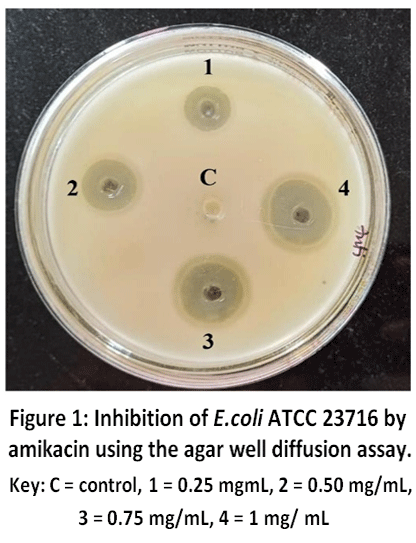 |
Figure 1: Inhibition of E.coli ATCC 23716 by amikacin using the agar well diffusion assay.Click here to view Figure |
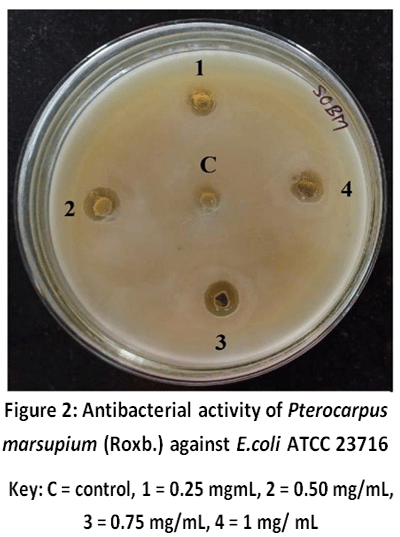 |
Figure 2: Antibacterial activity of Pterocarpus marsupium (Roxb.) against E.coli ATCC 23716
|
Table 2 presents the antibacterial activity of plant extracts against S. aureus ATCC 6538. A concentration-dependent increase in antibacterial activity was also observed against this strain. The methanolic extract of Buchanania cochinchinensis exhibited the highest antibacterial activity, with a 9±0 mm zone of inhibition (Figure 4), whereas Boerhavia verticillata Poir. and Ougeinia dalbergioides showed the lowest activity, with a 2±0 mm zone of inhibition. The antibacterial activity of all plant extracts remained lower than that of the standard antibiotic amikacin, which exhibited zones of inhibition ranging from 10-19 mm against S. aureus (Figure 3). One-way ANOVA analysis indicated that the antibacterial activity increased significantly with increasing concentrations for most of the tested plant extracts, including Buchanania cochinchinensis, Helicteres isora, Schleichera oleosa, Prosopis cineraria, Pterocarpus marsupium, Piliostigma malabaricum, Sterculia villosa, and Pueraria tuberosa (p < 0.05).
Table 2: Antibacterial efficacy of methanolic extracts from selected medicinal plants against S. aureus ATCC 6538 at varying concentrations, evaluated using the agar well diffusion method.
| Sr. no | Name of Plant | Concentration in mg/mL | ||||
| Control
(Methanol) |
0.25 | 0.5 | 0.75 | 1 | ||
| Inhibition in mm | ||||||
| 1 | Amikacin (Antibiotic) | 0 | 10±0.6 | 14±0 | 16±0.6 | 19±0 |
| 2 | Prosopis cineraria (L.) | 0 | 1±0 | 3±0 | 5±0 | 4±0.6 |
| 3 | Boerhavia verticillate Poir. | 0 | 0 | 0 | 2±0 | 2±0 |
| 4 | Buchanania cochinchinensis (Lour.) | 0 | 4 ±0 | 5±0.6 | 7±0 | 9±0 |
| 5 | Dregea volubilis (L.f.) Benth. ex-Hook f. | 0 | 0 | 0 | 2±0 | 4±0 |
| 6 | Helicteres isora (Linn.) | 0 | 1±0 | 3±0 | 5±0 | 6±0 |
| 7 | Millettia racemose (Roxb.) Benth. | 0 | 0 | 2±0 | 3±0 | 3±0 |
| 8 | Ougeinia dalbergioides (Benth.) | 0 | 0 | 0 | 1±0 | 2±0 |
| 9 | Piliostigma malabaricum (Roxb.) | 0 | 3±0 | 4±0 | 5±0 | 6±0 |
| 10 | Pterocarpus marsupium (Roxb.) | 0 | 3±0 | 4±0 | 4±0 | 5±0 |
| 11 | Pueraria tuberose (Roxb.) | 0 | 0 | 2±0 | 3±0 | 5±0 |
| 12 | Schleichera oleosa (Lour.) | 0 | 2±0 | 3±0 | 5±0 | 7±0 |
| 13 | Sterculia villosa Roxb. | 0 | 1±0 | 3±0 | 4±0 | 5±0 |
Note: Values are expressed as mean ± SD (n = 3). Statistical significance was determined using one-way ANOVA (p < 0.05).
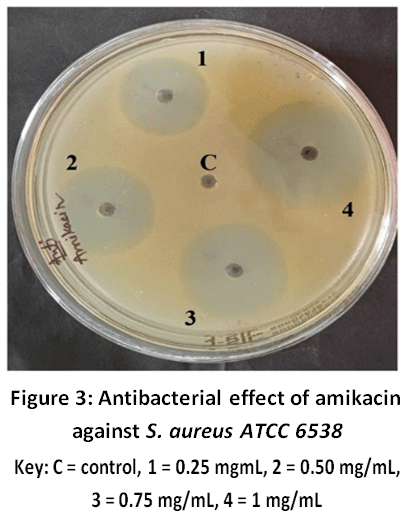 |
Figure 3: Antibacterial effect of amikacin against S. aureus ATCC 6538
|
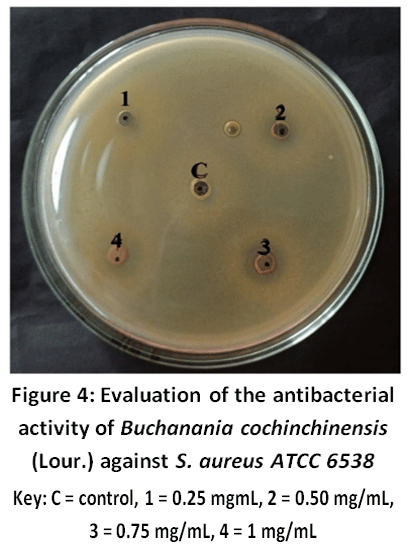 |
Figure 4: Evaluation of the antibacterial activity of Buchanania cochinchinensis (Lour.) against S. aureus ATCC 6538
|
Discussion
The observed antibacterial activity of the methanolic plant extracts may be attributed to the presence of bioactive compounds such as flavonoids and phenolics, as identified in the phytochemical analysis. The strong antibacterial effect of Pterocarpus marsupium (Roxb.) supports its traditional use in treating bacterial infections.
These findings are consistent with previous reports. One study demonstrated that methanolic extracts of Pterocarpus marsupium exhibited antimicrobial activity against Salmonella typhi and Enterococcus faecalis, with MIC values of 12.5 µg/mL and 25 µg/mL, respectively.13 Similarly, another study reported inhibitory effects of methanolic bark extracts of Pterocarpus marsupium against S. aureus, with zones of inhibition ranging from 15.86 to 22.50 mm.14 Comparable antimicrobial activity against E. coli has also been reported for zinc oxide nanoparticles synthesized using Pterocarpus marsupium.15 Additionally, stem wood extracts of Pterocarpus marsupium have shown activity against multiple pathogens, including E. coli.16
The antibacterial activity of Buchanania cochinchinensis against S. aureus observed in the present study aligns with earlier findings. Previous studies have demonstrated the antimicrobial potential of methanolic extracts from Buchanania species against S. aureus, indicating effective antibacterial properties.17 A recent study further reported the significant inhibition of S. aureus by bark extracts of Buchanania cochinchinensis, with inhibition zones around 15 mm, supporting its traditional medicinal use.18
The concentration-dependent increase in antibacterial activity, supported by statistical analysis (one-way ANOVA, p < 0.05), indicates a dose-responsive effect of the plant extracts. This suggests that the observed activity is not random but is associated with the increasing concentration of bioactive phytochemicals. The variation in antibacterial activity among different plant extracts may be attributed to differences in the type and concentration of phytochemical constituents.
The persistence of traditional medicinal practices highlights the strong link between indigenous health systems and women’s reproductive well-being in rural India. Ethno-gynecological knowledge is commonly transmitted orally through midwives, elderly women, and traditional healers, ensuring the continuity of indigenous healthcare practices in regions with limited access to modern medical facilities. The inhibition zones observed in this study confirm that the investigated plants possess promising antibacterial activity, validating their traditional use in the treatment of microbial infections. These results are consistent with ethnobotanical and pharmacological studies reporting that Indian medicinal plants contain bioactive phytochemicals such as flavonoids, alkaloids, phenols, and terpenoids responsible for antibacterial effects.19
This study provides preliminary insights based on in vitro antibacterial screening using crude methanolic extracts. However, further studies involving the determination of minimum inhibitory concentration (MIC), isolation and characterization of active compounds, and evaluation using clinical isolates and in vivo models are required to validate and extend these findings.
Conclusion
Among the twelve medicinal plants evaluated in this study for their antimicrobial activity against E. coli ATCC 23716 and S. aureus ATCC 6538 using the agar well diffusion method, Pterocarpus marsupium and Buchanania cochinchinensis emerged as the most effective. The methanolic extract of Pterocarpus marsupium exhibited a maximum zone of inhibition of 6 mm against E. coli, whereas Buchanania cochinchinensis showed a 9 mm inhibition zone against S. aureus. These results indicate that both plants possess broad-spectrum antibacterial properties, likely attributable to the presence of phytochemicals such as flavonoids, alkaloids, tannins, and saponins. Pterocarpus marsupium and Buchanania cochinchinensis represent promising candidates for further investigation, including the isolation of active compounds and evaluation through in vivo and clinical studies. Their antibacterial activity, particularly against clinically relevant pathogens like E. coli and S. aureus, underscores the value of ethno-gynecological knowledge and highlights the importance of these species in future phytopharmaceutical research.
Acknowledgement
The authors express their sincere gratitude to The Charutar Vidya Mandal (CVM) University for providing the necessary facilities to carry out this research work. Special thanks are extended to the Principal, ISTAR, for his continuous support and for providing essential resources throughout the study.
Funding Sources
The author(s) received no financial support for the research, authorship, and/or publication of this article.
Conflict of Interest
The authors do not have any conflict of interest.
Data Availability Statement
This statement does not apply to this article.
Ethics Statement
This research did not involve human participants, animal subjects, or any material that requires ethical approval.
Informed Consent Statement
This study did not involve human participants, and therefore, informed consent was not required.
Clinical Trial Registration
This research does not involve any clinical trials.
Permission to reproduce material from other sources
Not Applicable.
Author Contributions:
- Samta Mahyavanshi: Writing-Original Draft Preparation, Methodology, Data Collection, Visualization.
- Saklain Mustak Saiyad: Writing-Review & Editing.
- Nisha Daxini: Supervision, Data verification.
- Hiren Soni: Supervision, Validation, Writing-Review & Editing.
References
- Kumar M, Rawat S, Nagar B, et al. Implementation of the use of ethnomedicinal plants for curing diseases in the Indian Himalayas and its role in sustainability of livelihoods and socioeconomic development. Int J Environ Res Public Health. 2021;18(4):1-26. https://doi.org/10.3390/ijerph18041509
CrossRef - Abdallah EM, Alhatlani BY, de Paula Menezes R, Martins CHG. Back to nature: Medicinal plants as promising sources for antibacterial drugs in the post-antibiotic era. 2023;12:3077. https://doi.org/10.3390/plants12173077
CrossRef - Muhammad A, Lawan IM, Abubakar A, Dangora II. Antimicrobial activity of Azadirachta indica (Neem) leaf extract against some clinical isolates. Dutse J Pure Appl Sci. 2019;5(1B):97-104.
- Upadhayay A, Ling J, Pal D, Xie Y, Ping FF, Kumar A. Resistance-proof antimicrobial drug discovery to combat global antimicrobial resistance threat. Drug Resist Updat. 2023;66:100890. https://doi.org/10.1016/j.drup.2022.100890
CrossRef - Newman DJ, Cragg GM. Natural products as sources of new drugs over the nearly four decades from 01/1981 to 09/2019. J Nat Prod. 2020;83(3):770-803. https://doi.org/10.1021/acs.jnatprod.9b01285
CrossRef - Pandey D, Gupta AK. Antimicrobial Secondary Metabolites from Medicinal Plants: A Boon of Nature for Mankind A Review. Biochem Mol Biol Benef Plants. 2023:21.
- Perez C, Pauli M, Bazerque P. An antibiotic assay by the agar well diffusion method. Acta Biol Med Exp. 1990;5:113-115.
- Kebede T, Gadisa E, Tufa A. Antimicrobial activities evaluation and phytochemical screening of some selected medicinal plants: A possible alternative in the treatment of multidrug-resistant microbes. PLoS One. 2021;16(3):1-16. https://doi.org/10.1371/journal.pone.0249253
CrossRef - Ayele DT, Akele ML, Melese AT. Analysis of total phenolic contents, flavonoids, antioxidant and antibacterial activities of Croton macrostachyus root extracts. BMC Chem. 2022;16(1):1-9. https://doi.org/10.1186/s13065-022-00822-0
CrossRef - Bonev B, Hooper J, Parisot J. Principles of assessing bacterial susceptibility to antibiotics using the agar diffusion method. J Antimicrob Chemother. 2008;61(6):1295-1301. https://doi.org/10.1093/jac/dkn090
CrossRef - Elisha IL, Botha FS, McGaw LJ, Eloff JN. The antibacterial activity of extracts of nine plant species with good activity against Escherichia coli against five other bacteria and cytotoxicity of extracts. BMC Complement Altern Med. 2017;17(1):133. https://doi.org/10.1186/s12906-017-1645-z
CrossRef - Gupta A, Mahajan S, Sharma R. Evaluation of antimicrobial activity of Curcuma longa rhizome extract against Staphylococcus aureus. Biotechnol Rep. 2015;6:51-55. https://doi.org/10.1016/j.btre.2015.02.001
CrossRef - Londonkar RL, Hugar AL. Physicochemical, phytochemical profiling and antimicrobial activity of Pterocarpus marsupium. Int J Pharm Sci Res. 2017;8(5):2177-2183. https://doi.org/10.13040/IJPSR.0975-8232.8(5).2177-83
CrossRef - Parihar S, Jadhav R, Poonia P, Panchak SK, Singh B. Systematic Screening of Antibacterial and Antifungal Activity of Different leaves extracts of Pterocarpus marsupium. Adv Biores. 2023;14:78-81. https://doi.org/10.15515/abr.0976-4585.14.6.7881
- Abhinaya SR, Padmini R. Biofabrication of zinc oxide nanoparticles using Pterocarpus marsupium and its biomedical applications. Asian J Pharm Clin Res. 2019;12(1):245. https://doi.org/10.22159/ajpcr.2019.v12i1.28682
CrossRef - Pant DR, Pant ND, Yadav UN, Khanal DP. Phytochemical screening and study of antioxidant, antimicrobial, antidiabetic, anti-inflammatory and analgesic activities of extracts from stem wood of Pterocarpus marsupium Roxburgh. J Intercult Ethnopharmacol. 2017;6(2):170-176. https://doi.org/10.5455/jice.20170403094055
CrossRef - Pattnaik A, Sarkar R, Sharma A, et al. Pharmacological studies on Buchanania lanzan Spreng.- A focus on wound healing with particular reference to antibiofilm properties. Asian Pac J Trop Biomed. 2013;3(12):967-974. https://doi.org/10.1016/S2221-1691(13)60187-2
CrossRef - Dixit AK, Kumar V, Maloni N, et al. Comparative Assessment of Phytochemicals, Antioxidant, and Antimicrobial Potential of Stem Bark and Small Branches of Buchanania cochinchinensis (Lour.) MR Almeida for Substitution in Ayurvedic Drugs. J Drug Res Ayurvedic Sci. 2019;4(2):72-83. https://doi.org/10.5005/jp-journals-10059-0069
CrossRef - Di Napoli M, Castagliuolo G, Badalamenti N, et al. Antimicrobial, antibiofilm, and antioxidant properties of essential oil of Foeniculum vulgare Mill. leaves. 2022;11(24). https://doi.org/10.3390/plants11243573
CrossRef
Abbreviations
E. coli: Escherichia coli
S. aureus: Staphylococcus aureus
ZOI: Zone of inhibition
mm: millimeters
UTIs: Urinary tract infections
 PlumX:
 Views: 996 Views
  PDF Downloads:
163
PDF Downloads:
163 Accepted on: 19-04-2026
Second Review by: Dr. Rahul Sable
Final Approval by: Dr. Ali Mohamed Elshafei