Terahertz Spectroscopy: Principles, Instrumentation, Techniques and Applications – A Review
 Rahul Dnyaneshwar Khaire2Chetana Sanjay Deshmukh1 and Vaishnavi Vinayak Ranade1
 1Department of Pharmaceutical Quality Assurance, PRES’s College of Pharmacy (For Women), Savitribai Phule Pune University, Pune, India
2Department of Pharmaceutical Chemistry, PRES’s College of Pharmacy (For Women), Savitribai Phule Pune University, Pune, India
Corresponding Author’s E-mail: Ladeanushka890@gmail.com
Download this article as:
ABSTRACT:Terahertz (THz) spectroscopy is an analytical technique for investigating low-energy physical, chemical, and biological processes in the spectral region between microwave and infrared radiation. It is particularly sensitive to collective molecular motions, intermolecular interactions, lattice dynamics, and charge-carrier behavior. Terahertz time-domain spectroscopy (THz-TDS) enables coherent measurement of the temporal electric field, providing amplitude and phase information and allowing estimation of refractive index and absorption coefficient. Because THz radiation is non-ionizing and can penetrate many dry, non-polar materials, it is useful for non-destructive analysis. Applications include pharmaceutical characterization, material analysis, biomedical investigations, imaging, and industrial quality assessment. In pharmaceutical science, THz methods have been investigated for polymorph identification, coating evaluation, and monitoring of manufacturing-related changes.
KEYWORDS:Biomedical imaging; Electromagnetic radiation; Frequency-domain spectroscopy; Molecular spectroscopy; Non-destructive testing (NDT); Pharmaceutical analysis; Terahertz imaging; Terahertz spectroscopy (THz spectroscopy); Terahertz time-domain spectroscopy (THz-TDS)
Introduction
Background of the Topic
The terahertz (THz) portion of the electromagnetic spectrum is commonly described as the region between microwave and infrared radiation. A frequently used range is 0.1–10 THz, corresponding approximately to wavelengths of 3 mm–30 μm and photon energies of about 0.4–33 meV. This region was historically called the “THz gap” because suitable radiation sources and detectors were less mature than those available for neighboring spectral bands. The availability of ultrafast femtosecond lasers led to efficient broadband THz generation and coherent detection through photoconductive antennas and electro-optic sampling 1,2. These developments established THz-TDS as a major platform for spectroscopy. The THz region contains signatures associated with molecular rotations, crystal phonons, hydrogen-bond dynamics, and charge-carrier motion, giving the technique broad scientific relevance 1.
THz photons have relatively low energies and are therefore non-ionizing, which is advantageous when investigating biological and other sensitive samples.3 Many dry, non-polar substances, including paper, polymers, textiles, and wood, transmit THz radiation sufficiently well for non-destructive inspection and imaging.1 In contrast, water absorbs THz radiation strongly, making the technique highly responsive to changes in tissue hydration.3 Pharmaceutical studies have used THz measurements to distinguish crystalline and amorphous materials, examine polymorphism, and follow crystallization because low-frequency intermolecular modes are sensitive to solid-state structure.4 Distinct spectral features have been reported for compounds such as carbamazepine, indomethacin, and theophylline.5 Industrial applications include assessment of coating layers and other quality-control measurements.4
Several limitations still influence routine THz measurements. Atmospheric water vapor produces pronounced absorption features and may require dry-nitrogen purging or a controlled-vacuum environment. THz emitters can also provide lower output power than many microwave or optical sources, which can reduce signal-to-noise ratio and penetration capability. In addition, diffraction limits the spatial resolution of conventional far-field THz imaging; at around 1 THz, the resolution is typically on the order of several hundred micrometers.1
Problem Statement / Research Question
Although THz spectroscopy has demonstrated considerable analytical potential, several factors restrict wider implementation. Interpretation of complex THz spectra can be challenging because the observed bands frequently arise from collective and intermolecular motions rather than isolated functional groups. These signals can change with crystal packing, temperature, and humidity, making spectral assignment more context-dependent than in many mid-infrared applications.1 Computational prediction of THz spectra, including density-functional-theory approaches, may also become demanding for large molecular systems and can be sensitive to the selected structural model.5 Practical measurements outside controlled laboratories are further affected by atmospheric absorption, surface scattering, and sample-preparation variability. In pharmaceutical analysis, residual water and differences in sample handling can influence repeatability.1,5
Another important requirement is faster and more portable instrumentation. Conventional THz-TDS instruments commonly use mechanically scanned optical delay stages, which restrict measurement speed. Asynchronous optical sampling (ASOPS) and electronically controlled optical sampling (ECOPS) can reduce or eliminate mechanical motion, but the associated electronics, synchronization requirements, and system cost may still limit widespread deployment.1
Objectives and Hypotheses
The main objective is to assess the analytical capabilities of THz spectroscopy for practical material characterization, with particular consideration of pharmaceutical solids and hydrated biological systems.5 The review also considers the instrumental requirements, measurement principles, and emerging approaches that could improve the speed, portability, and quantitative performance of THz analysis.
In pharmaceutical manufacturing, a sufficiently validated THz-based process-analytical-technology (PAT) approach could support rapid monitoring and help identify process deviations before batch completion. Such applications are consistent with the broader PAT objective of obtaining timely information for improved process understanding and quality assurance.6
Brief Importance of the Study
The continued development of THz spectroscopy is relevant to both fundamental research and applied analysis. At the scientific level, the THz range provides access to low-energy collective motions and solid-state dynamics that complement information obtained by techniques such as X-ray diffraction, Raman spectroscopy, and mid-infrared spectroscopy.1 In pharmaceutical development, rapid and non-destructive THz measurements may assist in detecting solid-state changes, including polymorphic transformations that can influence product performance.4 From a manufacturing perspective, earlier detection of quality changes can support process control and reduce the consequences of failed batches.6
Biomedical interest is driven in part by the strong relationship between THz response and water content. Non-ionizing THz imaging has therefore been investigated for applications involving skin, burns, corneal hydration, and tissue characterization, including assessment of tumor margins.3 THz radiation can also pass through several common non-polar barriers, creating opportunities for security inspection and non-destructive examination of packaged materials.7
Principle
Introduction to the Principle
Terahertz spectroscopy is an analytical method based on the interaction of 0.1–10 THz electromagnetic radiation with matter.8 The region lies between the microwave and infrared bands and historically presented difficulties in source generation and detection.9 Modern ultrafast lasers and suitable photoconductive or nonlinear materials have made coherent THz measurements practical.10 Because THz photons have low energies, the radiation can couple to intermolecular interactions, lattice vibrations, molecular rotations, and other low-frequency excitations.3 These characteristics support applications in pharmaceutical science, materials research, biomedical analysis, and non-destructive inspection.4
Basic Working Principle of Terahertz Spectroscopy
THz-TDS is the principal broadband approach used in many laboratory systems because it records the electric-field waveform in the time domain and thereby provides both amplitude and phase information.5
Generation of THz Radiation
Broadband THz pulses can be produced when ultrashort femtosecond laser pulses excite a photoconductive antenna or a nonlinear optical crystal.8 In a photoconductive antenna, photo-generated carriers are accelerated by an applied electric field and produce a rapidly varying current that radiates THz energy.9 Nonlinear crystals such as ZnTe can generate THz radiation through optical rectification, in which the optical field induces a low-frequency nonlinear polarization.10
Propagation and Sample Interaction
After generation, the THz pulse is focused or otherwise directed onto the sample and measured in transmission or reflection geometry.3 The material modifies the temporal electric field through absorption, dispersion, reflection, and phase delay. Comparing the sample response with a reference measurement reveals information about the sample’s optical and dielectric properties.4
Detection of THz Radiation
In a coherent detection system, a delayed probe pulse samples the THz field at successive time points. The resulting measurements reconstruct the temporal electric-field waveform rather than only its average intensity.5
Data Analysis
The measured waveform can be transformed from the time domain into the frequency domain by Fourier analysis.11 The resulting complex spectrum can then be used to estimate quantities such as refractive index, absorption coefficient, dielectric response, and related optical parameters.1,32
Interaction of THz Waves with Matter
THz radiation couples to low-energy excitations in materials and is particularly responsive to weak interactions and collective motions that influence the arrangement of molecules and atoms.10
Dipole Interactions
Molecules with permanent or induced dipole moments can interact with the electric component of the THz field. Oscillation or reorientation of these dipoles can produce frequency-dependent absorption features.3
Intermolecular Forces
Weak forces between molecules, including hydrogen bonding and van der Waals interactions, can influence the THz response. Such interactions affect molecular packing, crystal stability, and collective motions and are therefore especially relevant to pharmaceutical solids.4
Lattice Vibrations (Phonons)
In crystalline materials, THz radiation excites phonon modes, which are collective vibrations of atoms in a lattice.5
In crystalline materials, THz radiation can excite phonon modes, representing collective oscillations of atoms or molecular units within the crystal lattice.
Charge Carrier Dynamics
In semiconductors, the THz field interacts with mobile charge carriers. Their frequency-dependent response can be described using models such as the Drude formalism, allowing parameters related to conductivity and carrier mobility to be investigated.11
Molecular Vibrations and Rotations
Rotational Transitions
Rotational transitions are especially important for gas-phase molecules, where absorption occurs between quantized rotational energy levels.8
For a simplified rigid-rotor description, the rotational energy levels can be expressed as:
E_J = B J(J + 1)
Where,
Here, B denotes the rotational constant and J is the rotational quantum number.9
Because rotational transitions occur at characteristic frequencies, their spectral positions can provide highly selective molecular information, particularly for gas-phase species.10
Vibrational Modes
Important low-frequency motions observable in the THz region include:
- Lattice vibrations (phonon modes)
- Hydrogen-bond stretching and related motions
- Torsional and rotational motions
- Collective biomolecular dynamics
These motions generally involve lower energies and more collective behavior than the localized functional-group vibrations commonly emphasized in infrared spectroscopy.4
Comparison with Infrared Spectroscopy
THz and infrared spectroscopy provide complementary information because the two methods emphasize different classes of molecular motion.5
Table 1: General comparison of THz and infrared spectroscopy
|
Property |
THz Spectroscopy | Infrared Spectroscopy |
| Typical photon energy | Lower |
Higher |
|
Dominant motions |
Intermolecular and collective | Predominantly intramolecular |
| Typical sensitivity | Crystal packing and lattice dynamics |
Functional groups and molecular bonds |
Absorption and Transmission
Absorption
Absorption is observed when the electromagnetic field couples efficiently to an allowed transition or collective excitation within the sample. The resulting frequency-dependent attenuation can form a characteristic spectral pattern that helps distinguish materials.11,1
Transmission
For a simple intensity-based description, the transmission coefficient can be written as:
T(ω) = I(ω) / I₀(ω)
Transmission measurements provide information about how strongly a sample attenuates the incident radiation and how its phase is modified.5
Optical Parameters
Analysis of the measured amplitude and phase can provide several optical and dielectric quantities, including:
- Refractive index.
- Absorption coefficient.
- Complex dielectric function.
- Optical conductivity.4
Experimental Considerations
Measurement Modes
- Transmission mode, generally suited to samples that permit adequate THz penetration.
- Reflection mode, useful for strongly absorbing or opaque samples.
- Attenuated total reflection (ATR) arrangements.
- Imaging configurations for spatially resolved measurements.3
Factors Affecting Measurements
- Absorption by atmospheric water vapor.
- Sample thickness and geometry.
- Temperature and relative humidity.
- Instrumental and environmental noise.10
Challenges and Future Scope
Important limitations include the strong absorption of THz radiation by water and the relatively high cost and complexity of some laboratory systems.9 Future work is directed toward compact sources and detectors, faster acquisition, improved imaging resolution, and data-analysis strategies that can use advanced statistical or artificial-intelligence methods.10
Instrumentation Analysis
The following section summarizes the principal components and functions of a typical Terahertz Time-Domain Spectroscopy (THz-TDS) system.
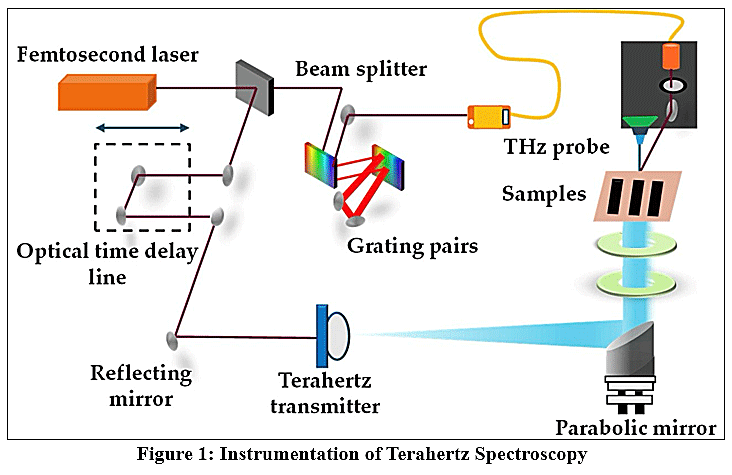 |
Figure 1: Instrumentation of Terahertz Spectroscopy Click here to View Figure |
Fundamental System Architecture
- THz spectroscopy occupies the spectral region that connects electronic microwave technologies with optical infrared systems.9,13
- A typical THz-TDS arrangement records the transient electric field of a THz pulse, rather than measuring only its average power.12,1
- Because the detection is coherent, both the phase and amplitude of the field are available. This enables simultaneous estimation of the real refractive index and absorption coefficient without relying solely on Kramers–Kronig transformations.15,25
- A mode-locked femtosecond laser provides the timing reference and is divided into excitation and sampling paths for THz generation and detection.12,17
Terahertz Sources (Emitters)
- Photoconductive antennas (PCAs) use a small electrode gap on a photoconductive semiconductor, commonly low-temperature-grown gallium arsenide (LT-GaAs).14,22
- When a laser pulse with sufficient photon energy illuminates the gap, electron–hole pairs are created. Under an applied bias, these carriers accelerate rapidly and generate a transient photocurrent.14,23
- The rapidly changing photocurrent produces a broadband electromagnetic transient in the THz region; the emitted field is related to the time variation of the carrier current.14,15
- Optical rectification is a second-order nonlinear optical process in which an intense ultrashort pulse induces a low-frequency polarization in a suitable non-centrosymmetric crystal.10,16
- ZnTe and GaP are commonly used optical-rectification crystals. Efficient generation depends on the phase relationship between the optical pulse and the generated THz wave.16,17
- Organic nonlinear crystals such as DAST can provide strong and broadband THz emission because of their large nonlinear optical response.20,21
- For continuous-wave operation, quantum-cascade lasers (QCLs) use engineered intersubband transitions in semiconductor heterostructures to produce stable, narrow-band THz radiation.19,26
Terahertz Detectors
- In coherent photoconductive detection, a synchronized optical probe pulse gates the receiving antenna and samples the incident THz field.12,22
- The incident THz electric field drives photo-generated carriers across the receiver gap, producing a current whose sign and magnitude reflect the instantaneous field.14,25
- Free-space electro-optic sampling uses the Pockels effect. The incident THz field induces a transient birefringence in an electro-optic crystal such as ZnTe.17,24
- A synchronized optical probe traversing the crystal experiences a polarization or ellipticity change that is proportional to the instantaneous THz electric field.17,18
- The polarization change can be measured with an optical polarization-analysis system containing components such as a quarter-wave plate, Wollaston prism, and balanced photodetectors.12,1
- For measurements where phase information is not required, thermal detectors such as bolometers, pyroelectric detectors, and Golay cells can measure average THz power.22,7
Beam Splitters
- Optical beam splitters divide the femtosecond laser beam into the excitation and probe arms of the instrument.21,1
- High-resistivity float-zone silicon (HRFZ-Si) is useful for manipulating THz beams because it has relatively low absorption and low dispersion over important portions of the THz range.10,27
- Depending on the optical design, HRFZ-Si components can be configured for beam splitting or combining. Their behavior is determined by their refractive index and surface properties.15,27
- Thin free-standing polymer films such as Mylar or Kapton may also be used when low-loss beam manipulation is required.28,29
Sample Holders and Environmental Elements
- Water vapor contains numerous rotational absorption lines that can strongly attenuate THz radiation, particularly across important portions of the sub-THz to few-THz range.15,30
- For this reason, the optical path is commonly enclosed and continuously purged with dry nitrogen or maintained under controlled vacuum conditions.1,12
- Many conventional window materials, including ordinary glass and several laboratory plastics, exhibit significant THz absorption and are therefore unsuitable for some sample-holder designs.10,29
- Materials such as high-density polyethylene (HDPE), polytetrafluoroethylene (PTFE/Teflon), and cyclic olefin polymers such as Topas are frequently selected because of their comparatively favorable THz transmission.2,29
- Bulk water is a strong THz absorber, making aqueous and highly hydrated samples particularly difficult to measure.3,30,31
- Liquid measurements can therefore use thin-path microfluidic cells made with THz-compatible materials such as Topas or suitable quartz configurations.3,30 Keeping the optical path short helps prevent complete attenuation of the THz signal.3,30
Data Acquisition System
The data-acquisition (DAQ) subsystem records, digitizes, and processes the weak transient signals produced by the THz detector. Because the useful signal can be small relative to electronic and environmental backgrounds, synchronized timing and low-noise electronics are important for reliable measurements.
Optical Path Delay and Sampling Mechanics
A conventional THz-TDS system uses a variable optical delay line, often based on a retroreflector mounted on a motorized translation stage, to change the arrival time of the probe pulse relative to the THz pulse.30,33,34 Scanning this delay samples the electric field sequentially in time.33,30 ASOPS and ECOPS approaches can accelerate acquisition by replacing mechanical scanning with synchronized laser or electronic timing schemes.33,35,36
Signal Modulation and Lock-In Amplification
The detector signal may be modulated with an optical chopper or an electrical bias modulation so that the desired response can be separated from slowly varying background signals.30 A transimpedance amplifier converts the small detector current into a voltage, and a lock-in amplifier referenced to the modulation frequency improves sensitivity by rejecting unrelated noise and drift.33
Digitization and Signal Processing
The lock-in output is digitized with a high-resolution analog-to-digital converter. The acquisition system synchronizes each voltage measurement with the corresponding optical-delay position or timing offset.30,33 The resulting time-domain waveform is then transferred to a computer, where Fourier transformation generates the frequency-domain spectrum.33,34
Techniques for Thz Spectroscopy
THz spectroscopy is commonly discussed over approximately 0.1–10 THz and is useful for non-ionizing and non-destructive examination of many materials. Its response is strongly influenced by collective low-frequency motions, hydrogen-bond networks, crystal-lattice vibrations, and rotational or vibrational states.
These characteristics distinguish THz measurements from techniques that primarily probe higher-energy intramolecular vibrations.
Terahertz Time-Domain Spectroscopy (THz-TDS)
THz-TDS is the most widely established broadband THz approach. It records coherent transient pulses in the time domain and uses the measured waveform to obtain spectral amplitude and phase information.41
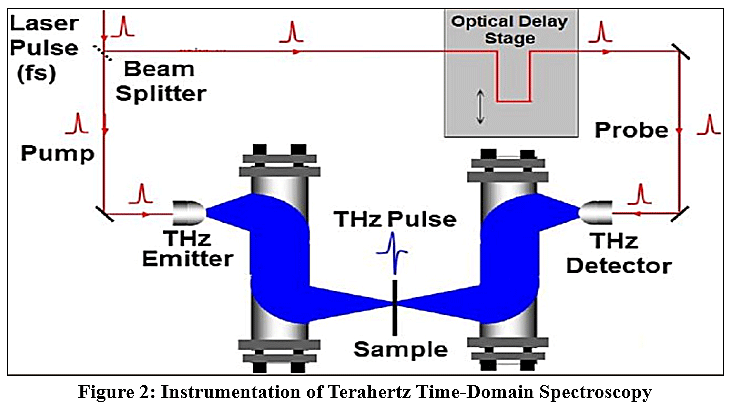 |
Figure 2: Instrumentation of Terahertz Time-Domain Spectroscopy Click here to View Figure |
Pulse generation: An ultrashort femtosecond pulse excites a photoconductive antenna or nonlinear crystal, producing a short broadband THz transient.
Coherent detection: After passing through or reflecting from the sample, the THz pulse exhibits changes in amplitude and phase.39 A controlled optical delay allows the detector to sample the electric field throughout the pulse.
Mathematical extraction: Fourier transformation of the reference and sample waveforms provides the complex transmission response. This response can be used to determine the sample’s complex refractive index and related optical constants.
n ̃(ω) = n(ω) + iκ(ω)
In this representation, n denotes the real refractive index, while the extinction coefficient is associated with the absorptive component of the material response.
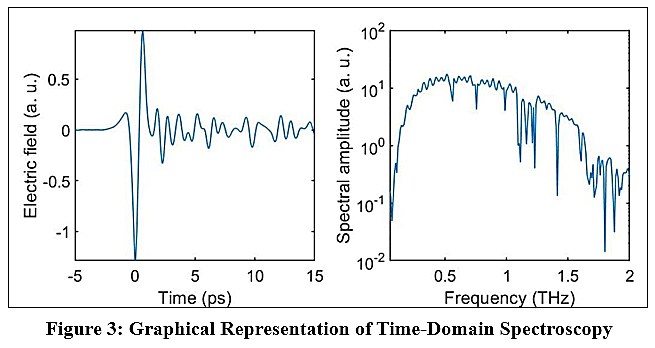 |
Figure 3: Graphical Representation of Time-Domain Spectroscopy Click here to View Figure |
Applications
Because THz-TDS is sensitive to changes in the local chemical and structural environment, it has been applied to pharmaceutical polymorph analysis, examination of geological and metallic materials, and investigation of low-energy carrier dynamics in condensed-matter systems.30,39,42
Frequency-Domain Spectroscopy (THz-FDS)
Terahertz frequency-domain spectroscopy (THz-FDS) differs from THz-TDS by using continuous-wave (CW) radiation at a selected or tunable frequency rather than recording a broadband pulse in time.33,40
Photomixing excitation: Two continuous-wave lasers with slightly different optical frequencies are combined and directed onto a fast photoconductive mixer or antenna.
Heterodyne beat generation: The frequency difference between the two optical waves produces a corresponding oscillating electrical response in the photomixer, which generates continuous THz radiation.
Spectral scanning: Varying one laser frequency changes the beat frequency and therefore scans the THz output across the desired spectral range.33,40 The approach avoids a mechanically scanned optical delay line and can provide high spectral resolution, depending on the source linewidth and system stability.
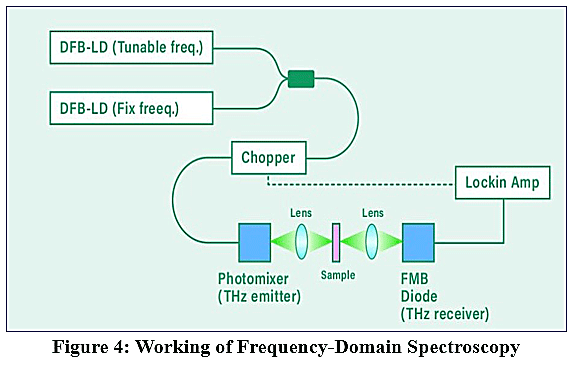 |
Figure 4: Working of Frequency-Domain Spectroscopy Click here to View Figure |
Applications
THz-FDS is particularly useful for resolving narrow absorption features, including gas-phase rotational lines, and can be applied to environmental monitoring.39,40 Integration with engineered metasurfaces has also been investigated for highly sensitive THz sensing of chemical and biological targets.
Terahertz Imaging
Terahertz imaging produces spatially resolved maps by measuring local differences in transmission, reflection, attenuation, phase, or scattering.33,38
Major Modalities
Pulsed time-domain holography and tomography: Broadband THz pulses can be time-gated to separate reflections originating at different depths. This enables depth-resolved and, with suitable reconstruction, three-dimensional imaging.
Continuous-wave and single-pixel imaging: CW systems can map the amplitude or phase at selected frequencies. Single-pixel and compressed-sensing approaches can reduce hardware requirements while supporting relatively rapid imaging.
Near-field sub-diffraction imaging: Near-field probes and scattering-type techniques can overcome the conventional far-field diffraction limit and provide much finer spatial information than standard THz imaging.33,38
Biomedical & Industrial Significance
The strong dependence of THz absorption on water content makes THz imaging particularly sensitive to hydration changes in soft tissues.33,37,38 Research has therefore explored applications such as tissue characterization, assessment of brain-tumor margins, skin-related measurements, and intraoperative diagnostics.30 In industrial and security settings, the ability of THz radiation to penetrate several non-polar materials also supports inspection of packaged or concealed objects.
Conclusion
Terahertz (THz) spectroscopy has emerged as a powerful and versatile analytical technique for investigating the structural, chemical, and physical properties of materials. Its position between the microwave and infrared regions of the electromagnetic spectrum enables the detection of low-frequency molecular vibrations, intermolecular interactions, rotational transitions, and collective motions that may not be readily observed using conventional spectroscopic techniques. The development of terahertz time-domain spectroscopy, frequency-domain spectroscopy, and terahertz imaging has significantly expanded its applications in pharmaceutical analysis, material characterization, biomedical research, security, food analysis, and quality control.
In pharmaceutical research, THz spectroscopy offers considerable potential for drug identification, polymorph and hydrate characterization, assessment of crystallinity, monitoring of intermolecular interactions, and non-destructive analysis of pharmaceutical formulations. THz imaging further provides spatial information and can be used to investigate coating thickness, tablet structure, defects, and component distribution. These capabilities make THz-based techniques particularly attractive for rapid and non-destructive quality assessment.
Despite these advantages, several challenges limit the widespread routine application of THz spectroscopy. Limited spectral databases, relatively low signal intensity, atmospheric absorption by water vapour, instrument cost, complex data interpretation, and difficulties associated with highly absorbing or heterogeneous samples remain important considerations. Advances in instrumentation, detector sensitivity, computational analysis, chemometrics, artificial intelligence, and machine-learning approaches are expected to address many of these limitations.
Overall, continued technological development and integration with complementary analytical techniques are likely to establish THz spectroscopy as an increasingly valuable tool for modern analytical science. Its non-destructive nature, sensitivity to intermolecular interactions, and ability to provide both spectroscopic and imaging information make it a promising technique for future applications in pharmaceutical quality assurance, process monitoring, material science, and biomedical analysis.
Acknowledgement
The authors acknowledge the Department of Pharmaceutical Quality Assurance, Pravara Rural Education Society’s, College of Pharmacy (For Women), Chincholi, Dist. Nashik, Maharashtra, India, for providing the necessary academic facilities and institutional support for preparation of this review article.
Funding Sources
The author(s) received no financial support for the research, authorship, and/or publication of this article.
Conflict of Interest
The authors do not have any conflict of interest.
Data Availability Statement
This statement does not apply to this article.
Ethics Statement
This research did not involve human participants, animal subjects, or any material that requires ethical approval.
Informed Consent Statement
This study did not involve human participants, and therefore, informed consent was not required.
Clinical Trial Registration
This research does not involve any clinical trials.
Permission to reproduce material from other sources
Not Applicable.
Author Contributions:
- Anushka Nitin Lade: Conceptualization, Literature Review, Methodology, Writing – Original Draft.
- Rahul Dnyaneshwar Khaire: Supervision, Methodology, Writing – Review & Editing.
- Chetana Sanjay Deshmukh: Literature Review, Data Curation, Writing – Review & Editing.
- Vaishnavi Vinayak Ranade: Literature Review, Data Curation, Writing – Review & Editing.
References
- Jepsen PU, Cooke DG, Koch M. Terahertz spectroscopy and imaging—modern techniques and applications. Laser Photonics Rev. 2011;5(1):124-166.
CrossRef - Fischer B, Hoffmann M, Helm H, Modjesch G, Jepsen PU. Chemical recognition in terahertz time-domain spectroscopy and imaging. Semicond Sci Technol. 2005;20(7):S246.
CrossRef - Pickwell E, Wallace VP. Biomedical applications of terahertz technology. J Phys D Appl Phys. 2006;39(17):R301.
CrossRef - Zeitler JA, Taday PF, Newnham DA, Pepper M, Gordon KC, Rades T. Terahertz pulsed spectroscopy and imaging in the pharmaceutical setting. J Pharm Pharmacol. 2007;59(2):209-223.
CrossRef - Shen YC. Terahertz pulsed spectroscopy and imaging for pharmaceutical applications. Int J Pharm. 2011;417(1-2):48-60.
CrossRef - US Food and Drug Administration. Guidance for industry: PAT—A framework for innovative pharmaceutical development, manufacturing, and quality assurance. Published September 2004.
- Kemp MC. Explosives detection by terahertz spectroscopy. IEEE Trans Terahertz Sci Technol. 2011;1(1):282-292.
CrossRef - Siegel PH. Terahertz technology. IEEE Trans Microw Theory Tech. 2002;50(3):910-928.
CrossRef - Tonouchi M. Cutting-edge terahertz technology. Nat Photonics. 2007;1(2):97-105.
CrossRef - Ferguson B, Zhang XC. Materials for terahertz science and technology. Nat Mater. 2002;1(1):26-33.
CrossRef - Markelz AG. Terahertz dielectric sensitivity. IEEE J Sel Top Quantum Electron. 2008;14(1):180-190.
CrossRef - Neu J, Schmuttenmaer CA. Tutorial: an introduction to terahertz time domain spectroscopy (THz-TDS). J Appl Phys. 2018;124(23):231101.
CrossRef - Dhillon SS, Vitiello MS, Linfield EH, et al. The 2017 terahertz science and technology roadmap. J Phys D Appl Phys. 2017;50(4):043001.
CrossRef - Smith PR, Auston DH, Nuss MC. Subpicosecond photoconducting dipole antennas. IEEE J Quantum Electron. 1988;24(2):255-260.
CrossRef - Grischkowsky D, Keiding S, van Exter M, Fattinger C. Far-infrared time-domain spectroscopy with terahertz beams of dielectrics and semiconductors. J Opt Soc Am B. 1990;7(10):2006-2015.
CrossRef - Zhang XC, Jin Y, Ma XF. Coherent sub-picosecond terahertz electromagnetic radiation from electro-optic crystals. Appl Phys Lett. 1992;61(23):2764-2766.
CrossRef - Wu Q, Zhang XC. Free-space electro-optic sampling of terahertz beams. Appl Phys Lett. 1995;67(24):3523-3525.
CrossRef - Hebling J, Almasi G, Kozma IZ, Kuhl J. Velocity matching by pulse front tilting for large-area THz-pulse generation. Opt Express. 2002;10(21):1161-1166.
CrossRef - Williams BS. Terahertz quantum-cascade lasers. Nat Photonics. 2007;1(9):517-525.
CrossRef - Schneider A, Neis M, Stillhart M, Ruiz B, Khan RU, Günter P. Organic nanocrystals DAST for efficient terahertz emission. J Opt Soc Am B. 2006;23(9):1822-1835.
CrossRef - Cunningham PD, Valdes NN, Vallejo JA, et al. Broadband terahertz generation and detection in organic crystals. J Appl Phys. 2011;109(4):043505.
CrossRef - Tani M, Matsuura S, Sakai K, Hangyo M. Emission characteristics of photoconductive antennas based on low-temperature-grown GaAs. IEEE Microw Guided Wave Lett. 1997;7(9):282-284.
CrossRef - Castro-Camus E, Alfaro IF. Photoconductive devices for terahertz pulsed spectroscopy: a review. Photonics Res. 2016;4(3):A36-A42.
CrossRef - Nahata A, Auston DH, Heinz TF, Wu Q. Coherent detection of high-frequency terahertz radiation with GaAs as an electro-optic crystal. Appl Phys Lett. 1996;69(16):2321-2323.
CrossRef - Van Exter M, Grischkowsky D. Characterization of an optoelectronic terahertz beam system. IEEE Trans Microw Theory Tech. 1990;30(11):1684-1691.
CrossRef - Davies AG, Linfield EH, Johnston MB. The development of terahertz sources and detectors. Physiol Meas. 2002;23(4):R1.
- Hangyo M, Tani M, Nagashima T. Terahertz time-domain spectroscopy of solids: an overview. Int J Infrared Millim Waves. 2005;26(12):1661-1690.
CrossRef - Naftaly M, Miles RE. Terahertz time-domain spectroscopy of silicate, borate, and phosphate glasses. J Non Cryst Solids. 2007;353(22):2268-2273.
- Dai J, Zhang J, Zhang W, Grischkowsky D. Terahertz time-domain spectroscopy characterization of polymers. J Chem Phys. 2004;120(17):8183-8189.
- Rønne C, Thrane L, Åstrand PO, Wallqvist A, Mikkelsen KV, Keiding SR. Investigation of the dynamics of liquid water by THz time-domain spectroscopy and molecular dynamics simulations. J Chem Phys. 1997;107(14):5319-5331.
CrossRef - Kindt JT, Schmuttenmaer CA. Far-infrared dielectric properties of polar liquids measured by femtosecond THz pulse spectroscopy. J Phys Chem. 1996;100(24):10373-10379.
CrossRef - Duvillaret L, Garet F, Coutaz JL. A reliable method for extraction of material parameters in terahertz time-domain spectroscopy. IEEE J Sel Top Quantum Electron. 1996;2(3):739-746.
CrossRef - Jepsen PU, Keiding SR. Radiation patterns from photoconductive THz transmitters. Opt Lett. 1996;21(13):1046-1048.
- Zhao G, Schouten RN, van der Valk N, Wenckebach WT, Planken PCC. Design and performance of a THz time-domain spectrometer. Rev Sci Instrum. 2002;73(4):1715-1719.
CrossRef - Bartels A, Thoma A, Janke C, Dekorsy T, Kirste A. High-speed terahertz time-domain spectroscopy based on asynchronous optical sampling using a single laser. Opt Express. 2006;14(10):4338-4344.
- Glidic S, Eliet S, Lampin JF, Roussel G, Ducournau G. High-dynamic range and fast data acquisition setups for terahertz spectroscopy. IEEE Trans Terahertz Sci Technol. 2019;9(6):612-620.
- Chernomyrdin NV, Musina GR, Nikitin PV, et al. Terahertz technology in intraoperative neurodiagnostics: a review. Opto Electron Adv. 2023;6(2):220071. doi:10.29026/oea.2023.220071
CrossRef - Cong M, Li W, Liu Y, et al. Biomedical application of terahertz imaging technology: a narrative review. Quant Imaging Med Surg. 2023;13(12):8768-8786. doi:10.21037/qims-23-526
CrossRef - Huang S, Deng H, Wei X, Zhang J. Progress in application of terahertz time-domain spectroscopy for pharmaceutical analyses. Front Bioeng Biotechnol. 2023;11:1219042. doi:10.3389/fbioe.2023.1219042
CrossRef - Lu PK, Jarrahi M. Frequency-domain terahertz spectroscopy using long-carrier-lifetime photoconductive antennas. Opt Express. 2023;30(6):9319-9329. doi:10.1364/OE.483746
CrossRef - Noe GT, Katayama I, Katsutani F, et al. Single-shot terahertz time-domain spectroscopy in pulsed high magnetic fields. Opt Express. 2016;24(26):30328. doi:10.1364/OE.24.030328
CrossRef - Zhang J, Huang H, Zhao P, et al. Terahertz time-domain spectroscopic characteristics of typical metallic minerals. 2024;29(3):648. doi:10.3390/molecules29030648
CrossRef
Abbreviations
THz Terahertz
THz-TDS Terahertz Time-Domain Spectroscopy
FDS Frequency-Domain Spectroscopy
CW Continuous Wave
EO Electro-Optic
PC Photoconductive
FTIR Fourier Transform Infrared
IR Infrared
NIR Near-Infrared
UV Ultraviolet
XRD X-ray Diffraction
FEL Free-Electron Laser
SNR Signal-to-Noise Ratio
QCL Quantum Cascade Laser
RMS Root Mean Square
PCA Principal Component Analysis
ATR Attenuated Total Reflection
TDS Time-Domain Spectroscopy
EM Electromagnetic
API Active Pharmaceutical Ingredient
PAT Process Analytical Technology
Accepted on: 17-09-2026
Second Review by: Dr. Supriya Mhamane
Final Approval by: Dr. Mohammad Fareed