Quantitative Ethnobotanical Analysis of Medicinal Plants Used by Tribal Communities in East Nimar, Madhya Pradesh, India
 , Shakun Dinesh Mishra2, Sunil Makanbhai Khristi3 and Hiren Babubhai Soni1*
 1Department of Environmental Science and Technology (EST), Institute of Science & Technology for Advanced Studies and Research (ISTAR), The Charutar Vidya Mandal (CVM) University, Gujarat, India
2Department of Botany, Shri Neelkantheshwar Government Postgraduate College, Khandwa, India
3Department of Biotechnology, The Charutar Vidya Mandal (CVM) University, Gujarat, India
Corresponding Author E-mail: hirenkumar.soni@cvmu.edu.in
Download this article as:
ABSTRACT:Ethnomedicinal knowledge forms an integral part of traditional health care systems and continues to be used by the tribal populations having limited access to the conventional medical facilities. The present study was conducted to document the diversity of medicinal plants and assess ethnobotanical knowledge of indigenous tribal communities of the East Nimar Region of Madhya Pradesh in India via qualitative and quantitative approaches. Semi-structured interviews, guided field excursions, participant observation, and group discussions were used to carry out ethnobotanical surveys from December 2024 to November 2025. The study included 146 informants from 52 villages, predominantly belonging to the Korku, Bhil, and Gond tribal communities.The survey documented 159 angiosperm species belonging to 144 genera and 58 families, used to treat 51 diseases grouped into 12 disease categories.Fabaceae was the dominant family (26 taxa).Herbs were the dominant growth form, although it was the leaves that were most frequently used. Powder and decoction were the main methods of preparation. The quantitative ethnobotanical studies identified Ocimum tenuiflorum L. (UV = 0.281) and Azadirachta indica A. Juss. (UV = 0.274) as the most culturally important species, and Meliaceae exhibited the highest Family Use Value (FUV = 0.274) among all families, followed by Combretaceae (FUV = 0.113) and Moraceae (FUV = 0.098). The Informant Consensus Factor (ICF) values ranged from 0.17 to 0.60. The highest consensus was observed for respiratory (0.60) and gastrointestinal disorders (0.59).The findings highlighted the richness and cultural significance of indigenous medicinal knowledge, supporting its conservation, scientific validation, and future pharmacological research.
KEYWORDS:Drug discovery; Ethnomedicinal knowledge; Family Use Value; Informant Consensus Factor; Madhya Pradesh; Medicinal plants; Pharmaceutical potential; Traditional healthcare; Use value
Introduction
Ethnobotany is a multidisciplinary science that studies the interactions between people and plants, with special reference to traditional knowledge, utilization, perception, and management of plant resources by cultural traditions.1,2 Ethnobotany attempts to scientifically describe the relationships that exist between plants and human beings. The field incorporates aspects of botany, anthropology, ecology, pharmacology, and chemistry. Ethnomedicine is a branch of ethnobotany and deals with the treatment of diseases and the maintenance of health by various ethnic groups using biologically active natural resources.3 Traditional health care systems of indigenous peoples are still largely based on medicinal plants, especially in rural and forested areas where modern health care facilities are still limited or not available. Indigenous peoples have long-standing cultural traditions of using plant-based medicines to treat various diseases.This knowledge is primarily transmitted orally from generation to generation.4,5 India is considered one of the richest countries in the world in terms of floral diversity and ethnobotanical heritage.
Madhya Pradesh is endowed with rich medicinal plant diversity, particularly within its dry deciduous forests, including the East Nimar Region, where these plant resources are widely used in regional ethnomedical traditions. Geographical isolation, socioeconomic factors, poor access to healthcare, and relatively low literacy rates among indigenous groups are all factors that have contributed to the continued reliance on traditional medicine in the region.6 According to the Census of India (2011),the literacy rate of the tribal population in Madhya Pradesh remains relatively low, especially among women, which further supports the practice of traditional medicine.7 However, urbanization, migration, environmental degradation, rapid socioeconomic change, and a decrease in traditional knowledge holders increasingly threaten indigenous ethnomedical knowledge.
Therefore, systematic documentation of ethnomedicinal knowledge preserves indigenous healthcare traditions and provides a valuable foundation for phytochemical, pharmacological, and drug discovery research based on medicinal plant resources.8,9Quantitative ethnobotanical methods help evaluate the cultural importance, patterns of use, and agreement among informants regarding the use of medicinal plants in local communities. Accordingly, the present study was undertaken to statistically evaluate the medicinal plant species used in curing many different diseases and to document the traditional ethnomedical knowledge of tribal groups of the East Nimar Region of Madhya Pradesh.
Materials and Methods
The present ethnomedicinal study was conducted in the East Nimar region of Madhya Pradesh, India (21°5′–22°25′ N, 75°57′–77°13′ E), which consists of dry deciduous forest, agricultural fields, and rural villages located near a forest. The survey was conducted between December 2024 and November 2025. The ethnobotanical data was obtained following the standard ethical guidelines with the informed consent of all participants.10,11Informants with traditional medicinal knowledge aged 30 years and above were selected using purposive and snowball sampling. Eligible participants possessed traditional medicinal knowledge and were recognized within their communities for their knowledge of medicinal plants.12 Key informants, including traditional healers (Vaidyas), priests, senior residents, and community members with knowledge of the community, were identified with the assistance of local authorities. Data were collected through semi-structured interviews, participant observation, guided field walks, and group discussions. Information on local names of plants, parts used, methods of preparation, administration and medicinal uses was documented.4,5,11 Plant specimens were identified using the Flora of Madhya Pradesh and verified through the Plants of the World Online (POWO) database. Graphical visualizations were prepared using OriginPro 2024and Flourish Version 2.0.13,14
Quantitative Ethnobotanical Analysis:
Use Value (UV)15:

Where: Ui = number of use reports for a species; (N) = total number of informants.
Family Use Value (FUV)16:
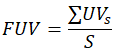
Where: UVs = UV of each species within a family; (S) = total number of species in that family
Informant Consensus Factor (ICF)17:
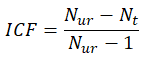
Where: = total use reports for an ailment category; (Nt) = total plant species used for that ailment category
Results
Socio-Demographic Profile of Informants
The ethnomedicinal survey was conducted among 146 informants from 52 villages in the East Nimar Region of Madhya Pradesh. The majority of the informants belonged to the Korku (35.62%), Bhil (30.82%), and Gond (30.14%) tribal communities, with a small proportion of non-tribal participants. Most respondents were male(86.99%), predominantly 40–59 years(36.30%) of age, and resided in rural, hamlet, and forest-fringe areas. Nearly half of the informants were illiterate(49.32%), followed by those with primary education, indicating that ethnomedicinal knowledge is primarily transmitted through oral tradition. Farming was the principal occupation, and ethnomedicinal information was mainly documented from experienced traditional healers (Vaidyas), elderly community members, herbal traders, and local practitioners possessing extensive knowledge of plant-based remedies.
Diversity of Ethnomedicinal Plants Documented
The ethnomedicinal survey documented 159 angiosperm species belonging to 144 genera and 58 families, reflecting the rich floristic diversity of the East Nimar Region and the continued reliance of local communities on plant-based healthcare. The complete ethnomedicinal inventory is provided in Supplementary Table S1. The recorded species were used to treat 51 diseases, which were classified into 12 disease groups according to the International Classification of Diseases (ICD). Fabaceae was the dominant family (26 taxa), followed by Apocynaceae (10 taxa), Lamiaceae and Malvaceae (9 taxa each), while Solanaceae, Rutaceae, Moraceae, and Combretaceae also contributed substantially to the documented ethnomedicinal diversity.
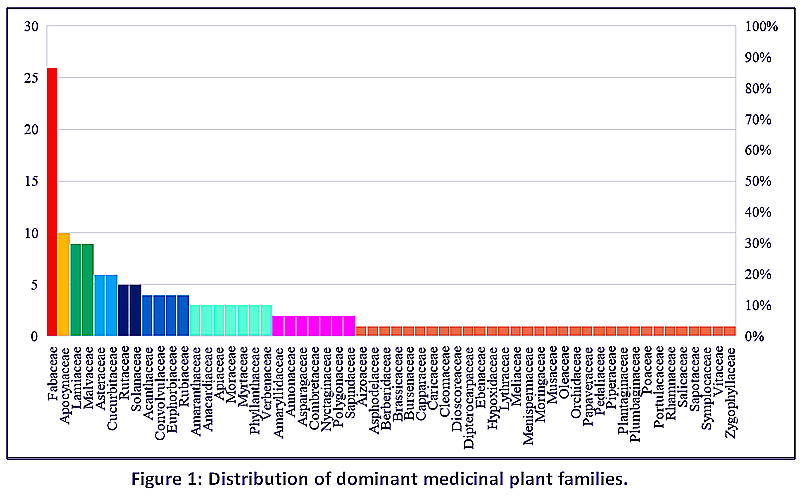 |
Figure 1: Distribution of dominant medicinal plant families. |
Table 1: Frequently reported medicinal plant species documented in the East Nimar Region, Madhya Pradesh, India.
| Botanical Name | Habit | Part(s) Used | Mode of Preparation | Ailments Treated | UV |
| Ocimum tenuiflorum L. | H | Le, Wh | De, Ex, In, Ju, Pa, Ra, Tea | Asthma, Bleeding gums,Boils, Bronchitis, Cold, Constipation, Cough, Diabetes, Diarrhoea, Dysentery, Fever, Indigestion, Insect bite, Intestinal worms, Joint pain, Malaria, Mouth ulcer, Ringworm, Skin irritation, Sore throat, Stomach ache | 0.281 |
| Azadirachta indica A. Juss. | T | Ba, Fl, Le, Ri, Se | De, Ex, In, Ju, Oil, Pa, Po, Ra | Acne, Bleeding gums, Blood pressure, Boils, Cold, Cough, Diabetes, Diarrhoea, Fever, General weakness, Hair fall, Hair growth, Indigestion, Malaria, Pimples, Ringworm, Skin irritation, Toothache, Wounds | 0.274 |
| Terminalia arjuna (Roxb. ex DC.) Wight & Arn. | T | Ba, Le | De, Pa, Po | Asthma, Blood pressure, Bronchitis, Cold, Constipation, Cough, Diabetes, Diarrhoea, Fever, General weakness, Joint pain, Libido enhancement, Spermatogenic stimulation, Semen quality improvement, Toothache, Wounds | 0.199 |
| Aegle marmelos (L.) Corrêa | T | Le, Uri | De, Ex, In, Ju, Pa, Po, Ra | Boils, Bronchitis, Constipation, Cold, Cough, Diarrhoea, Diabetes, Dysentery, Fever, Jaundice, Wounds | 0.144 |
| Ficus racemosa L. | T | Ba, Le, Uri | De, Ju, Pa, Po, Ra | Asthma, Boils, Bronchitis, Constipation, Diabetes, Fever, Indigestion, Libido enhancement, Semen enhancement, Semen quality improvement, Sore throat, Swelling, Vomiting, Wounds | 0.144 |
| Abutilon indicum (L.) Sweet | S | Le, Ro, Se, Wh | De, Ju, Pa, Ra | Cold, Cuts, Fever, General weakness, Headache, Joint pain, Semen quality improvement, Swelling, Toothache, Wounds | 0.103 |
| Tectona grandisL.f. | T | Ba, Le | De, Ex, Pa, Po | Bronchitis, Cuts, Diarrhoea, Dysentery, Fever, Hair fall, Jaundice, Stomach ache, Swelling, Vomiting, Wounds | 0.096 |
| Diplocyclospalmatus(L.) C.Jeffrey | H | Uri, Le, Se, Wh | Pa, Po, Ra | Constipation, Fever, General body pain, Indigestion, Irregular menstruation, Libido enhancement, Spermatogenic stimulation, Stomach ache | 0.089 |
| Ocimum gratissimum L. | H | Le, Wh | De, Ju, Pa, Po | Bleeding gums, Cold, Cough, Cuts, Fever, Indigestion, Insect bites, Jaundice, Skin infections, Toothache, Wounds | 0.089 |
| Bauhinia purpurea L. | T | Le, Ba | De, Ju, Po | Cough, Diarrhoea, Dysentery, Fever, Gastric Ulcer, Indigestion, Ringworm, Stomach ache | 0.082 |
| Boerhaviadiffusa L. | H | Le, Ro, Wh | De, Ex, Pa, Po, Ra | Asthma, Cold, Cough, Fever, Indigestion, Jaundice, Rheumatism | 0.082 |
| Ficus religiosa L. | T | Ba, Le, Uri | De, In, Pa, Po, Ra | Constipation, Diabetes, Diarrhoea, General weakness, Spermatogenic stimulation, Stomachache,Swelling, Wounds | 0.082 |
| Withania somnifera (L.) Dunal | S | Le, Ro | De, Pa, Po | Arthritis, Asthma, Cold, Cough, Indigestion, Semen quality improvement, Joint pain, Ringworm, Stomach ache, Swelling | 0.082 |
| Abelmoschus moschatusMedik. | H | Le, Ro, Se | De, Ju, Pa, Po | Constipation, Fever, Libido enhancement, Semen enhancement, Skin irritation, Spermatogenic stimulation, Stomach ache, Wounds | 0.075 |
The complete inventory of all 159 documented medicinal plant species is provided in Supplementary Table S1.
Habit:C = Climber; G = Grass; H = Herb; S = Shrub; T = Tree.Plant parts: Ba = Bark; Fl = Flowers; Le = Leaves; Ri = Ripe fruits; Ro = Roots; Se = Seeds; Uri = Unripe fruits; Wh = Whole plant.Preparation methods: De = Decoction; Ex = Extract; In = Infusion; Ju = Juice; Pa = Paste; Po = Powder; Ra = Raw.
Habit Analysis of Documented Medicinal Plants
The documented medicinal plants showed different growth forms, such as herbs, trees, shrubs, climbers, and grasses (Fig. 2). Herbs were the dominant growth form (34.59%), followed by trees (30.18%) and shrubs (20.12%), together accounting for 84.90% of the documented species. Climbers were represented by 23 species (14.46%), whereas grasses were represented by only one species (0.63%). These findings suggest that the traditional healthcare system of the East Nimar Region predominantly depends on herbs, trees, and shrubs.
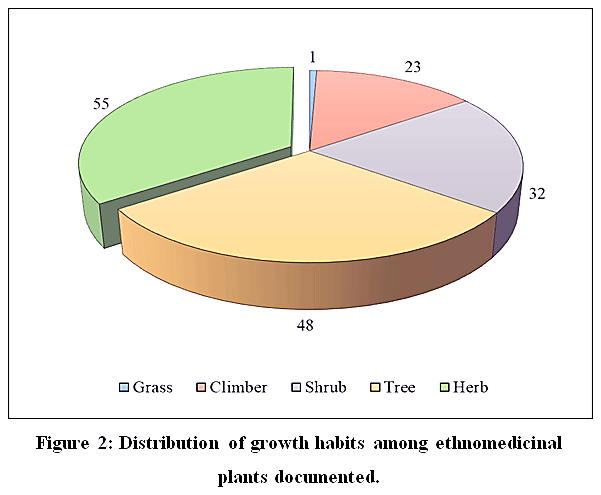 |
Figure 2: Distribution of growth habits among ethnomedicinal plants documented. |
Plant Parts Used in Traditional Healthcare Practices
In the East Nimar Region, 15 plant parts were recorded for the preparation of traditional remedies (Fig. 3). Leaves were the most frequently used plant part, with 111 use reports (36%), followed by whole plants (12.05%), bark (11.70%), roots (9.93%), and seeds (5.1%). Other plant parts, including unripe and ripe fruits, flowers, stems, bulbs/rhizomes, flower buds, pods, resin, and latex, were used less frequently. Aerial plant parts were used more frequently than underground parts, with leaves being the predominant component in traditional medicinal formulations. The relationship between plant growth forms and the plant parts used is presented in Fig. 4.
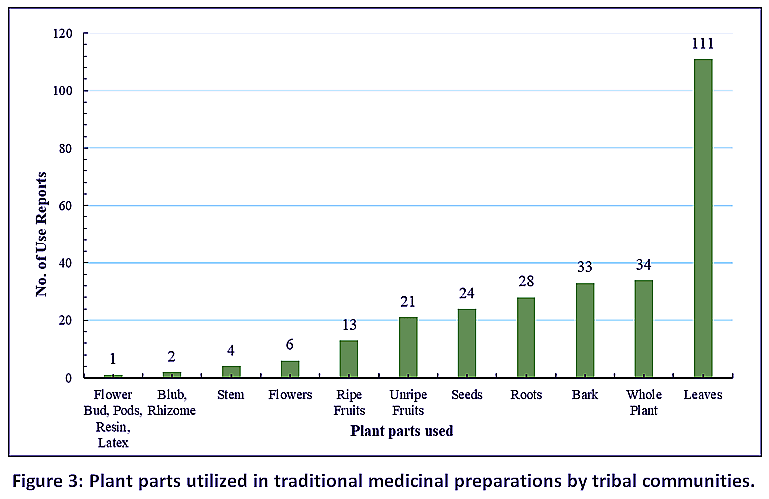 |
Figure 3: Plant parts utilized in traditional medicinal preparations by tribal communities. |
A chord diagram illustrated the relationships between plant growth forms and the plant parts used in traditional medicinal treatments (Fig. 4). Herbaceous species were primarily associated with the use of leaves and whole plants, highlighting their importance in ethnomedicinal preparations. Tree species were mainly associated with bark, leaves, fruits, and roots, while shrubs showed moderate associations with several plant parts. Climbers were principally associated with leaves, roots, and fruits, whereas grasses contributed minimally to the overall utilization pattern.
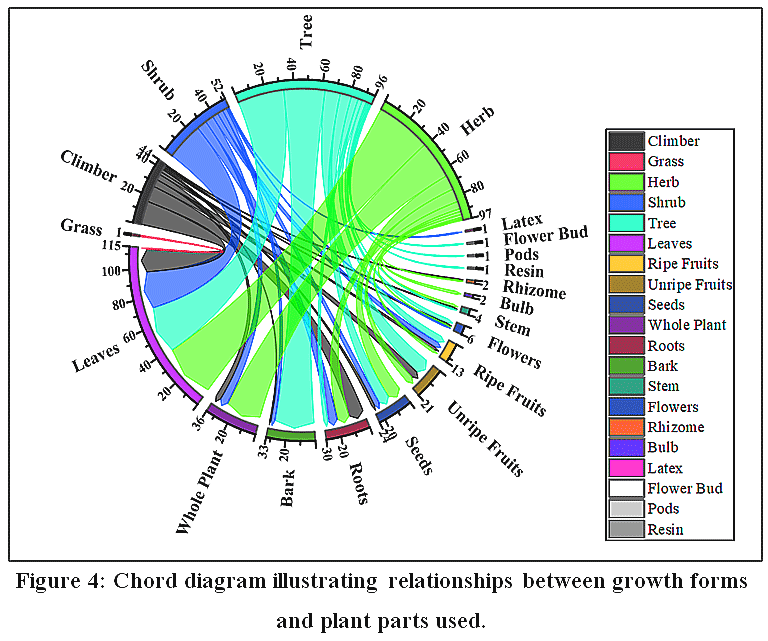 |
Figure 4: Chord diagram illustrating relationships between growth forms and plant parts used. |
Preparation Methods Used in Traditional Healthcare Practices
Various methods of preparation were recorded for herbal formulations in the East Nimar Region (Fig. 5). The most common preparation was powder (20.49%), followed by decoction (19.13%), paste (18.58%), and juice (18.31%). Raw preparations, extracts, infusions, and oil-based formulations were rarely used, and tablets, tea, and smoke were rarely reported. The results are attributed to a strong reliance on simple preparation methods that require little processing and easily accessible resources.
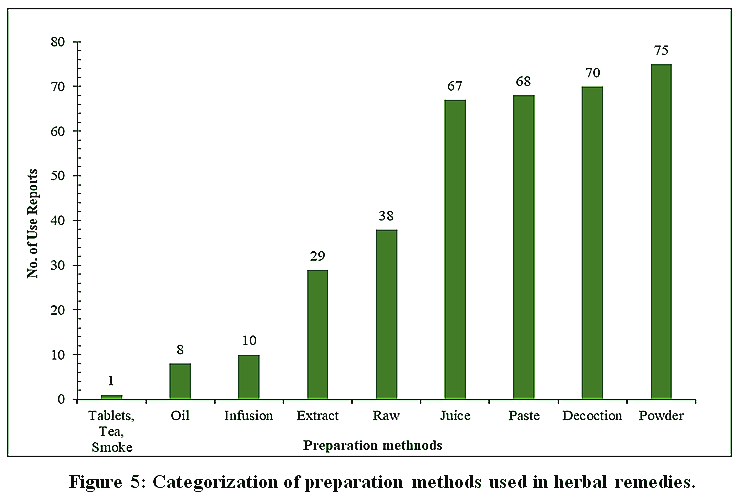 |
Figure 5: Categorization of preparation methods used in herbal remedies. |
Use Value (UV) and Family Use Value (FUV)
Quantitative ethnobotanical analysis indicated that the cultural significance of the recorded medicinal plants varied considerably(Table 1). UV ranged from 0.007 to 0.281. The highest UV values were recorded for Ocimum tenuiflorum L. (0.281) and Azadirachta indica A. Juss. (0.274), whereas the lowest UV was observed for Eulophia nuda Lindl. and Sapindusemarginatus Vahl (0.007 each).At the family level,Meliaceaeexhibited thehighest Family Use Value (FUV = 0.274), followed by Combretaceae (FUV = 0.113), Moraceae (FUV = 0.098), Menispermaceae (FUV = 0.075), and Asparagaceae and Moringaceae (FUV = 0.062 each), indicating their comparatively greater average ethnomedicinal importance.
Informant Consensus Factor (ICF)
The Informant Consensus Factor (ICF) values ranged from 0.17 to 0.60, suggesting different levels of agreement among informants within disease categories (Table 2). The highest consensus was observed for respiratory (0.60), gastrointestinal (0.59), reproductive (0.56), and infectious disorders (0.52), followed by general disorders (0.46). Metabolic (0.43), dermatological (0.40), hair and scalp (0.39), musculoskeletal (0.38), and oral disorders (0.37) showedmoderate ICF values, while injury and bite (0.26) and urinary disorders (0.17) showedthe lowest consensus. In general, moderate to high ICF values in different disease categories indicate high consensus and conservation of ethnomedicinal knowledge among local communities.
Table 2: Informant Consensus Factor (ICF) values across disease categories.
| Disease Type | Ailments | Nur | Nt | ICF |
| Respiratory Disorders | Asthma, Bronchitis, Cold, Cough, Sore throat | 175 | 71 | 0.60 |
| Reproductive Disorders | Libido enhancement, Spermatogenic stimulation, Semen quality improvement, Irregular menstruation | 37 | 17 | 0.56 |
| Gastrointestinal Disorders | Constipation, Diarrhoea, Dysentery, Indigestion, Gastric ulcer, Stomach ache, Vomiting, Piles | 226 | 94 | 0.59 |
| Infectious Disorders | Malaria, Intestinal worms | 22 | 11 | 0.52 |
| General Disorders | General disorders, Fever, Jaundice, General body pain, General weakness, Headache | 124 | 68 | 0.46 |
| Metabolic Disorders | Diabetes | 55 | 32 | 0.43 |
| Dermatological Disorders | Acne, Boils, Pimples, Ringworm, Skin burn, Skin irritation, Wounds | 85 | 51 | 0.40 |
| Hair and Scalp Disorders | Hair fall, Hair growth | 19 | 12 | 0.39 |
| Musculoskeletal Disorders | Arthritis, Joint pain, Rheumatism, Swelling | 43 | 27 | 0.38 |
| Oral Disorders | Mouth ulcer, Bleeding gums, Toothache | 31 | 20 | 0.37 |
| Injury and Bite Disorders | Cuts, Snake bite, Insect bite | 36 | 27 | 0.26 |
| Urinary Disorders | Burning urination, Urinary troubles, Kidney stone | 7 | 6 | 0.17 |
The present study documented high ethnomedicinal diversity and extensive traditional knowledge of medicinal plant utilization in the East Nimar Region of Madhya Pradesh. Collectively, the documented patterns of plant diversity, growth forms, plant parts used, preparation techniques, medicinal uses, and quantitative ethnobotanical indices demonstrate a systematic and culturally rooted traditional healthcare system. The variations in species used and agreement levels among informants reflect the selective and experiential nature of the ethnomedicinal practices of groups. These findings provide a basis for further discussion of their cultural significance, conservation, and potential pharmaceutical value.
Discussion
The present study underscores the ethnomedicinal diversity and the continued reliance on plant-based healthcare systems in the East Nimar Region. Fabaceae was the most species-rich family, whereas Meliaceae recorded the highest FUV, consistent with previous ethnobotanical research demonstrating the therapeutic value of these families.6,18 The relatively high number of genera in relation to species also reflects high taxonomic diversity and suggests that local communities utilize a wide range of plant resources rather than relying on only a few medicinal plants.
The high proportion of herbs, followed by trees and shrubs, may reflect both their availability in nature and the practical choices of the local communities. A similar predominance of herbs (43%), followed by trees (26%), shrubs (18%), and climbers (13%), was also reported from the Amarkantak region of Central India.31Herbs are preferred for their abundance, ease of collection, and rapid growth, while woody species are sources of medicinally important tissues such as bark and roots.19,20 According to this trend, leaves were the most used plant part and were related to different therapeutic categories and preparation methods. The occurrence of leaves in this study is also consistent with recent ethnobotanical studies from Mizoram, India, where leaves (30.39%) were also the most commonly used plant part in the preparation of traditional medicines.21,24Leaves are generally the preferred plant material due to their easy availability, the possibility of harvesting them without damaging the plant, and because they are important sites for biosynthesis and accumulation of several bioactive secondary metabolites.25On the other hand, harvesting bark and roots, although therapeutically important, may present challenges in terms of sustainability, as their collection may harmthe survival of the plants.20This unsustainable harvesting of this plant part may therefore threaten the natural populations of medicinal species. Hence, it is necessary to use sustainable harvesting practices and conservation programs that will ensure their long-term availability.
Preparation patterns further demonstrated the practical nature of the indigenous healthcare systems. The most common forms were powder, decoction, paste, and juice, which suggests a preference for simple and efficient methods of preparation compatible with locally available resources. Similar preparation patterns have been reported from the Kashmir Himalaya, where powder (40.19%) predominated, and from Pushprajgarh, Madhya Pradesh, where decoction (44.34%) was the most common preparation method.26,30The correlation of leaves with several preparation procedures and the stronger association of bark and roots with decoction and powder indicates a practical understanding of processing techniques that increase medicinal effectiveness.22,23
A quantitative ethnobotanical study revealed Ocimum tenuiflorum, Azadirachta indica, and Terminalia arjuna as culturally important species with high UV values, which indicate frequent use and strong support by the community. In the Amarkantak Biosphere Reserve in Central India, Ocimum tenuiflorum and Azadirachta indica were also found to have high UV values (0.66-0.68), showing that they are widely used in traditional medicine throughout the area.33Pharmacological studies on these species have demonstrated antioxidant, anti-inflammatory, antidiabetic, cardioprotective, and antimicrobial activities, highlighting their relevance in traditional health practices.27–29However, high UV values may also represent the widespread availability and familiarity of these species throughout the community rather than solely suggesting superior therapeutic efficacy.At the family level,while Fabaceae contributed the highest number of medicinal species, Meliaceae exhibited the highest Family Use Value, indicating the highest average ethnomedicinal importance per species among the documented botanical families within the indigenous healthcare system. The ICF analysis showed moderate-to-high consensus among the informants, especially for respiratory, gastrointestinal, reproductive, and infectious diseases,suggesting strong knowledge transmission and the consistent use of medicinal plants for common diseases.17However, high ICF values may also reflect the high prevalence of certain disease categories or the use of a limited number of well-established remedies within the community, rather than exclusively indicating superior therapeutic effectiveness or the quality of traditional knowledge.Likewise, a high consensus between informants for respiratory (ICF = 0.97), reproductive (ICF = 0.97), and gastrointestinal disorders (ICF = 0.96) has been reported from Northeastern Madhya Pradesh.32The outcomes of the present investigation must be comprehended in the context of the socio-ecological setting of the East Nimar Region, Madhya Pradesh, where tribal communities inhabit forest-adjacent areas and rely on medicinal plants for healthcare owing to geographical inaccessibility, inadequate medical services, and socio-economic constraints. In such circumstances, higher use values may reflect repeated use and acceptance through generations rather than isolated cultural preferences. However, this knowledge system is increasingly threatened by changing livelihood patterns, migration of younger populations, formal education replacing oral knowledge transmission, and declining engagement with traditional healing practices. Such transitions may gradually erode ethnomedicinal knowledge despite the continued availability of medicinal plant resources. Species identified with high cultural importance represent promising candidates for future phytochemical characterization, pharmacological validation, and bioactive compound discovery. However, their traditional use should be regarded as ethnobotanical evidence rather than evidence of therapeutic efficacy.
Contrastingly, the prolific use of medicinal plants with a low number of highly valued species and high informant consensus indicates that local healthcare systems are not random collections of plant uses but rather selective and experience-driven systems shaped by long-term observations and community-level validation. Species identified in the present study as culturally important are, therefore, not only therapeutic resources but also indicators of knowledge resilience in the East Nimar Region of Madhya Pradesh. The documentation of such species could safeguard indigenous knowledge andmay facilitate pharmacological and conservation-oriented studies in similar geographical regions within the sampledarea, as well as other parts ofIndia.
Conclusion
This study records the extensive ethnomedicinal knowledge preserved by tribal communities in the East Nimar Region and emphasizes the ongoing significance of plant-based healthcare systems in local therapeutic practices. The extensive variety of medicinal plants and the identified patterns of plant selection, preparation techniques, and disease management suggest a robust and empirically grounded traditional knowledge system. Quantitative ethnobotanical analyses identified culturally significant species and medicinally relevant plant families, while informant consensus revealed collective therapeutic knowledge across various disease categories. These findings underscore the necessity of documenting and preserving indigenous knowledge and provide a foundational basis for future phytochemical, pharmacological, and conservation-oriented research on culturally important medicinal species.
Acknowledgement
The authors are thankful to the Department of Botany, S.N. Govt. P.G. College, Khandwa, Madhya Pradesh – 450001, India, and the Institute of Science & Technology for Advanced Studies & Research (ISTAR), managed by The Charutar Vidya Mandal (CVM) University, Vallabh Vidyanagar, for providing infrastructural support and research facilities. The authors also gratefully acknowledge the Knowledge Consortium of Gujarat (KCG), Government of Gujarat, for awarding the SHODH (Scheme of Developing High Quality Research) Research Fellowship to the first author. The fellowship provided financial support to the researcher and significantly facilitated the successful execution of this study.
Funding Sources
The author(s) received no financial support for the research, authorship, and/or publication of this article.
Conflict of Interest
The authors do not have any conflict of interest.
Data Availability Statement
This statement does not apply to this article.
Ethics Statement
This research did not involve human participants, animal subjects, or any material that requires ethical approval.
Informed Consent Statement
Informed consent was obtained from all participants involved in the study prior to data collection.
Clinical Trial Registration
This research does not involve any clinical trials.
Permission to reproduce material from other sources
Not Applicable.
Author Contributions
- Rut Navnitbhai Megha: Data Collection, Formal Analysis, Data Curation, Visualization, and Original Draft Preparation
- Shakun Dinesh Mishra: Conceptualization, Designing of Field Methodology
- Sunil Makanbhai Khristi: Framing of Laboratory Methods and Analytical Techniques
- Hiren Babubhai Soni:Supervision of Manuscript (Suggestions, Refinements, and Finalization).
References
- Harshberger JW. Purposes of ethnobotany. Gaz. 1895;21:146–154.
CrossRef - Schultes RE, Reis SV. Ethnobotany: Evolution of a Discipline. Portland, USA: Dioscorides Press. 1995.
- Albuquerque UP. Re-examining hypotheses concerning the use and knowledge of medicinal plants: A study in the Caatinga vegetation of NE Brazil. Ethnobiol. Ethnomed. 2019;15:1–12.
- Cotton CM. Ethnobotany: Principles and Applications. 1st edn. Chichester: John Wiley & Sons. 1996.
- Martin GJ. Ethnobotany: A Methods Manual. London: Chapman & Hall. 1995.
CrossRef - Jain SK. Dictionary of Indian Folk Medicine and Ethnobotany. New Delhi: Deep Publications. 1991.
- Office of the Registrar General and Census Commissioner. Census of India. Census of India 2011: Scheduled Caste and Scheduled Tribe Population. New Delhi, India: Office of the Registrar General and Census Commissioner. 2011.
- Fabricant DS, Farnsworth NR. The value of plants used in traditional medicine for drug discovery. Health Perspect. 2001;109(Suppl 1):69-75.
CrossRef - World Health Organization. WHO Traditional Medicine Strategy 2014–2023. Geneva: World Health Organization. 2013.
- International Society of Ethnobiology. International Society of Ethnobiology Code of Ethics (with 2008 additions). International Society of Ethnobiology. 2006.
- Alexiades MN, Sheldon JW. Selected Guidelines for Ethnobotanical Research: A Field Manual. New York: New York Botanical Garden. 1996.
- Bernard HR. Research Methods in Anthropology: Qualitative and Quantitative Approaches. 3rd edn. Walnut Creek: AltaMira Press. 2002.
- Flourish Team. Flourish. Version 2.0 [computer software]. London: Flourish Studio. 2024.
- OriginLab Corporation. OriginPro. Version 2024 [computer software]. Northampton, MA: OriginLab Corporation. 2024.
- Phillips O, Gentry AH. The useful plants of Tambopata, Peru: I. Statistical hypotheses tests with a new quantitative technique. Bot. 1993;47(1):15-32.
CrossRef - Cadena-González AL, Sørensen M, Theilade I. Use and valuation of native and introduced medicinal plant species in Campo Hermoso and Zetaquira, Boyacá, Colombia. Ethnobiol. Ethnomed. 2013;9:23.
CrossRef - Trotter RT, Logan MH. Informant consensus: A new approach for identifying potentially effective medicinal plants. In: Plants in Indigenous Medicine and Diet: Behavioural Approaches (Etkin NL, ed). New York: Redgrave Publishing Corp. 1986; pp 91-112.
CrossRef - Giday M, Asfaw Z, Woldu Z, Teklehaymanot T, Animut A. Medicinal plant knowledge of the Bench ethnic group of Ethiopia: An ethnobotanical investigation. Ethnobiol. Ethnomed. 2009;5:34.
CrossRef - Balick MJ, Cox PA. Plants, People, and Culture: The Science of Ethnobotany. 2nd edn. Boca Raton: Garland Science. 2020.
CrossRef - Cunningham AB. Applied Ethnobotany: People, Wild Plant Use and Conservation. 1st edn. London: Routledge. 2001.
- Umair M, Altaf M, Abbasi AM. An ethnobotanical survey of indigenous medicinal plants in Hafizabad district, Punjab-Pakistan. PLoS One. 2017;12(6):e0177912.
CrossRef - Kala CP. Indigenous uses and structure of chir pine forest in Uttaranchal Himalaya, India. J. Sustain. Dev. World Ecol. 2005;12(2):205-10.
CrossRef - Heinrich M, Ankli A, Frei B, Weimann C, Sticher O. Medicinal plants in Mexico: Healers’ consensus and cultural importance. Sci. Med. 1998;47(11):1859-71.
CrossRef - Ralte L, Singh BP. Ethnobotanical survey of medicinal plants used by various ethnic tribes of Mizoram, India. PLoS One. 2024;19(5):e0302792.
CrossRef - Batoro J, Siswanto D, Setyawan AD, et al. An ethnobotanical study of medicinal plants used by the Tengger tribe in Ngadisari village, Indonesia. PLoS One. 2020;15:e0235886.
CrossRef - Bhat JA, Singh B, Surmal O, Singh B, Shivgotra V, Musarella CM. Ethnobotany of the Himalayas: Safeguarding medical practices and traditional uses of Kashmir regions. Biology (Basel). 2021;10(9):851.
CrossRef - Cohen MM. Tulsi – Ocimum sanctum: A herb for all reasons. Ayurveda Integr. Med. 2014;5(4):251-9.
CrossRef - Kumar V, Sharma N, Saini R, et al. Therapeutic potential and industrial applications of Terminalia arjuna J. Ethnopharmacol. 2023;310:116352.
CrossRef - Ismail M, Salman HA, Ibrahim H. Study the phytochemical, biological and pharmacological aspects of Azadirachta indica: A review. GSC Biol. Pharm. Sci. 2024;29(1):33-41.
CrossRef - Rao KS, Haran RH, Rajpoot VS. Ethnomedicinal documentation of folk medicinal plants used by tribal communities living in the selected villages of Pushprajgarh Block of Anuppur District, Madhya Pradesh, Central India. Integr. Med. 2022;7(3):319-41.
- Kareti SR, Hariharan R, Rajpoot VS. Ethnobotanical survey of folk medicinal plants used in tribal villages of Amarkantak region of Central India. Plant Biosyst. 2022;156(5):1019-38.
CrossRef - Sharma A, Adhikari D, Wagh VV. An ethnobotanical investigation of medicinal plants used among rural communities in Northeastern Madhya Pradesh, India: A quantitative study. Plant Biosyst. 2024;158(5):1160-81.
CrossRef - Lal M, Chandraker SK, Shukla R. Quantitative ethnobotanical study of therapeutic plants of Amarkantak hills in Achanakmar-Amarkantak Biosphere Reserve, Central India. Acta Ecol. Sin. 2023;43(1):139-53.
CrossRef
Abbreviations
FUV: Family Use Value
ICF: Informant Consensus Factor
POWO: Plants of the World Online
UV: Use Value
Accepted on: 19-08-2026
Second Review by: Dr. Satishkumar Khadia
Final Approval by: Dr. Wagih Ghannam