Phytochemical Profile and Therapeutic Potential of Tithonia diversifolia: A Critical Review of Pharmacological Activities and Toxicological Considerations
 , Kota Srivalli Maha Lakshmi, Salman Khan and Mabbu Viswanath Reddy
 Department of Pharmacology, Jawaharlal Nehru Technological University Kakinada, Andhra Pradesh, India
Corresponding Author E-mail: mehmoodkamar7@gmail.com
Download this article as:
ABSTRACT:This review critically evaluates the phytochemistry, pharmacological activities, and toxicological profile of Tithonia diversifolia (Asteraceae). Evidence from preclinical studies indicates that the plant contains bioactive constituents, particularly sesquiterpene lactones and chlorogenic acids, which may contribute to anti-inflammatory, antimicrobial, antiparasitic, antioxidant, immunomodulatory, and metabolic effects. However, the reported therapeutic outcomes vary considerably according to extraction solvent, plant source, experimental model, and dose. Available toxicity studies also suggest a relatively narrow safety margin at higher exposure levels, with hepatotoxic, nephrotoxic, and gastrointestinal effects observed in animal models. Current literature is limited by heterogeneous methodologies, inconsistent phytochemical standardization, and the absence of human clinical studies. Future research should prioritize standardized extraction procedures, quantitative marker analysis, pharmacokinetic investigations, and well-designed clinical evaluations before therapeutic applications can be established.
KEYWORDS:Anti-hyperglycaemic; Anti-inflammatory; Antimicrobial; Antioxidant activity; Antiparasitic; Immunomodulatory; Mexican Sunflower; Secondary metabolites; Tithonia diversifolia; Toxicity profile
Introduction
Medicinal plants continue to represent an important source of bioactive molecules for drug discovery and the development of complementary therapeutic strategies. Interest in plant-derived compounds has increased because of the growing prevalence of chronic inflammatory disorders, metabolic diseases, Medicinal plants continue to represent an important source of bioactive molecules for drug discovery and the development of complementary therapeutic strategies. Interest in plant-derived compounds has increased because of the growing prevalence of chronic inflammatory disorders, metabolic diseases, and infections caused by multidrug-resistant pathogens. Within this context, Tithonia diversifolia (Hemsl.) A. Gray (Asteraceae), commonly known as Mexican sunflower, has attracted considerable attention due to its wide range of traditional medicinal applications and chemically diverse secondary metabolites. The plant is native to Mexico and Central America but is now widely distributed across tropical regions of Africa, Asia, and South America, where it is used in folk medicine for wound healing, fever, malaria, diabetes, gastrointestinaldisorders, and inflammatory conditions.14
Previous publications have described individual pharmacological activities or phytochemical constituents of T. diversifolia; however, the available evidence remains fragmented. Reported biological effects are often influenced by extraction solvent, plant part, geographic origin, and experimental model, making direct comparison between studies difficult. In addition, many reviews provide descriptive summaries without critically addressing methodological limitations, dose-dependent toxicity, and the distinction between preclinical observations and potential clinical relevance.
The objective of the present review is to provide a structured and critical evaluation of the phytochemical profile, major pharmacological activities, and toxicological considerations associated with T. diversifolia. Particular emphasis is placed on the relationship between sesquiterpene lactones and chlorogenic acids, their proposed mechanisms of action, the variability introduced by extraction methods, and the current gaps that must be addressed before therapeutic translation can be considered.
Phytochemical analysis of water and ethanol extracts from the plant of T. diversifolia showed high level of secondary metabolites in leaves, stems and roots.2,9,12 Qualitative screening tests showed the presence of volatile oils, tannins, saponin glycosides, cardiac glycosides, balsams and anthracenes.12
Phytochemical Profile
Sesquiterpene Lactones (STLs)
As a prominent member of the Asteraceae family, the plant’s most heavily evaluated terpenoid subclasses are STLs, which concentrate heavily within the leaves and flowers.7,8,16,17 Structurally, these molecules feature a core 15-carbon framework built from three distinct isoprene units fused directly to an α-methylene-γ-lactone ring arrangement.2 While STLs like Tagitinin A&C and 1β-methoxydiversifolin, drive the plant’s potent antiprotozoal action, they also account for its baseline cellular toxicity. This dual effect occurs via a classic Michael-type addition reaction. The α, β-unsaturated carbonyl groups on the lactone ring function as electrophilic Michael acceptors, binding covalently with nucleophilic free thiol groups (R-SH) on cellular proteins and cysteine residues.This covalent binding causes macromolecular dysfunction, disrupts cellular replication, and triggers targeted oxidative stress within target pathogensas well as mammalian host cells at elevated concentrations.25
Phenolic and Essential Oil Compositions
Fractional analysis clearly differentiates the plant’s therapeutic mechanics
The Polar Extract (PE)
Lacks STLs entirely and is dominated by hydrophilic Chlorogenic Acids (CAs). In preclinical models, these compounds exert prominent anti-inflammatory effects by modulating distinct cellular pathways.10,20
The Lipophilic/Low-Polarity Extract (LRE)
Serves as the primary source for evaluating lipophilic STLs and flavonoids.10
Essential Volatile Oils
Characterized by high chemical variability depending on plant tissue source:
Flowers
Dominated by α-pinene (50.8% to 61.0%) and (Z)-β-ocimene (15.5% to 21.4%).21 Alternate profiles demonstrate β-caryophyllene (20.1%), germacrene D (20.3%) and bicyclogermacrene (8.0%).22,23
Leaves
Characterized by (Z)-β-ocimene (40.2%) [21] or alternate profiles containing β-caryophyllene (20.8%), 1,8-cineole (9.1%), germacrene D (12.6%), β-pinene (10.9%), and 1,8- α-pinene (32.9%).22,23,24
Visualized Chemistry and Mechanisms
To address structural clarity and map the therapeutic activities of T. diversifolia, the following visual keys outline the core chemistry and biological pathways:
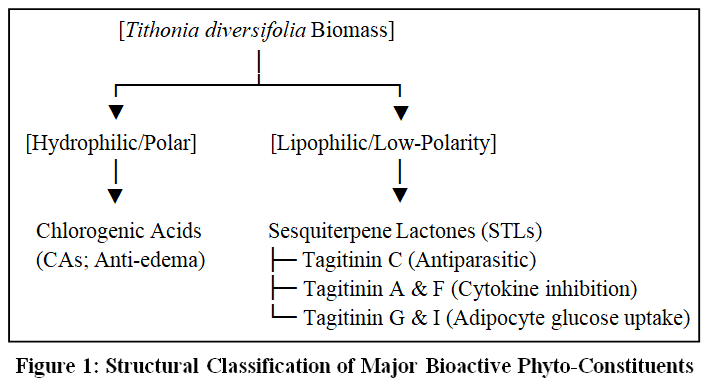 |
Figure 1: Structural Classification of Major Bioactive Phyto-Constituents
|
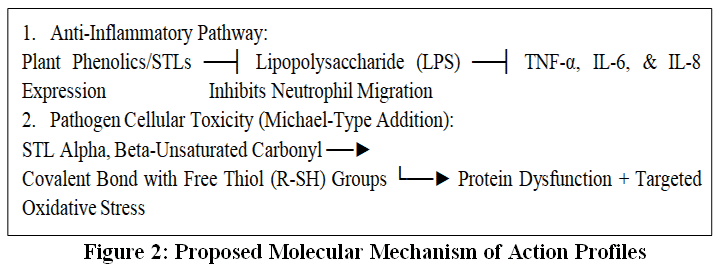 |
Figure 2: Proposed Molecular Mechanism of Action Profiles
|
Evaluated Biological Activities
Table 1: Reformatted Quantitative Pharmacological Metrics of Tithonia diversifolia Fractions
Table 1: Key Quantitative Pharmacological Metrics of Tithonia diversifolia Fractions.
| Extract / Bioactive | Target Pathogen / Model | Key Quantitative Metric / Outcome |
| Polar Extract (PE)10 | In Vivo Paw Edema | 64.3% inhibition at 10 mg/kg oral dose 66.4% inhibition at 50 mg/kg oral dose |
| Tagitinin C | Trypanosoma brucei (TC221) | IC50: 0.0042 μg/mL (4.5x more potent than Suramin reference) |
| Saline Leaf Extract9 | Candida krusei Candida albicans |
MIC50: 0.0024 μg/mL MIC50: 0.25 μg/mL |
| Tagitinin G & I7,16 | Adipocyte Cultures | Significantly improved glucose uptake compared to standard Pioglitazone background. |
Pharmacological Activities of Tithonia diversifolia
Anti-Inflammatory and Anti-Nociceptive Pathways
In preclinical experimental models, crude plant extracts show evidence of anti-inflammatory activity.Oral pe at low doses of 10 mg/kg and 50 mg/kg exhibited mean anti-edematogenic inhibitions of 64.3% and 66.4% respectively, which were greater than Indomethacin (45.4%) and LRE fractions (52.1%).10 At the cellular level, both PE and LRE are effective in modulating neutrophil migration and reducing pro-inflammatory cytokine cascades. Specifically, Tagitinin A, C and F directly inhibit the lipopolysaccharide-induced expression for Tumour Necrosis Factor-alpha (TNF-α) Interleukin-6 (IL-6), Interleukin-8 (IL-8) and in human neutrophils.7These extracts, when applied topically in animal designs, demonstrate classical cyclooxygenase (COX) inhibition profiles, though further comparative safety evaluations are required before human therapeutic assumptions can be finalized.10
Immune Modulation and Hematopoietic Recovery
Saline leaf preparations act as effective biological response modifiers. In murine models, these extracts activate splenocytes and increase cell proliferation within 24 hours, indicating an immunostimulatory effect.9 Furthermore, administering flavonoid-rich fractions to immunosuppressed animal groups yields a significantly higher phagocytic index compared to untreated controls.5 In chemotherapy-induced stress models, T. diversifolia demonstrated a strong capacity to restore white blood cell,haemoglobin, red blood cell and levelsfollowing severe cyclophosphamide-induced myelosuppression.7
Antimicrobial Spectrum
- T. diversifolia extracts display variable, dose-dependent zone inhibitions against critical bacterial pathogens, with E. coli showing higher vulnerability to volatile essential oils compared to P. aeruginosa.4
- At a standard 15 mg leaf extract application, S. aureus and E. coli generated distinct zones of inhibition measuring 6 mm and 10 mm, respectively.11
- Antifungal screenings highlight strong efficacy against pathogenic yeasts. Saline extractions yielded a minimum inhibitory concentration (MIC50) of 0.0024 μg/mL against Candida krusei, 0.293 μg/mL for C. parapsilosis, and 0.25 μg/mL against C. albicans.9
- Against agricultural crop fungi like Fusarium oxysporum, standard crude extracts applied at 25 to 100g/L generated steady inhibition zones from 7.93 mm to 10.44 mm.13
Antiparasitic Capabilities
Anti-trypanosomal
Tagitinin C stands out as a highly active anti-trypanosomal compound. It selectively suppresses Trypanosoma brucei (TC221) with an extreme IC50 value of 0.0042 μg/mL, outperforming the clinical reference drug Suramin by a factor of 4.5.
Antimalarial
Traditional claims regarding its efficacy against Flavonoid-rich extracts sustain P. berghei and Plasmodium falciparum.
The extract clearly suppresses trophozoite development at low baselines of 0.0004 mg/mL, reaching a 100% decrease at 0.025 mg/mL across 24 and 48-hour periods.5,15
Antileishmanial
In peritoneal macrophages, lipophilic STLs such Tagitinin F and Tirotundin 3-O-methyl ether have potent efficacy against Leishmania braziliensis’s promastigote and amastigote developmental phases without harming host cells.25
Antioxidant Capacity and Metabolic Regulation
Quantitative free radical scavenging studies show that the saline extract provides a total DPPH/ABTS radical scavenging baseline of 3.042 ± 0.019 mg AAE/g, which is comparable to the commercial standard Butylated Hydroxytoluene at 4.12 ± 0.10 mg AAE/g.9 Aqueous preparations likewise exhibit high antioxidant activity, producing 241.04 ± 11.93 μmol Trolox per gram of dry extraction weight.11,18The plant functions as an efficient organic phytobiotic when added to the diets of young tilapia at a rate of up to 160 g/kg. It optimizes baseline levels of superoxide dismutase (SOD), catalase (CAT), and glutathione peroxidase (GPX) while maintaining stable levels of alkaline phosphatase (ALP) and low levels of serum transaminases (ALT, AST).1
Anti-Hyperglycemic Activity
Isolated Tagitinin G and Tagitinin I significantly enhance glucose uptake in adipocyte tissue models, outperforming the reference antidiabetic drug Pioglitazone.2,7,16,19
Lipid Modulation
In livestock feeding trials, swine fed Tithonia leaf meal (TDLM) showed an optimized drop in serum triglycerides and total cholesterol, decreasing down to 15 mol/L compared to control groups.3
Critical Methodological Discussion and Limitations
A critical review of the existing literature reveals significant limitations that must be addressed to advance the therapeutic deployment of T. diversifolia:
Extraction Solvent Variability
The phytochemical profile changes dramatically depending on extraction parameters. While aqueous extracts maximize the yield of polar chlorogenic acids (minimizing toxic STL contamination), ethanolic and methanolic processes aggressively extract lipophilic sesquiterpene lactones.18 This structural variation heavily alters the safety-to-efficacy ratios reported across different academic papers.
Experimental Model Discrepancies
The vast majority of available data is derived from automated in vitro systems or preliminary rodent designs. These models fail to account for complex human metabolic conversions, bio-distribution properties, or chronic low-dose biological accumulations.
Inconsistent Efficacy Metrics
Conflicting baseline values appear frequently in publications, driven by variations in plant maturity, geographic harvesting zones, and soil qualities. Standardizing raw chemical profiles is therefore an absolute requirement before clinical translation.
Toxicological and Safety Considerations
The Dose-Response Duality
Despite promising therapeutic activities in screening assays, T. diversifolia possesses a highly restrictive safety margin due to the intrinsic toxicity of its highly active STLs. For example, the highly potent Tagitinin C displays poor cellular selectivity in host macrophages, returning a low Selectivity Index (SI = 1.4).11 This toxicity is directly linked to its chemical architecture, which contains a highly reactive α, β-unsaturated carbonyl moiety paired with dual double bonds in its germacrene ring structure.Crude methanolic and aqueous extracts provide distinct IC50 toxicity levels of 5.2 μg/mL and 3.7 μg/mL, respectively, when tested against common mammalian host cell lines such as BALB/3T3 murine fibroblasts.25
Organ-Specific Pathology
Long-term in vivo toxicity assessments in rodent designs reveal clear safety risks when predefined exposure limits are crossed:
Hepatotoxicity and Nephrotoxicity
Doses Hepatocellular necrosis is caused by doses more than 200 mg/kg body weight given over a 14-day period. bile ductular hyperplasia, and renal tubular epithelial flattening with localized vacuolar degeneration.6 While low-dose blends (100–200 mg/kg) safely enhance immune parameters without side effects, exceeding this 200 mg/kg limit consistently causes structural tissue damage.6
Gastrointestinal Damage
While a modest 10% dietary inclusion rate of TDLM in livestock feed helps optimize lipid metabolism, raising this dietary threshold above 20% triggers severe damage along the digestive tract.3 Histographical analyses confirm extensive mucosal erosion, epithelial degeneration, focal necrosis, intense neutrophilic infiltration, and severe mucosal hemorrhaging paired with congested mesenteries throughout both the small and large intestines.3
Guidelines for Safe Usage
Safety Ceiling Notice
To prevent systemic pathologies during long-term clinical or livestock evaluation, strict exposure ceilings must be strictly maintained based on the following validated thresholds:
- In Vitro Bioassays: Safe working concentrations should remain at or below 25 μg/mL.9
- In Vivo Rodent Models: Direct oral administration must be kept strictly below 200 mg/kg body weight.6
- Livestock Feeding Regimens: Dietary inclusion levels for leaf meal mixtures must be restricted to under 20% of total feed volume to prevent severe systemic toxicity.3
Conclusion
Current evidence indicates that Tithonia diversifolia is a phytochemically rich species with several promising preclinical biological activities. Sesquiterpene lactones, including Tagitinin derivatives, have demonstrated notable antiparasitic and immunomodulatory effects, whereas chlorogenic acids appear to contribute substantially to the antioxidant and anti-inflammatory properties observed in experimental models. Nevertheless, the available data are derived predominantly from in vitro assays and animal studies, and the reported efficacy varies according to extraction method, plant source, dose, and experimental design.
The toxicological literature also suggests that higher exposure levels may produce hepatotoxic, nephrotoxic, and gastrointestinal alterations, indicating that safety assessment is a critical consideration for future development. Because standardized phytochemical characterization, pharmacokinetic information, and clinical evidence are currently lacking, T. diversifolia should be regarded as a promising preclinical candidate rather than an established therapeutic agent. Future investigations should focus on extraction standardization, quantitative marker analysis, mechanism-based studies, long-term safety evaluation, and well-designed human clinical trials.
Acknowledgement
The authors are thankful to the Department of Pharmacology, JNTUK, Kakinada for providing the necessary academic support and complete pharmacological profiling and work.
Funding Sources
The author(s) received no financial support for the research, authorship, and/or publication of this article.
Conflict of Interest
The authors do not have any conflict of interest.
Data Availability Statement
This statement does not apply to this article.
Ethics Statement
This research did not involve human participants, animal subjects, or any material that requires ethical approval.
Informed Consent Statement
This study did not involve human participants, and therefore, informed consent was not required.
Clinical Trial Registration
This research does not involve any clinical trials.
Permission to reproduce material from other sources
Not Applicable.
Author Contributions
- Shaik Kamar Jaha: Conceptualization, Methodology, Writing – Original Draft
- Kota Srivalli Maha Lakshmi: Data Collection, Analysis, Conceptualization, Design of the study, Data collection and analysis, Prepared the original manuscript draft and Writing – Review & Editing
- Salman Khan: Visualization – Review
- Mabbu Viswanath Reddy: Project Administration, Supervision
References
- Abdella B, Abozahra NA, Shokrak NM. Whole spectrum of Aeromonas hydrophila virulence determinants and the identification of novel SNPs using comparative Patho genomics. Sci Rep. 2023;13(1):7712.
CrossRef - Yuan H, Ma Q, Ye L, Piao G. The traditional medicine and modern medicine from natural products. Molecules. 2016;21(5):559.
CrossRef - Social-Stamler J, Wentworth D, Neaton JD. Is relationship between serum cholesterol and risk of premature death from coronary heart disease continuous and graded? JAMA. 1986;256(20):2823-2828.
CrossRef - Emirdağ-Öztürk S, Karayildirim T, Anil H. Synthesis of egonol derivatives and their antimicrobial activities. Bioorg Med Chem. 2011;19(3):1179-1188.
CrossRef - Misganaw D, Amare GG, Mengistu G. Chemo suppressive and curative potential of Hypoestes forskalei against Plasmodium berghei: Evidence for in vivo antimalarial activity. J Exp Pharmacol. 2020; 12:313-323.
CrossRef - Funmilayo IA, Afolayan OM, Adegbolagun BI, et al. Antimalarial actions of Lawsonia inermis, Tithonia diversifolia and Chromolaena odorata in combination. J Ethnopharmacol. 2016; 191:188-194.
CrossRef - Zhao G, Li X, Chen W, Xi Z, Sun L. Three new sesquiterpenes from Tithonia diversifolia and their anti-hyperglycemic activity. Fitoterapia. 2012; 83:1590-1597. (Duplicated reference consolidated)
CrossRef - Chagas-Paula DA, Oliveira RB, Rocha BA, Da Costa FB. Ethnobotany, chemistry, and biological activities of the genus Tithonia (Asteraceae). Chem Biodivers. 2012; 9:210-234.
CrossRef - Dias DA, Urban S, Roessner U. A historical overview of natural products in drug discovery. Metabolites. 2012;2(2):303-336.
CrossRef - Santos MD, Almeida MC, Lopes NP, Souza GEP. Evaluation of the anti-inflammatory, analgesic and antipyretic activities of the natural polyphenol chlorogenic acid. Biol Pharm Bull. 2006; 29:2236-2240.
CrossRef - Maregesi SM, Ngassapa OD, Pieters L, Vlietinck AJ. Ethnopharmacological survey of the Bunda district, Tanzania: plants used to treat infectious diseases. J Ethnopharmacol. 2007;113(3):457-470.
CrossRef - Sofowora A. African medicinal plants: Medicinal plant research in Nigeria. J Altern Complement Med. 1999; 13:455-462.
- Awere CA, Githae EW, Gichumbi JM. Phytochemical analysis and antifungal activity of Tithonia diversifolia and Kigelia africana extracts against Fusarium oxysporum in tomato. Afr J Agric Res. 2021; 17:727-731.
CrossRef - Bernard LK, Siele KD, Nanyingi OM, et al. Larvicidal action of extracts from Tithonia diversifolia against the Dengue Mosquito Aedes aegypti (Diptera: Culicidae). J Biol Act Prod Nat. 2012;2(1):46-49.
CrossRef - Elufioye TO, Agbedahunsi JM. Antimalarial activities of Tithonia diversifolia (Asteraceae) and Crossopteryx febrifuga (Rubiacaeae) on mice in vivo. J Ethnopharmacol. 2004;93(2-3):167-177.
CrossRef - Zhao GJ, Zhong-Xin X, Wan-Sheng C, Xia L, Yan W, Lian-Na S. Chemical constituents from Tithonia diversifolia and their chemotaxonomic significance. Biochem Syst Ecol. 2012; 44:250-254.
CrossRef - Bouberte MF, Krohn K, Hidayat H, et al. Tithoniamarin and tithoniamide: a structurally unique isocoumarin dimer and a new ceramide from Tithonia diversifolia. Nat Prod Res. 2006;20(9):842-849.
CrossRef - Lin HR. Sesquiterpene lactones from Tithonia diversifolia act as peroxisome proliferator-activated receptor agonists. Bioorg Med Chem Lett. 2012;22(8):2954-2958.
CrossRef - Chagas-Paula DA, de Oliveira RB, da Silva VC, et al. Chlorogenic acids from Tithonia diversifolia demonstrate better anti-inflammatory effect than indomethacin and its sesquiterpene lactones. J Ethnopharmacol. 2011;136(2):355-362.
CrossRef - Menut C, Geérard L, Paul-H AZ, Kuiate JR, Jean-Marie B. Aromatic plants of Tropical Central Africa: IX. Chemical composition of flower essential oils of Tithonia diversifolia (Hemsl.) A. Gray from Cameroon. J Essential Oil Res. 1992;4(6):651-653.
CrossRef - Moronkola DO, Ogunwande IA, Walker TM, Setzer WN, Oyewole IO. Identification of the main volatile compounds in the leaf and flowers of Tithonia diversifolia (Hems) Gray. J Nat Med. 2007;61(1):63-66.
CrossRef - Lawal OA, Adeleke AK, Andy RO, Adebola OO. Volatile constituents of the flowers, leaves, stems and roots of Tithonia diversifolia (Hemsely) A. Gray. J Essential Oil-Bearing Plants. 2012;15(6):816-821.
CrossRef - Tithonia diversifolia (Hemsl.) A. Gray Essential Oil: A Potential Biopesticide for Management of Sitophilus zeamais (Maize Weevils). Int J Res Innov Appl Sci. 2025;10(10):000061.
CrossRef - Peters NC, Egen JG, Secundino N, et al. In vivo imaging reveals an essential role for neutrophils in leishmaniasis transmitted by sand flies. Science. 2008; 321:970-974.
CrossRef - Wink M. Evolutionary advantage and molecular modes of action of multi-component mixtures used in phytomedicine. Curr Drug Metab. 2008;9(10):996-1009.
CrossRef
Accepted on: 01-08-2026
Second Review by: Dr. Thanaa Naji Shaker Abuguname
Final Approval by: Dr. Eugene A. Silow