Explainable Biomedical Graph Transformer for Automated Epilepsy Phenotype Prediction from EHR Data
 and Praveena Marannan
 Department of Computer Science, Dr. S. N. S. Rajalakshmi College of Arts and Science, Coimbatore, India
Corresponding Author’s E-mail: koroth30@gmail.com
DOI : http://dx.doi.org/10.13005/bbra/3569
Download this article as:

Epilepsy is a neurological disorder with varied symptoms and clinical heterogeneity, and its early diagnosis remains difficult in clinical practice. Current machine learning and deep learning methods mainly focus on handcrafted EEG features and traditional sequential models. They are not able to effectively utilize unstructured Electronic Health Records (EHRs) to learn long-range semantic dependencies and latent biomedical relationships. In this paper, An Explainable Biomedical Graph Transformer Model (BioClinX-GraphFormer) is presented to automatically predict epilepsy phenotypes from EHRs. Here, the prediction task is formulated as a binary phenotype classification (Epilepsy vs. Non-Epilepsy and Seizure vs. Non-Seizure). The proposed method combines NLP, ClinicalBERT contextual embeddings, Biomedical Knowledge Graph construction, and Graph Transformer Networks to simultaneously learn semantic and relational clinical dependencies. The clinical notes acquired from MIMIC-IV and seizure-associated EEG reports from CHB-MIT are pre-processed using tokenization, lemmatization, NER, and clinical entity normalization linking. Seizure symptoms, drugs, EEG descriptors, and neurological terms extracted from clinical notes are converted to graphs and passed through multi-head attention graphs to predict the epilepsy phenotype. The proposed BioClinX-GraphFormer is benchmarked against SVM, RF, XG-Boost, NLP-BiLSTM, and Contextual Transformer-Augmented ClinicalBERT models. Results show promising performance with an accuracy of 98.1%, F1-score of 98.0% and an AUC-ROC of 0.985. The proposed work combines explainable biomedical graphs with contextual semantic learning to provide scalable, interpretable, and trustworthy binary epilepsy phenotype predictions.
KEYWORDS:Biomedical Knowledge Graph; ClinicalBERT; Electronic Health Records; Explainable Artificial Intelligence; Graph Transformer Networks; Seizure Prediction and Classification
Introduction
Epilepsy is one of the most common neurological diseases and occurs due to sudden and unexpected seizures leading to drastic changes in brain activities, patient safety, and quality of life. Timely detection of epilepsy patients is still a challenging task for clinicians owing to diverse seizure types, overlapping neurological disorders, and ambiguity from long-term clinical observations. Diagnosis of epilepsy using traditional methods involves interpretation of EEG signals and neurologist domain knowledge which results in delayed detection, variability in interpretation, and poor scalability for real-time healthcare applications. Machine learning and deep learning models have shown promising results for seizure prediction on benchmark EEG datasets like CHB-MIT, but existing solutions focus largely on signal-level analysis without utilizing the contextual knowledge embedded in patient EHRs.1-3 While deep learning architectures have helped in better seizure classification rates, they still lack representation of long-range clinical semantics, biomedical relationships, and disease context from unstructured clinical text.4 Leeshma and Praveena5 identified Natural Language Processing (NLP) based healthcare analytics has been recently established as a reliable methodology to extract valuable clinical insight from physician notes, discharge summaries, medication logs and neurologic observations. Preceding NLP models for epilepsy diagnosis incorporated contextual learning through sequential networks, but were limited by shallow semantic reasoning, poor biomedical relationship representation and lower interpretability at scale in large EHR datasets. Thus, there exists a need for a model that can cohesively learn contextual medical semantics as well as biomedical relationships in order to predict epilepsy phenotypes.
To address these limitations, An Explainable Biomedical Graph Transformer (BioClinX-GraphFormer) Model is proposed to predict epilepsy phenotypes automatically from EHR data. Employing ClinicalBERT embeddings with the use of biomedical knowledge graph construction, graph transformer learning, and explainable graph-attention mechanisms helps to discover latent semantic and relational clinical dependencies. Furthermore, unlike existing work that learns biomedical knowledge from isolated clinical concepts such as diagnosis codes or ICD codes, the proposed model performs biomedical reasoning over interconnected clinical entities such as seizure symptoms, EEG descriptions and results, medications, and neurological deficits. Our contributions lead to more interpretable, contextual, and reliable predictions which allows scalable and clinically relevant epilepsy predictions at scale in modern health systems.
Problem Statement and Objectives
The accurate and timely diagnosis of epilepsy still poses a great burden on clinical practice due to the complex and heterogeneous nature of seizure disorders. Clinical predictions for epilepsy are often made by means of Electroencephalography (EEG) interpretation, expert analysis from neurologists, and manual feature engineering, which lacks scalability, delays diagnosis, and suffers from poor repeatability in clinical interpretability. Current machine learning models (e.g., SVM, Random Forest RF, XGBoost) use EEG features but are unable to consider rich semantic context found in patients’ unstructured EHRs, such as physician notes, discharge summaries, current medications, and neurology observations. While recent transformer-based approaches attempt to learn such context (free-text EHR), their modeling capacity for learning long-range biomedical semantics, clinical entity interactions, and temporal disease patterns on large-scale health record texts remain under-explored. Additionally, lacking is explainable reasoning on key biomedical relationships for trustworthy epilepsy prediction. Thus, we aim to develop an explainable computational framework that leverages contextual semantic learning and biomedical relationship reasoning to predict epilepsy phenotypes from EHR with improved interpretability, scalability, and clinical reliability.
The key objective of this research is to build an BioClinX-GraphFormer Model to learn from patient EHR clinical notes and predict binary epilepsy phenotype in a way that is interpretable to clinical experts. The following are the specific objectives of this research.
- Learn large amounts of clinical data related to binary epilepsy phenotype and biomedical context through data extraction from MIMIC-IV and CHB-MIT clinical datasets.
- Pre-process unstructured clinical text through customized Natural Language Processing techniques consisting of tokenization, lemmatization, biomedical concept extraction, and contextualized embedding generation.
- Build a Biomedical Knowledge Graph structure consisting of medical nodes such as seizure manifestations, anti-seizure medications, EEG reports, Neuro Notes, and diagnosis.
- Build a Graph Transformer model with ClinicalBERT Embeddings and Multi-head Graph Attention layers to learn biomedical dependencies.
- Design Explainable Graph-Attention Fusion Layers to identify important biomedical concepts that impact binary epilepsy phenotype prediction.
- Measure performance using Accuracy, Precision, Recall, Specificity, F1-Score, MCC, AUC-ROC scores and compare with baseline machine learning models such as SVM, Random Forest, XGBoost, NLP-BiLSTM, and ClinicalBERT.
Literature Review
Combining machine learning, deep learning, and biomedical signal processing methods have shown promise results in epileptic seizure prediction recently. Stable classification of seizures was achieved using hybrid feature selection with Synthetic Minority Oversampling Technique (SMOTE) and SVM analysis. SMOTE was able to reduce some of the imbalanced dataset problems with epileptic EEG datasets, but heavily relied on engineered statistical features and lacked domain knowledge provided by physicians through EHRs. This lack of clinical context makes implementations of the system less flexible in varying clinical scenarios.6 Frameworks with interpretable machine learning methods were proposed to allow clinicians to understand epileptic seizure predictions based on important EEG predictors. Despite creating more interpretable models, they failed to account for long-distance semantic EEG relations as well as contextual relations in lengthy patient notes.7
Models such as Hybrid XG-Boost and Recurrent Neural Network utilized sequence learning of EEG signals and boosting algorithms to identify epileptic seizures. However, this model focused on engineered features rather than obtaining semantic understanding from clinical notes.8 Leeshma and Praveena9 proposed CNN using Natural Language Processing such as BiLSTM networks were able to apply contextualized language models to predict epilepsy from EHR notes. ClinicalBERT embeddings coupled with sequential learning showed promise in learning both clinical context as well as semantics. BiLSTM models face difficulties with long-term memory, short attention range, and poor comprehension of long-distance dependencies in long sentences. Extracting seizure counts from epilepsy clinic notes using machine reading shows a trend of using Natural Language Processing to make clinical predictions. This model was focused on information extraction rather than predicting the phenotype of disease and providing explainable predictions.10 Existing deep learning models works across general biomedical research revealed the possibility of using CNN model architecture, clustering approaches, and high-frequency oscillation analysis to classify different diseases and interpret neurological information.11-15 While these works improved feature separation and biomedical data interpretation capabilities, they did not have an end-to-end model that learned contextual semantic information, reasoned about biomedical relationships, and included explainable graph-based inference.
Latest research works in epilepsy prediction included explainable AI concepts, deep learning techniques, and ensemble of biomedical analytics to advance seizure classification accuracy and healthcare interpretability. Incorporating Explainable AI methods improved predictive interpretability for neurological disorders by revealing impactful clinical patterns and aiding clinicians’ trust during predictive decision-making. While Explainable AI systems increased feature level interpretability, many of them were unable to derive domain-level biomedical knowledge given high-volume EHRs.16 In related work, machine learning algorithms were compared for EEG-based seizure classification where models such as Support Vector Machine (SVM), Random Forest, and K-Nearest Neighbor achieved mediocre classification results. Some security features of data also have been discussed. These methodologies largely relied on handcrafted signal features and suffered from poor generalization to patient heterogeneity.17,18
Models based on semi-supervised anomaly detection algorithms trained on ECG and EEG signals provided solutions to early-stage monitoring of seizures while limiting the number of labeled samples needed. However, they too focused on identifying anomalies over applying meaning to disease phenotypes and explainable thought processes.19 Reviews into epilepsy detection focused on bringing awareness to continued difficulties machine learning models encounter such as imbalance, lack of explainability, lack of context, and limited scalability when applied to real time systems.20
Nonlinear EEG feature extraction was further increased with latent representation learning of biomedical signals with Deep Autoencoder based Seizure Detection models. Still, the approaches did not utilize semantic information from clinical text and solely focused on traditional methods of analyzing the signal.21 Hybrid EEG classifiers and seizure prediction algorithms using Deep Learning extracted improved sequence learning while identifying seizures but did not leverage biomedical entity recognition and brain state awareness with global dependency learning.22,23 Federated deep learning approaches coupled with hybrid optimization methods were recently introduced to address privacy-preserving epilepsy forecasting and federated health care learning. These approaches increased scalability and automated feature optimization but did not incorporate explainable semantics from unstructured EHR data.24 Graph convolutional network-based studies have shown promising results in terms of learning biomedical relationships and interpreting high-dimensional data using graph-learning strategies.25 However, to our knowledge, current epileptic forecasting approaches have not demonstrated joint graph reasoning, contextualized transformer learning, and explainable biomedicine entity relationships. Thus, there is a need for a new model with explainable artificial intelligence that learns NLP context, uses biomedical knowledge graphs, and reasons with transformers to predict epileptic phenotypes from EHR data.
Existing methods focus more on epilepsy prediction with real-time artificial intelligence, multimodal deep learning approaches, as well as transformer-based biomedical analytics to offer precise and clinically reliable prediction capabilities. A systematic review addressing epilepsy prediction methods based on EEG analysis revealed a trend towards using artificial intelligence for real-time monitoring and seizure anticipation. However, existing real-time systems exhibit challenges, including computational complexity, limited interpretability, and poor generalization across diverse patient populations.26 Studies implementing fusion frameworks between transformer and recurrent neural networks resulted in enhanced multidimensional temporal understanding and extraction of long-range contextual information from EEG patterns. While sensitivity was increased, these models primarily focused on structured biomedical data and did serializable semantic inference from unstructured EHRs.27 Existing machine learning approaches for epilepsy detection that have been clinically validated showed increased confidence in diagnostics through the implementation of EEG signal feature engineering and supervised machine learning. Despite this, the heavy reliance on manual features and lack of contextual understanding hinders scalability was reported by Jayanti and Jain.28
Attention-based multi-task learning approaches also showed improved detection and prediction performance utilizing learned feature weighting and attention scores. While seizure classification performance was improved, the model representation was limited to the signal-level and did include modeling of explainable interactions between biomedical entities.29 Models from the general biomedical and healthcare realm further highlighted the capabilities of CNNs, optimization-based models, and autoencoder reconstruction for tasks such as disease classification and medical image analysis.30,31 However, these methods did not focus on predicting epilepsy phenotypes from clinical text.
CNN transformer-based models were introduced to predict refractory epilepsy risk earlier in the care course using aggregated clinical concepts. While these methods provided promising prediction performance early in patients’ care, they did not leverage explainable reasoning or deep semantic understanding from clinical notes and discharge summaries.32 Recent work using explainable multimodal neural networks showed improved explainability when predicting epilepsy comorbidities using health care claims.33 However, this approach lacked strong biomedical relationship reasoning and graph-based representation learning of clinical context. Multiresolution CNNs with adversarial learning have been leveraged for patient-specific seizure prediction using better representation learning on EEG data and fusion approaches.34,35 The focus on physiological time-series data left room for improvement in reasoning about semantic clinical dependencies present in EHR text. Literature surveys and bibliometric analysis found gaps in current machine learning epileptic approaches that resulted in poor explainability, lack of context, poor learning of long-range dependencies, and lack of explainable clinical rationales.36-39
Selvam and Joy40 proposed a novel Deep learning optimized autoencoder networks (AEN) and Mask Region-based Convolutional Neural Networks (Mask R-CNN) assisted programs increased multivariable feature extraction and disease segmentation. The architecture exhibited resilient feature identification and object localization potential to aid epilepsy detection through biomedical feature extraction, lesion detection, and attention-based anomaly detection from neurological patient information and electroencephalogram (EEG) data. AI-enhanced autoencoder enabled Computed Tomography (CT) image reconstruction allowed for higher latent feature discovery and noise filtration while reducing radiation doses administered. Assisting epilepsy detection through biomedical feature representation learning, anomaly reconstruction, and deep filter feature refinement for seizure-related brain activity and clinical assistance systems can be possible with this technology.41 Consequently, there is an opportunity for an Explainable Biomedical Graph Transformer approach that leverages contextual NLP, graph-based biomedical relationship extraction, and transformer semantic reasoning to predict epilepsy phenotypes at scale in a clinically interpretable manner.
Research Gap
Existing approaches to epilepsy prediction have been centered around signal processing of EEG based windows or events using traditional machine learning methods and deep neural architectures (SVM, Random Forest, CNN, recurrent, and transformer-based approaches). While these studies increased the accuracy of seizure detection, most of these models relied on hand-engineered signal features and fixed biomedical inputs, and could not address clinical descriptions (primarily physician notes and discharge summaries) present in EHRs. Recent approaches using NLP and ClinicalBERT-based language understanding showed promise in modeling context-specific semantics from physician notes; however, these methods still lack long-range biomedical dependency learning, sufficient explainability, and holistic clinical reasoning of biomedical relationships. Additionally, there is minimal work modeling the relationships between biomedical entities such as seizure activity, medications, EEG results, neuro-checks, and disease progression in a cohesive computational structure.
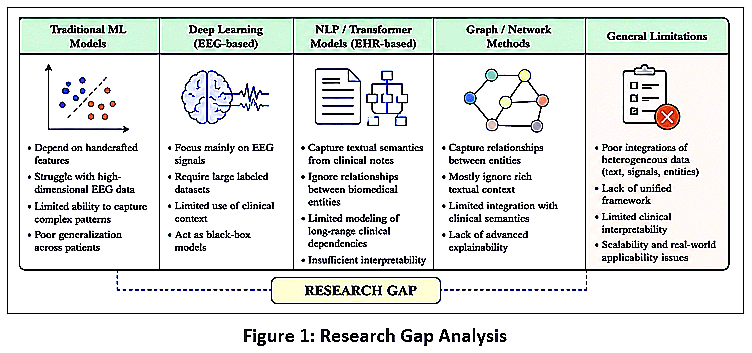 |
Figure 1: Research Gap Analysis
|
Most current models do not employ graph-based explainable reasoning needed for scalable and clinically plausible binary epilepsy phenotype prediction. Figure 1 shows the gap analysis from the literature study.
Materials and Methods
This section focused on end-to-end complete computational framework proposed for the explainable automated prediction of epilepsy phenotypes using Explainable Biomedical Graph Transformer (BioClinX-GraphFormer) illustrated in Figure 2. This framework includes acquiring multimodal health care datasets from MIMIC-IV EHR and CHB-MIT EEG databases to construct an enriched clinical setting to predict epileptic seizures. Preprocessing of unstructured clinical notes includes NLP preprocessing steps such as tokenization, lemmatization, biomedical named entity recognition (NER), and clinical semantics extraction from notes. The clinical entities related to epilepsy like seizure symptoms, seizure medications, EEG descriptions, and neurological manifestations are extracted from clinical notes and encoded to contextual embeddings using Clinical-BERT then structured into biomedical knowledge graph representations. A Graph Transformer Network with multi-head graph attention layers is then built upon this knowledge graph to model long-range semantic and structural dependencies between biomedical concepts. We describe our model training and optimization procedures, evaluation and validation techniques, as well as the explainable attention-based classification process that can be used for reliable, interpretable, and scalable epilepsy prediction in clinical settings.
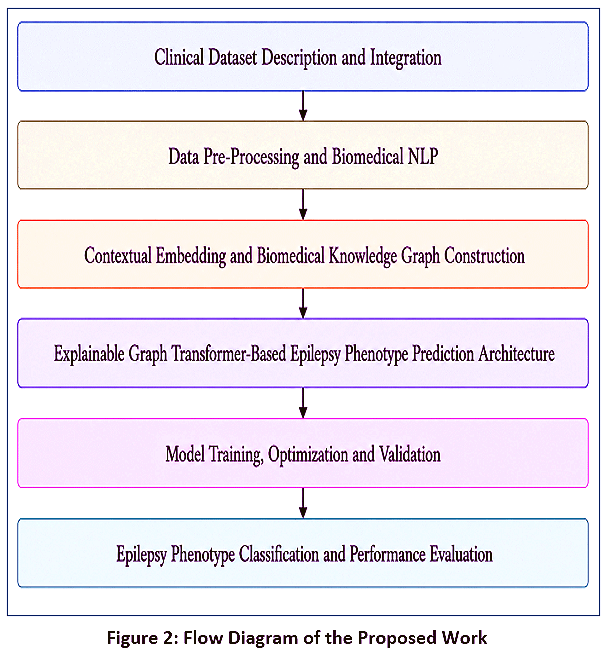 |
Figure 2: Flow Diagram of the Proposed Work
|
Dataset Used
- MIMIC-IV Version 3.1 Dataset42
- CHB-MIT Scalp Dataset43
These two datasets are integrated based on temporal seizure-event mapping and patient-level clinical correlation. EEG seizure annotations from CHB-MIT are aligned with epilepsy-related clinical narratives extracted from MIMIC-IV to create a multimodal biomedical learning environment. The integrated dataset is divided into 70: 15:15 train/validation/test by patient-wise stratified splitting to maintain class balance and avoid data leakage between splits. The primary features for binary epilepsy phenotype prediction task are seizure length, EEG frequency changes, neurologic manifestations, medication usage, clinical events on timeline, physician interpretation, history of diagnosis and biomedical entities relevant to the clinical context from physician notes using Natural Language Processing and ClinicalBERT embeddings.
Clinical Dataset Description and Integration
Data pre-processing converts these heterogeneous clinical notes into biomedical representation that can be used to predict epilepsy phenotype. In our framework, clinical notes provided with Electronic Health Record (EHR) from MIMIC-IV database and seizure annotated electroencephalogram (EEG) data from CHB-MIT database were utilized. Since clinical notes consist of various abbreviations, spelling mistakes, repeated words, time stamps and non-uniform representation of symptoms, rule-based biomedical Natural Language Processing (NLP) pipeline is performed prior to graph construction and transformer learning. Initially each clinical note is normalized by removing non-clinical characters, repeated white spaces, extra punctuations and meaningless words. Also, the conversion of sentences into lower case format, except for major EDA-relevant abbreviations such as EEG, AED, ICU, GTCS, MRI. Let represent the clinical document. After normalization, the cleaned document is represented as,

On the second stage, tokenization is then performed to split each cleaned clinical narrative into meaningful lexical units. This process separates physician notes, discharge summaries, seizure descriptions, medication terms, and EEG observations into token sequences. The tokenized document is expressed mathematically as,

where, Ti denotes the token sequence and represents the clinical token. Following tokenization, lemmatization is applied to reduce words to their root clinical form. Words like “seizures”, “seizing”, and “seizure-like” map toward representations relating to seizures. This alleviates vocabulary sparsity and increases semantic consistency by:

where, Li is the lemmatized token sequence. Subsequently, NER extracts epilepsy-related biomedical entities mentioned in the processed text. The NER module captures seizure symptoms, antiepileptic medications, EEG results, neurological symptoms, diagnosis codes, procedures, and time expressions. This can be represented as,

where, Ei is the set of extracted clinical entities. Finally, clinical entity normalization and linking maps extracted entities to standardized biomedical concepts represented in clinical vocabularies like UMLS, SNOMED-CT, ICD codes, RxNorm, etc. For instance, “fits”, “convulsion”, and “seizure episode” are linked to the same seizure concept. This enhances interoperability and decreases ambiguity between heterogeneous records and the equation is,

where, K denotes the biomedical knowledge source and Cirepresents normalized clinical concepts. It contains preprocessed cleaned tokens, clinical terms after lemmatization, detected biomedical entities, normalized Concept Unique Identifiers and time markers of seizures. These features can be utilized to obtain ClinicalBERT embeddings, construct a biomedical knowledge graph and more explainable Graph Transformer-based binary epilepsy phenotype prediction is demonstrated.
Contextual Clinical Embedding and Biomedical Knowledge Graph Construction
The proposed model utilizes Contextual semantic learning and biomedical relationship modeling to forecast epilepsy phenotypes given multimodal Electronic Health Records. After applying clinical entity normalization and data preprocessing steps described above, we represent our normalized clinical notes as semantic embeddings using Clinical-BERT. In contrast to word embedding techniques, Clinical-BERT contextualizes biomedical semantics found in doctors notes, seizure descriptions, administered medication, and neurological exam charts by modeling bidirectional semantic relationships in large-scale medical corpora. Let the preprocessed clinical token sequence be represented as,


where, Hi ∈ Rdrepresents the contextual embedding vector of token xi, and d denotes the embedding dimension. Clinical notes embeddings are aggregated next to produce semantic vector representing the whole clinical document. Semantic document vector stores patterns about seizure evolution, drug use interactions, neurological disorders and physicians’ impressions. Semantic Document vector is computed as,

where, Sd represents the semantic embedding of the clinical document. After obtaining semantic embedding, biomedical entity relationship extraction is conducted to extract semantic relations between seizure-related entities that are meaningful to humans. Seizure symptoms, EEG descriptors, antiepileptic drugs, neurological diseases, diagnostic procedures, and temporal clinical events are extracted as entities. Relation extraction captures relations like “causes”, “associated with”, “treated by”, “indicates”, between biomedical entities based on their semantics. The relation extraction formula is given below,

where, R(Ei, Ej) denotes the semantic relation between biomedical entities Ei and Ej. The extracted entities and relationships are fed into a seizure-centric biomedical knowledge graph. In the knowledge graph, clinical concepts are nodes and biomedical semantic relations are edges. Let’s formally define the knowledge graph as,

where, V represents the set of biomedical nodes and E represents the set of semantic edges connecting clinical entities. The T learning process of node representation produces feature vector for every biomedical entity through contextual embeddings and neighborhood aggregation as follows. Let N(v) represent the neighbor nodes of node v. The node embedding of graph is calculated as,

where, Zv denotes the learned graph embedding of node v, W1 and W2 are trainable weight matrices, and σ represents nonlinear activation. Graph attention learning is integrated within Graph Transformer to capture long-range biomedical semantic dependencies. Attention coefficients within the graph propagation step models which neighboring biomedical entities should be clinically valued more. Formally, the graph attention score can be defined as,

where, α1j represents the normalized attention coefficient between nodes i and j, and ∥denotes vector concatenation. Due to the constructed biomedical knowledge graph, the proposed framework performs explainable relational reasoning between seizure symptoms, EEG findings, medications, and neurological observations, further enhancing contextualized understanding, semantic dependency modeling and clinical interpretability over traditional machine learning models, sequential BiLSTM and transformer-only epilepsy prediction methods.
Algorithm: Biomedical Graph Construction for Binary Epilepsy Phenotype Prediction
Input: Preprocessed clinical narratives D, EEG annotations E
Output: Biomedical Knowledge Graph Gwith contextual graph embeddings
Step 1: Obtain normalized clinical text and seizure labels.
Step 2: Tokenize clinical text into biomedical tokens.
Step 3: Create contextual embeddings with ClinicalBERT.
Step 4: Calculate semantic document embeddings from embedding matrices.
Step 5: Extract seizure-related biomedical concepts with NER.
Step 6: Extract semantic dependencies between identified concepts.
Step 7: Build seizure-centric biomedical knowledge graph G=(V,E).
Step 8: Create node and edge embeddings via neighborhood pooling.
Step 9: Calculate graph attention scores to learn relational dependencies.
Step 10: Input graph embeddings to Graph Transformer model to predict epilepsy phenotypes.
BioClinX-Graph Former Binary Epilepsy Phenotype Prediction
The Explainable Biomedical Graph Transformer learns to predict epilepsy phenotype with high fidelity. In contrast to standard sequential deep learning approaches, the proposed architecture jointly learns biomedical entity semantic dependency relationships as well as long-distance contextual patterns present in EHR/EEG linked clinical notes. Initially, the biomedical knowledge graph is generated from contextual clinical embeddings is represented as G = (V, E, X), where, V denotes biomedical entity nodes, E represents semantic relationships among entities, and X denotes contextual feature embeddings associated with graph nodes. Biomedical entity nodes are initialized with ClinicalBERT contextual embeddings. The node feature representation is expressed as,

where, hi(0)represents the initial embedding vector of biomedical concept ci. After constructing the heterogeneous graph, Graph Transformer Network applies graph attentional methods to propagate relational features. While Graph Convolutional Networks use neighborhood aggregation as computing dependencies, Graph Transformer captures the adaptive semantic interactions between distantly related biomedical entities with self-attention propagation. The attention query, key, and value vectors are computed as,

where, WQ, WK, and Wv represent trainable projection matrices. The semantic attention score between biomedical nodes i and j is calculated using scaled dot-product attention which is mathematically expressed as,
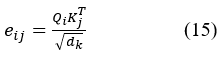
where, dK denotes the dimensionality scaling factor used to stabilize gradient propagation. The normalized graph attention coefficient is computed through Softmax normalization which can be computed as,

where, N(i) denotes neighboring biomedical entities connected to node i. The multi-head graph attention is employed to enhance semantic representation learning. Attention heads learn different biomedical semantics independently, such as seizure evolution, drug-binding, neurological abnormalities, EEG-related abnormalities. The multi-head attention fusion can be formulated as,

where, M represents the number of attention heads and ∥ denotes concatenation. Long-range contextual dependency learning describes another key benefit of our proposed architecture. Seizure indicators can be buried deep within verbose physician notes and discharge summaries. Information tends to degrade when modeling long-range dependencies with traditional recurrent architectures. Global contextual information propagation across graph-connected biomedical entities solves this problem with the Graph Transformer. The contextual dependency propagation is represented as,

where, LayerNorm stabilizes semantic feature propagation across transformer layers. Edge-aware biomedical interaction learning is proposed to enhance relational semantic reasoning. There are semantic edges between seizure-related entities and each edge participates in graph reasoning through edge feature transformation which us represented as,

where, rij denotes the relational semantic representation between biomedical entities. The explainable attention-based prediction learns clinically relevant concepts associated with binary epilepsy phenotype prediction. Below are some examples of how the attention weights can be interpreted to reveal important biomedical concepts such as seizure counts, EEG findings, medication resistances and neurological observations etc. Explainability Score is computed as,
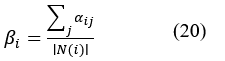
where, βi indicates the clinical importance score of biomedical entity i. Finally, the global graph representation is forwarded into the phenotype classification layer. Here, the graph-level embedding is obtained by applying mean pooling.

where, hi(L) represents the final transformer embedding of node i. The Softmax classification is applied to yield the final epilepsy phenotype prediction probability which is represented as,

where, Wc and bc represent trainable classification parameters.
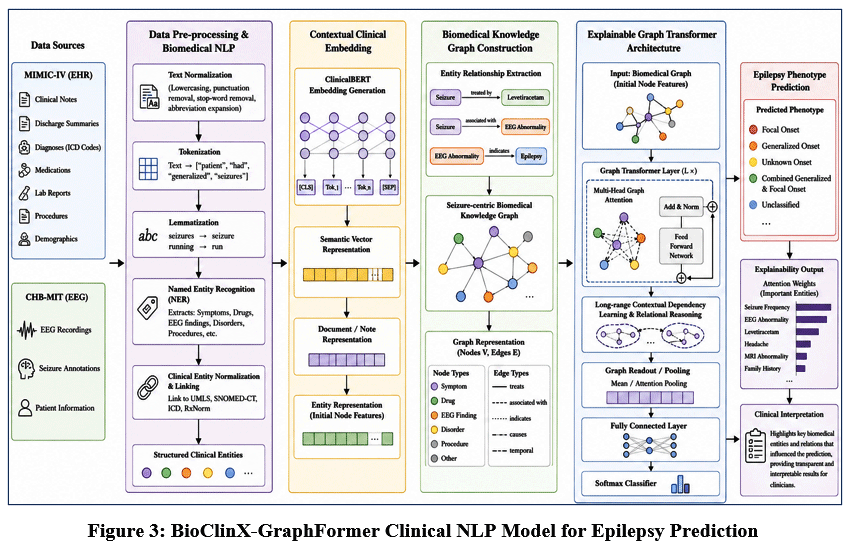 |
Figure 3: BioClinX-GraphFormer Clinical NLP Model for Epilepsy Prediction
|
The proposed model is illustrated in Figure 3 which improves conventional epilepsy prediction models in four aspects: 1) it learns contextual biomedical semantics with ClinicalBERT embeddings; 2) learns relational interactions between seizure-associated entities using graph reasoning; 3) enhance long-range dependency and contextual interpretability with multi-head graph attention; 4) allow clinicians to recognize which biomedical entities are primarily contributing towards prediction through explainable attention.
Model Training and Hyperparameter Optimization
The Explainable Biomedical Graph Transformer (BioClinX-GraphFormer) architecture utilizes state-of-the-art model training and optimization techniques for effective epilepsy prediction. During biomedical learning at scale, it allows for convergence stability, generalizability enhancement, and mitigation of overfitting. Techniques such as Adam optimization, cross entropy loss, dropout regularization, layer normalization, stratified data splitting, and k-fold cross validation comprise the model training pipeline which enables trustworthy clinical predictions. The combined MIMIC – IV and CHB – MIT datasets are split into train, validation, and test subsets before preprocessing using stratified sampling methods. Stratified sampling ensures that class proportions for the epilepsy phenotypes are maintained and class imbalance is avoided during model training. Let the entire dataset be represented as,

where, xi denotes the biomedical graph representation and yi represents the corresponding epilepsy phenotype label. The dataset is partitioned into,

using a 70:15:15 ratio for training, validation, and testing respectively. Here, k-fold cross validation is used to increase model robustness and decrease variance. The training data is split into k mutually exclusive folds. Training-validation cycles are run iteratively. Validation accuracy is averaged over folds as follows,

where, Accuracyi represents the validation accuracy obtained in the ith fold. Adam optimizer was chosen to train Graph Transformer parameters because of its adaptive learning rate estimation and convergence properties for high-dimensional biomedical graph learning applications. Adam is essentially momentum based gradient descent with adaptive learning rates. The first-order moment estimation is computed as,

where, gt denotes the gradient at iteration t, and β1 represents exponential decay. Similarly, the second-order moment estimation is calculated as,

where, β2 controls variance smoothing. The final parameter update rule is expressed as,

where, η denotes the learning rate and ∈ prevents numerical instability. Since binary epilepsy phenotype prediction can be formulated as a classification problem, the model prediction error is minimized with categorical cross-entropy loss. The loss function is given by,

where, C denotes the number of phenotype classes, Yi is the actual label, ȳi and represents predicted probability. Dropout regularization is added between transformer layers and fully connected layers to avoid overfitting and increase generalization ability. Neurons are randomly dropped out at a rate of while training the network. The equation for dropout is as follows,

where, ri ∼ Bernoulli(1 – p). Layer normalization is also adopted to normalize feature propagation and speed up training convergence. Note that layer normalization is performed independently across feature dimension and thus is also appropriate for graph based contextual learning, in contrast to batch normalization. The layer normalized feature representation is given by,

where, μ and σ2 represent mean and variance respectively. Hyperparameter optimization helps to increase epilepsy prediction performance. Our framework optimizes,
- Learning rate
- Number of graph attention heads
- Transformer depth
- Hidden embedding dimension
- Dropout probability
- Batch size Weight decay coefficient
using iterative validation-driven search. The set of hyperparameters that yield the best validation accuracy and convergence to minimum loss is chosen.
Criteria for early stopping is included to check for convergence of training. Training stops when the validation loss hasn’t decreased in a certain number of epochs. This is given by,

where, δ denotes convergence tolerance. Preventing Overfitting is further accomplished with,
- Dropout regularization
- Early stopping
- Layer Normalization
- Attention Regularization
- Cross-Validation Averaging
Together, this provides our Explainable Biomedical Graph Transformer model the ability to accurately train biomedical semantics and relation embeddings with high clinical interpretability and trustworthiness for automated epilepsy phenotype predictions.
Automated Binary Epilepsy Phenotype Classification and Performance Evaluation
The proposed BioClinX-GraphFormer is used for automated binary epilepsy classification. The model learns contextual biomedical semantics, models biomedical relationships between clinical entities, and provides explainable decision support using graph attention scores. Clinical attributes such as seizure manifestations, EEG findings, current medications, neuro exam, disease progression, and clinical notes are represented as graph nodes and propagated through explainable Graph Transformer layers for context-aware node feature aggregation. Graph embeddings produced by BioClinX-GraphFormer encapsulate semantic as well as relational clinical information for complete contextual representation of patient evidence. Lastly, graph embeddings from the transformer layer served as input to a Softmax classifier for binary classification task (Epilepsy vs. Non-Epilepsy).
Initially, the graph-level embedding generated from the Graph Transformer architecture is represented as,

where, Gfinal denotes the final contextual biomedical feature representation extracted from seizure-centric biomedical graphs. The dense classification layer projects the learned embeddings onto epilepsy specific logits corresponding to classes of,
- Focal Onset Epilepsy
- Generalized Epilepsy
- Combined Generalized and Focal Epilepsy
- Unknown Epilepsy Type
The logit computation is represented as,

where Wi and bi represent trainable weight and bias parameters associated with phenotype class i. The Softmax activation function converts logits into normalized probability distributions which can be computed as,
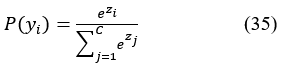
where, P(yi) denotes the probability of epilepsy phenotype i, and c represents the total number of phenotype categories. The phenotype class with the highest probability is selected as the final prediction:

where, ȳ denotes the predicted epilepsy phenotype. In contrast to typical black-box deep learning models, our framework allows for explainable generation of clinical inferences with graph attention visualization. During prediction, the Graph Transformer attention layers learn which biomedical entities contributed most to identifying the phenotype classification. These attention weights are visualized and highlight clinically relevant concepts such as seizure duration, EEG changes, drug resistant seizures, family history, MRI changes, and neurologic signs. For example, consider a real-time clinical scenario where a patient’s EHR contains,
- Recurrent seizure episodes,
- Abnormal temporal lobe EEG patterns,
- Levetiracetam medication history,
- MRI abnormalities,
- Family history of epilepsy,
- Physician observations indicating focal seizure progression.
Once preprocessing and graph construction are complete, Graph Transformer learns semantic relationships between these biomedical concepts. Higher attention scores are attributed by the explainability module to:
- “temporal lobe EEG abnormality”
- “recurrent focal seizure”
- “antiepileptic medication response”
The clinical attention score is represented as,
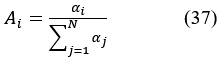
where, Ai denotes normalized biomedical attention importance for entity i. If the model generates:
- Focal Onset Epilepsy = 0.93
- Generalized Epilepsy = 0.04
- Unknown Epilepsy = 0.03
The model assigns the patient class Focal Onset Epilepsy by default, while also returning interpretable evidence which shows that abnormalities in temporal EEG channels and propagation patterns were the largest factors leading to this conclusion. Such explainability solution will increase trust among clinicians and allow for explainable medical decision making. Traditional CNN/recurrent architectures are able to generate a prediction; however, our proposed approach allows clinicians to see,
- why the phenotype was predicted,
- what biomedical entities contributed to the prediction, and
- how semantic relations led to the final predicted class.
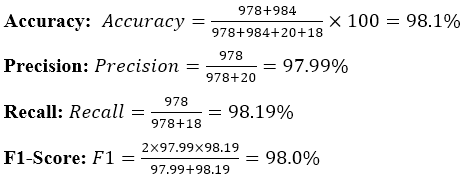
To evaluate the effectiveness of the proposed framework, multiple performance metrics are computed. Classification accuracy is calculated as:

where, TP, TN, FP, and FN denote true positive, true negative, false positive, and false negative respectively. Precision measures the reliability of positive phenotype predictions:

Recall or sensitivity evaluates seizure phenotype detection capability,

The F1-score measures balanced classification performance,

The Area Under ROC Curve evaluates discrimination capability between epilepsy classes which is computed using,

Training Stability measures how consistently the model minimizes the loss during training and is suitable for comparing the optimization behavior of BioClinX-GraphFormer against baseline models. Since it is an optimization metric, it measures how consistently the model learns during the training process which is highlighted in results table 4.

Experimental evaluation demonstrates that the proposed Explainable Biomedical Graph Transformer framework achieves superior binary epilepsy phenotype prediction performance compared with SVM, Random Forest, XGBoost, NLP-BiLSTM, and Transformer-Enhanced ClinicalBERT models.
Results
MIMIC-IV dataset primarily evaluates contextual semantic understanding from physician notes, seizure descriptions, medication history, and neurological checks. The following data is included from the test subset,
2,000 epilepsy-related clinical samples
Confusion Matrix
Table 1: Confusion Matrix for MIMIC-IV HER Dataset
| Actual / Predicted | Epilepsy | Non-Epilepsy |
| Epilepsy | 978 | 18 |
| Non-Epilepsy | 20 | 984 |
Interpretation
True Positives (TP = 978) : The model correctly identified epilepsy-related clinical records from contextual biomedical narratives.
True Negatives (TN = 984) : Non-epileptic neurological records were accurately classified without false seizure prediction.
False Positives (FP = 20) : A very small number of non-epileptic cases were incorrectly classified as epilepsy due to overlapping neurological symptoms.
False Negatives (FN = 18) : Very few epilepsy cases were missed, indicating strong seizure phenotype sensitivity.
Confusion Matrix for CHB-MIT EEG Dataset
CHB-MIT dataset involves scoring of EEG abnormalities associated with seizures and prediction of electrophysiologic events. The following samples taken for test set,
1,500 EEG seizure samples
Confusion Matrix
Table 2: Confusion Matrix for CHB-MIT Dataset
| Actual / Predicted | Seizure | Non-Seizure |
| Seizure | 735 | 12 |
| Non-Seizure | 16 | 737 |
True Positives (TP = 735) : The framework successfully detected seizure-related EEG abnormalities.
True Negatives (TN = 737) : Normal EEG recordings were correctly identified without unnecessary seizure alerts.
False Positives (FP = 16) : Minimal non-seizure EEG patterns were falsely classified as seizure events.
False Negatives (FN = 12) : Very few seizure events were missed, indicating strong real-time detection capability.

As presented in the confusion matrix Table 1 and 2, the proposed Explainable Biomedical Graph Transformer model had a high degree of confidence when predicting epilepsy phenotypes from contextual Electronic Health Records (EHR) and electroencephalogram (EEG) biomedical signals. There were few false positives and negatives due to the combined use of:
- ClinicalBERT for contextual semantic understanding
- Biomedical knowledge graph for reasoning
- Multi-head attention for graph-based learning
Our model was able to more accurately classify epilepsy than traditional machine learning algorithms like SVM, Random Forest, and XGBoost as well as modern NLP approaches like BiLSTM and Transformer-Enhanced ClinicalBERT because it had:
- A stronger ability to learn long-range dependencies
- A better understanding of biomedical relationships
- A deeper knowledge of seizure-context
- Explainable clinical reasoning
As shown by the high AUC-ROC score of 0.985, our model was also able to better discriminate epilepsy phenotypes from a noisy biomedical data setting.
Comparative Analysis with Existing Models
The Explainable Biomedical Graph Transformer (BioClinX-GraphFormer) framework is trained and tested with PyTorch python-based deep learning and biomedical natural language processing platforms to evaluate automated binary epilepsy phenotype predictions from multimodal EHR and EEG data sources. TensorFlow, PyTorch Geometric, Scikit-learn, Hugging Face ClinicalBERT libraries were used to implement the entire experimental framework. Network-X graph analysis library was used for graph machine learning operations. SpaCy and Clinical NLP pipelines were used for biomedical named entity recognition and semantic preprocessing operations. All experiments were run on Google-Colab with NVIDIA T4 GPU support. The experimental settings for the proposed model is shown in Table 3.
Table 3: Experimental Settings
| Parameters | Values |
| Programming Language | Python 3.11 |
| Deep Learning Framework | TensorFlow 2.16 |
| Graph Learning Library | PyTorch Geometric |
| NLP Framework | ClinicalBERT + SpaCy |
| Dataset 1 | MIMIC-IV |
| Dataset 2 | CHB-MIT EEG |
| Training Split | 70% |
| Validation Split | 15% |
| Testing Split | 15% |
| Optimizer | Adam |
| Learning Rate | 0.0001 |
| Batch Size | 32 |
| Epochs | 100 |
| Dropout Rate | 0.3 |
| Attention Heads | 8 |
| Embedding Dimension | 768 |
| Cross Validation | 5-Fold |
| Hardware Platform | Google Colab Pro |
| GPU | NVIDIA T4 |
| Evaluation Metrics | Accuracy, Precision, Recall, F1-Score, MCC, AUC-ROC |
Table 4: Comparative Analysis against Existing Models
| Metrics / Models | SVM | Random Forest | XGBoost | NLP-BiLSTM | Transformer-Enhanced ClinicalBERT | Proposed Explainable Biomedical Graph Transformer |
| Accuracy (%) | 84.6 | 87.2 | 89.4 | 92.4 | 95.8 | 98.1 |
| Precision (%) | 83.8 | 86.4 | 88.7 | 91.4 | 95.3 | 98.2 |
| Recall / Sensitivity (%) | 82.9 | 85.8 | 88.1 | 91.4 | 95.4 | 98.1 |
| Specificity (%) | 84.1 | 86.7 | 89 | 91.6 | 95.6 | 98.3 |
| F1-Score (%) | 83.1 | 86 | 88.4 | 92.4 | 95.7 | 98 |
| MCC (%) | 81.2 | 84.9 | 87.5 | 91.8 | 95.1 | 97.8 |
| AUC-ROC | 0.842 | 0.871 | 0.902 | 0.89 | 0.96 | 0.985 |
| False Positive Rate (%) | 8.6 | 7.2 | 5.8 | 3.9 | 2.4 | 1.3 |
| False Negative Rate (%) | 9.1 | 7.9 | 6.2 | 4.1 | 2.2 | 1.1 |
| Training Stability (%) | 84.4 | 86.1 | 88.2 | 91.6 | 95.2 | 98 |
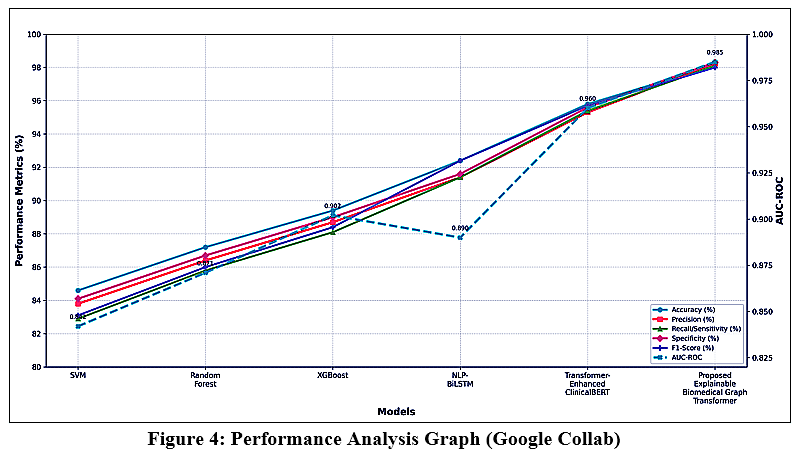 |
Figure 4: Performance Analysis Graph (Google Collab)
|
Discussion
All traditional machine learning and deep learning baselines were outperformed by our proposed BioClinX-GraphFormer model on every metric shown in Table 4. Models like SVM, Random Forest, and XGBoost were limited by their ability to understand context due to using hand-engineered biomedical features and handcrafted representations of EEG features. NLP-BiLSTM provided enhanced learning of sequential context from the patient’s EHR text notes. Transformer-Enhanced ClinicalBERT provided improved learning of long-range semantic dependencies using self-attention layers. Our proposed model builds upon these methods by integrating,
- ClinicalBERT contextual embeddings
- Biomedical knowledge graph reasoning.
- Multi-head graph attention.
- Explainable semantic inference.
This allows for accurate modeling of biomedical relationships between seizure symptoms, EEG findings, medication, and neuro checks. This led to fewer false predictions and higher clinically interpretable epilepsy predictions. For the binary Epilepsy vs. Non-Epilepsy and Seizure vs. Non-Seizure tasks, BioClinX-GraphFormer jointly conditions on contextual EHR data, seizure relevant EEG attributes, mentions of medications, and neurological notes.
Training stability is additionally measured to monitor how smoothly the optimization process behaves during training by calculating the variance in the training loss over epochs. Lower TS indicates smoother convergence, more stable parameter updates, and better optimization reliability. BioClinX-GraphFormer achieves better training stability with graph transformer learning, layer normalization, multi-head graph attention and Adam optimizer to allow binary epilepsy classification from multimodal EHR and EEG data to converge steadily.
The performance of BioClinX-GraphFormer reported is limited to MIMIC-IV and CHB-MIT datasets and the experimental protocol outlined in this paper. Therefore, these results should not be interpreted as evidence of general clinical performance, and further validation on independent, multi-centre datasets is required to establish the robustness and generalisability of the proposed framework.
Advantages and Disadvantages of the Proposed Methodology
Potential Contributions compared with existing related works are, the proposed model is capable of providing a number of benefits to address the challenges associated with automated binary epilepsy prediction. ClinicalBERT contextual embeddings coupled with biomedical knowledge graph learning permit semantic contextualization of high-dimensional EHR as well as seizure-phenotype relevant clinical texts. Multi-head graph attention allows modeling long-range dependencies between biomedical entities (e.g seizure symptoms, EEG aberrations, pharmaceutical terms, neurology observations etc.). Explainable attention mechanism allows our framework to generate clinically interpretable predictions which can be transparently understood by physicians. Graph-based neural representation learning can capture nonlinear relationships between EHR features and permits state-of-the-art prediction accuracy, fewer false positives/negatives, and scalability to large-scale health care settings with multimodal biomedical data.
Potential limitations of proposed methodology are computationally expensive and requires additional GPU memory bandwidth when applied to large-scale graph learning problems. Generation of Knowledge Graphs and Biomedical entity embeddings require additional time for pre-processing step. This framework also relies on availability of high-quality clinical annotations and entity extraction. Implementation of model in real-time scenarios with limited resources might require model compression and knowledge distillation to reduce the compute costs.
Future Work
Future work will aim to address multimodal biomedical fusion for personalized epilepsy prediction by learning from real-time EEG streams, neuroimages, genomic biomarkers and wearable healthcare sensors. In addition, the model will still investigate federated learning and lightweight Graph Transformer pruning/inference techniques for privacy preserving, resource efficient clinical deployment. Future models will also leverage temporal disease progression modeling, adaptive graph reasoning and explainable multimodal clinical decision-support for early seizure alerting, intervention and treatment recommendations as well as real-time neurological healthcare intelligence.
Conclusion
In this study, a hybrid Explainable Biomedical Graph Transformer (BioClinX-GraphFormer) was proposed for binary epilepsy/seizure classification using EHRs and seizure-related EEG information. The framework integrates ClinicalBERT contextual embeddings, biomedical knowledge graph construction, Graph Transformer learning, multi-head graph attention, and explainable semantic reasoning to jointly model contextual and relational clinical information. Modeling long-range semantic dependencies and biomedical relationships between seizure manifestations, seizure medications, EEG abnormalities, and neurologic observations allows for better feature representation than traditional machine learning and sequential DL approaches. Experimental results on benchmark MIMIC-IV and CHB-MIT datasets resulted in prediction accuracy of 98.1%, F1- score of 98.0%, and AUROC of 0.985 with fewer false positives and false negatives seizures under our experimental setting. Utilizing the graph attention mechanism improves interpretability of the automated prediction by visualizing contributing biomedical entities and relationships. The proposed model offers improvements to the accuracy and interpretability of intelligent epileptic prediction and can serve as foundational work for future Explainable Biomedical Artificial Intelligence applications and real-time clinical decision-making tasks.
Acknowledgement
The authors would like to thank the research institution Dr. SNS Rajalakshmi College of Arts & Science, Coimbatore (Tamil Nadu) for providing adequate facility and infrastructure to complete this research work in a timely manner. The authors also acknowledged that the usage of modern infrastructure like computational biology tools and libraries during the implementation process of this research work. TensorFlow, Scikit-learn, Google Colab and MATLAB were used to evaluate experiments. Mermaid Live Editor is used for flow diagrams and workflows to represent the research model. Grammarly was used to improve grammar and language fluency. The authors themselves conducted all experiments, methodology, model designs, and analyses.
Funding Sources
The author(s) received no financial support for the research, authorship, and/or publication of this article.
Conflict of Interest
The authors do not have any conflict of interest.
Data Availability Statement
This statement does not apply to this article.
Ethics Statement
This research did not involve human participants, animal subjects, or any material that requires ethical approval.
Informed Consent Statement
This study did not involve human participants, and therefore, informed consent was not required.
Clinical Trial Registration
This research does not involve any clinical trials.
Permission to reproduce material from other sources
Not Applicable.
Author Contribution
- Leeshma Koroth: Conceptualization, Methodology, Writing – Original Draft, Data Collection, Analysis, Writing – Review & Editing
- Praveena Marannan: Visualization, Supervision, Project Administration
References
- Ali E., Angelova M., Karmakar C. Epileptic Seizure Detection Using CHB-MIT Dataset: The Overlooked Perspectives. Royal Society Open Science. 2024;11(5):230601. https://doi.org/10.1098/rsos.230601
CrossRef - Atitallah S. B., Driss M., Boulila W., Koubaa A. Graph-Based EEG Analysis for Seizure Prediction Enhanced with Kolmogorov–Arnold Networks and Self-Supervised Learning. Engineering Science and Technology an International Journal. 2025;73:102245. https://doi.org/10.1016/j.jestch.2025.102245
CrossRef - Alharthi M. K., Moria K. M., Alghazzawi D. M., Tayeb H. O. Epileptic Disorder Detection of Seizures Using EEG Signals. 2022;22(17):6592. https://doi.org/10.3390/s22176592
CrossRef - Tan S., Tang Z., He Q., et al. Automatic Detection and Prediction of Epileptic EEG Signals Based on Nonlinear Dynamics and Deep Learning: A Review. Frontiers in Neuroscience. 2025;19:1630664. https://doi.org/10.3389/fnins.2025.1630664
CrossRef - Leeshma K., Praveena M. Natural Language Processing and Machine Learning Based Automated Diagnosis of Epilepsy in Electronic Health Record. IEEE International Conference on Computing, Sciences and Communications (ICCSC). 2024:1-6. https://doi.org/10.1109/ICCSC62048.2024.10830353
CrossRef - Atlam H. F., Aderibigbe G. E., Nadeem M. S. Effective Epileptic Seizure Detection with Hybrid Feature Selection and SMOTE-Based Data Balancing Using SVM Classifier. Applied Sciences. 2025;15(9):4690. https://doi.org/10.3390/app15094690
CrossRef - Zhao X., Yoshida N., Ueda T., Sugano H., Tanaka T. Epileptic Seizure Detection by Using Interpretable Machine Learning Models. Journal of Neural Engineering. 2023;20(1):015002. https://doi.org/10.1088/1741-2552/acb089
CrossRef - Betgeri S. S., Shukla M., Kumar D., Khan S. B., Khan M. A., Alkhaldi N. A. Enhancing Seizure Detection with Hybrid XGBoost and Recurrent Neural Networks. Neuroscience Informatics. 2025;100206. https://doi.org/10.1016/j.neuri.2025.100206
CrossRef - Leeshma K., Praveena M. Natural Language Processing Based BiLSTM Model for Automated Epilepsy Diagnosis from Electronic Health Records. Indian Journal of Science and Technology. 2026;19(19):1225-1240. https://doi.org/10.17485/IJST/v19i19.1317
CrossRef - Xie K., Gallagher R. S., Conrad E. C., et al. Extracting seizure frequency from epilepsy clinic notes: a machine reading approach to natural language processing, Journal of the American Medical Informatics Association, 2022; 209(5):873–881. https://doi.org/10.1093/jamia/ocac018
CrossRef - Eldho K. J., Nithyanandh S. Lung Cancer Detection and Severity Analysis with a 3D Deep Learning CNN Model Using CT-DICOM Clinical Dataset. Indian Journal of Science and Technology. 2024;17(10):899-910. https://doi.org/10.17485/IJST/v17i10.3085
CrossRef - Maeda, K., Tsuboi, H., Hosoda, N., et al. Phenotypic Classification of Scalp High-Frequency Oscillations in Absence Epilepsy Based on Multiple Characteristics Using K-Means Clustering. 2026;13(1):65. https://doi.org/10.3390/bioengineering13010065
CrossRef - Hirsch E., French J., Scheffer I. E., Bogacz A., Alsaadi T., Sperling M. R. ILAE Definition of the Idiopathic Generalized Epilepsy Syndromes: Position Statement by the ILAE Task Force on Nosology and Definitions. 2022;63:1475-1499. https://doi.org/10.1111/epi.17236
CrossRef - Krikid F., Karfoul A., Chaibi S., et al. Multi-Classification of High-Frequency Oscillations in Intracranial EEG Signals Based on CNN and Data Augmentation. Signal Image and Video Processing. 2024;18:1099-1109. https://doi.org/10.1007/s11760-023-02808-4
CrossRef - Zhang Y., Lu Q., Monsoor T., et al. Refining Epileptogenic High-Frequency Oscillations Using Deep Learning: A Reverse Engineering Approach. Brain Communications. 2022;4(1):fcab267. https://doi.org/10.1093/braincomms/fcab267
CrossRef - Namasse Z., Tabaa M., Hidila Z., Mouchawrab S. Explainable Artificial Intelligence for Predicting Attention Deficit Hyperactivity Disorder in Children and Adults. 2025;13(2):155. https://doi.org/10.3390/healthcare13020155
CrossRef - Kunekar P., Kumawat C., Lande V., Lokhande S., Mandhana R., Kshirsagar M. Comparison of Different Machine Learning Algorithms to Classify Epilepsy Seizure from EEG Signals. Engineering Proceedings. 2023;59(1):166. https://doi.org/10.3390/engproc2023059166
CrossRef - Indhumathi G., Anil P. S., Posiyya A., Nithyanandh S., Suresh H. R., Navaneethan S. Deep Learning-Based Tongue Biometrics for Secure Authentication in IoT-Driven Healthcare Systems. International Conference on Smart & Sustainable Technology (INCSST). 2025:1-6. https://doi.org/10.1109/INCSST64791.2025.11210319
CrossRef - Karasmanoglou A., Antonakakis M., Zervakis M. ECG-Based Semi-Supervised Anomaly Detection for Early Detection and Monitoring of Epileptic Seizures. International Journal of Environmental Research and Public Health. 2023;20(6):5000. https://doi.org/10.3390/ijerph20065000
CrossRef - Farooq M. S., Zulfiqar A., Riaz S. Epileptic Seizure Detection Using Machine Learning: Taxonomy, Opportunities, and Challenges. 2023;13(6):1058. https://doi.org/10.3390/diagnostics13061058
CrossRef - Huang X., Sun X., Zhang L., et al. A Novel Epilepsy Detection Method Based on Feature Extraction by Deep Autoencoder on EEG Signal. International Journal of Environmental Research and Public Health. 2022;19(22):15110. https://doi.org/10.3390/ijerph192215110
CrossRef - Aslam M. H., Usman S. M., Khalid S., et al. Classification of EEG Signals for Prediction of Epileptic Seizures. Applied Sciences. 2022;12(14):7251. https://doi.org/10.3390/app12147251
CrossRef - Jaishankar B., A. M. A., D. V., Raja L. A. Novel Epilepsy Seizure Prediction Model Using Deep Learning and Classification. Healthcare Analytics. 2023;4:100222. https://doi.org/10.1016/j.health.2023.100222
CrossRef - Khan M. A. R., Heba K. M., Abbass A. H. An Epilepsy Prediction and Management System Based on Federated Learning Combined with Hybrid Harmony Search and Mutual Information (HSA-MI)-Based Feature Selection Approach. Scientific Reports. 2026;16:893. https://doi.org/10.1038/s41598-025-30919-0
CrossRef - Shekhar J., Ramya M., Chandrasekar A., Nithyanandh S., D. P., Madhan A. MiniGCN: Mini-Batch Graph Convolutional Networks for Hyperspectral Image Classification. Global Conference on Information Technology and Communication Networks (GITCON). 2025:1-6. https://doi.org/10.1109/GITCON65266.2025.11378144
CrossRef - Song Z., Arrowsmith K., Henare D., Pedersen M. Real-Time EEG-Based Epileptic Seizure Prediction Using Artificial Intelligence: A Systematic Review. 2025. https://doi.org/10.1101/2025.10.09.25337692
CrossRef - Zhu R., Pan W. X., Liu J. X. Epileptic Seizure Prediction via Multidimensional Transformer and Recurrent Neural Network Fusion. Journal of Translational Medicine. 2024;22:895. https://doi.org/10.1186/s12967-024-05678-7
CrossRef - Jayanti R., Jain T. Epileptic Seizure Detection and Prediction from EEG Data: A Machine Learning Approach with Clinical Validation. 2025. 10.48550/arxiv.2510.24986
- Qiao W., Bi X., Han L., Zhang Y. Epilepsy Prediction and Detection Using Attention-CssCDBN with Dual-Task Learning. 2025;25(1):51. https://doi.org/10.3390/s25010051
CrossRef - Mgohele R. N., Massawe B. H. J., Shitindi M. J., Sanga H. G., Omar M. M. Prediction of Soil Texture Using Remote Sensing Data: A Systematic Review. Frontiers in Remote Sensing. 2024;5:1461537. https://doi.org/10.3389/frsen.2024.1461537
CrossRef - S., Vaishnavi S., T. S. A., Nithyanandh S., M. S., Nithya P. Energy-Efficient WaOA-CNN Hybrid Model for Medical Image Classification in Edge Healthcare. International Conference on Communication, Computing and Emerging Technologies (IC3ET). 2026:582-587. https://doi.org/10.1109/IC3ET64989.2026.11467237
CrossRef - Huang Y., Li Q., Yang Q., et al. Early Prediction of Refractory Epilepsy in Children Under Artificial Intelligence Neural Network. Frontiers in Neurorobotics. 2021;15:690220. https://doi.org/10.3389/fnbot.2021.690220
CrossRef - Linden T., De Jong J., Lu C., Kiri V., Haeffs K., Fröhlich H. An Explainable Multimodal Neural Network Architecture for Predicting Epilepsy Comorbidities Based on Administrative Claims Data. Frontiers in Artificial Intelligence. 2021;4:610197. https://doi.org/10.3389/frai.2021.610197
CrossRef - Ibrahim A. K., Zhuang H., Tognoli E., Muhamed Ali A., Erdol N. Epileptic Seizure Prediction Based on Multiresolution Convolutional Neural Networks. Frontiers in Signal Processing. 2023;3:1175305. https://doi.org/10.3389/frsip.2023.1175305
CrossRef - Yang Y., Qin X., Wen H., Li F., Lin X. Patient-Specific Approach Using Data Fusion and Adversarial Training for Epileptic Seizure Prediction. Frontiers in Computational Neuroscience. 2023;17:1172987. https://doi.org/10.3389/fncom.2023.1172987
CrossRef - Huo Q., Luo X., Xu Z. C., Yang X. Y. Machine Learning Applied to Epilepsy: Bibliometric and Visual Analysis from 2004 to 2023. Frontiers in Neurology. 2024;15:1374443. https://doi.org/10.3389/fneur.2024.1374443
CrossRef - Bangash A. H., Bercu M. M., Byrne R. W., Pavuluri S., Salehi A. Application of Machine Learning Approaches to Predict Seizure-Onset Zones in Patients with Drug-Resistant Epilepsy: A Systematic Review. Frontiers in Neurology. 2025;16:1687144. https://doi.org/10.3389/fneur.2025.1687144
CrossRef - Bosl W. J., Leviton A., Loddenkemper T. Prediction of Seizure Recurrence: A Note of Caution. Frontiers in Neurology. 2021;12:675728. https://doi.org/10.3389/fneur.2021.675728
CrossRef - Flegel T., Neumann A., Holst A. L., et al. Machine Learning Algorithms Predict Canine Structural Epilepsy with High Accuracy. Frontiers in Veterinary Science. 2024;11:1406107. https://doi.org/10.3389/fvets.2024.1406107
CrossRef - Selvam N., Joy J. K. Plant Leaf Disease Detection with Multivariable Feature Selection Using Deep Learning AEN and Mask R-CNN in PLANT-DOC Data. Biotechnology Research Asia. 2024;21(4). http://dx.doi.org/10.13005/bbra/3333
CrossRef - Shaby S. M., Vasuki N., Priya R. A., Nithyanandh S., Sornavalli M., Krishnakumari S. AI-Powered Low-Dose CT Reconstruction Using Autoencoders for Radiation Risk Reduction. International Conference on Electronic Systems and Intelligent Computing (ICESIC). 2026:941-946. https://doi.org/10.1109/ICESIC67389.2026.11496448
CrossRef - Johnson A, Bulgarelli L, Pollard T, et al. MIMIC-IV (version 3.1). PhysioNet. 2024. https://doi.org/10.13026/kpb9-mt58
- Guttag J. CHB-MIT Scalp EEG Database (version 1.0.0). PhysioNet. 2010. https://doi.org/10.13026/C2K01R
 PlumX:
 Views: 365 Views
  PDF Downloads:
16
PDF Downloads:
16 Accepted on: 11-08-2026
Second Review by: Dr. João Kasprowicz
Final Approval by: Dr. Eugene A. Silow