Vitamin D₃ and L-Theanine Co-Therapy Alleviates Behavioral and Biochemical Deficits in a Chronic Unpredictable Stress Rodent Model
 , Archana Jorige*and Tejasri Talloju
 Department of Pharmacology, R.B.V.R.R. Women’s College of Pharmacy (Affiliated Osmania University), Hyderabad, India.
Corresponding Author E-mail: archanacology@gmail.com
Download this article as:
ABSTRACT:Stress, particularly chronic stress, affects physical and mental health and causes adverse outcomes. Mental disorders account for 14% of all diseases, with depression being the main cause. Chronic Unpredictable Stress (CUS) models are used to study stress-induced disorders and evaluate therapeutic agents. Vitamin D3(Vit D3), essential for mood regulation and neuroplasticity, L-theanine, an amino acid in tea with anxiolytic and neuroprotective qualities, have been connected to depression and stress susceptibility. This study used adult male Albino Wistar rats aged ten–fifteen-weeks weighing 250–350 g to investigate the combined effects of L-theanine and Vit D3in the CUS Model. This involves administering Vit D3 and L-theanine to rodents after exposure to random stressors for a predetermined duration. Behavioural tests including forced swim test(FST), sucrose preference test(SPT), open field test(OFT), splash test, and novel object recognition test(NORT) evaluated cognitive and anhedonia symptoms resembling depression. Biochemical assays measured glucose, total cholesterol, triglyceride, and cortisol levels in serum, and adrenal gland relative weight was measured. Results indicated that L-theanine and Vit D3 significantly mitigated CUS-induced behavioural changes, showing reduced immobility in forced swim test, increased exploratory behaviour in OFT, normalized SPT and increased cognition in NORT. Biochemical assessment showed triglycerides, cholesterol, glucose, and cortisol levels were lower in treatment groups than stress control group. The results demonstrate that co-administration of L-theanine and Vit D3confers superior protection against CUS-induced behavioural and neurochemical deficits compared with monotherapy, indicating a synergistic therapeutic interaction. This finding supports the potential of combination strategies in stress-related mood disorders. Further research is required to define the molecular pathways mediating this enhanced effect.
KEYWORDS:Behavioural assessments; Biochemical deficits; Chronic unpredictable stress (CUS); Cortisol; L - Theanine; Vitamin D3
Introduction
Stress, particularly chronic stress, affects both mental and physical health, contributing to neuropsychiatric changes and cognitive impairments such as depression and dementia through hormonal imbalances, neuroinflammation, and neurodegeneration.1 Chronic stress (When stress persists over an extended period), they can cause cumulative psychological and physiological effects, elevated risk of health problems involving anxiety, cardiovascular disease,depression.2Persistent stress might also alter immune cells, leading to gene transcription changes, posing higher susceptibility to infectious diseases and autoimmune disorders.3
The HPA axis and sympathetic nervous system are activated in the pathophysiology of chronic stress, which results in elevated cortisol levels and immune response suppression. Stress hormones like glucocorticoids and adrenaline are released by the body in reaction to stress. Dysregulation of GABA and glutamate further disrupts the brain’s excitatory–inhibitory balance, contributing to cognitive and emotional instability. On a broader level, reduced BDNF (brain-derived neurotrophic factor) impairs synaptic plasticity and resilience, while altered VEGF (vascular endothelial growth factor) signaling affects neurogenesis and vascular support in the brain. Together, these changes create a neurochemical environment that sustains depressive symptoms and hinders recovery. This can make people more susceptible to infections, delayed wound healing, and exacerbate inflammatory diseases.2
Chronic Unpredictable Stress (CUS) model is used to research the effects of chronic stress on behaviour and physiology, particularly for mood or anxiety disorders. It involves exposing animals to a variety of mild stressors in an unpredictable sequence over several weeks, inducing behavioural and physiological changes. The CUS model offers ecological validity, induces anhedonia and depressive symptoms, and allows for the development of chronic behavioural changes.4Nutraceuticals, derived from natural sources, may offer therapeutic effects on stress-related disorders with lesser side effects when compared with allopathic medicine. Supplements such as L-theanine and Vit D₃, have gained attention due to their potential therapeutic effects on stress-related disorders. L-theanine, a compound predominantly found in green tea, demonstrates a range of physiological effects, including potential anti-anxiety and antidepressant properties.5Research has indicated its effectiveness in alleviating major depressive disorder. Similarly, vitamin D supplementation have been linked to improvements in depression and cognitive function.6Thus, this study uses the CUS model to investigate how L-theanine and Vit D3 work together to affect depression and memory impairment.
Materials and Methods
Animals and Drugs
A total of 36 animals utilized for the experimental period of 42 days. They have been kept in polypropylene cages in a room with a 12/12 hr night/day cycle, with a 24±2degree Celsius temperature and 45–64% humidity. The animals were given a commercially balanced meal and unlimited water during the study period. Every animal procedure had been performed in compliance with the CCSEA(Committee for Control and Supervision of Experiments on Animals) standard set of guidelines for use as well as care of experimental animals. The protocol received approval by RBVRR/1328/02/2024.
The doses of L-theanine (15 mg/kg, i.p.) and Vit D3 (10 000 IU/kg, p.o.) were selected based on previously published evidence demonstrating antidepressant and neuroprotective efficacy in rodent models of chronic stress while maintaining a favourable safety profile. L-theanine within the 5–50 mg/kg range produces significant antidepressant-like and anxiolytic effects by modulating monoaminergic neurotransmission and reducing oxidative stress.5,7,8 A dose of 15 mg/kg was therefore chosen as a sub-sedative yet pharmacologically active concentration suitable for chronic administration. Vit D3at 10,000 IU/kg was adopted from studies showing restoration of 25-hydroxyvitamin D levels, enhancement of BDNF expression, and suppression of oxidative and inflammatory changes during unpredictable chronic mild stress 9,10These doses were expected to provide complementary neurochemical and antioxidative protection, justifying their combined evaluation against CUS-induced behavioural and biochemical impairments.Everyday dose was given at 10’O clock and stressor was given after dosing. On the day of behavioural parameters assessment stressor was not given and tests were performed after giving dose. Blood collection was also done after giving dose on the last day.
The animals that have been split into the following groups at random.
Group 1-Vehicle control (V.C)-Distilled water (p.o.)
Group 2 -Stress control(S.C)-Distilled water (p.o.) + Stress
Group 3-Standard group(Cit)-Citalopram (10 mg/kg) (i.p) + Stress
Group 4 -Test group1(L-The) – Theanine (15 mg/kg) (i.p)+ Stress
Group 5 -Test group 2(Vit D₃)-Vit D₃ (10000 IU/Kg) (p.o.)+ Stress
Group 6 -Test group 3(L-The + Vit D₃)-L- Theanine (15 mg/kg)(i.p)+ Vit D₃ (10000
IU/Kg)(p.o.) + Stress
Induction of stress
Stress was induced by stressors like Shaking ,Restraint, Tilted cage, Wet cage, Overnight illumination, Without sawdust and loud sounds, Foot shock, Social isolation, Tail pinching. Except for Vehicle control rats all other rats received CUS protocol. A total of nine stressors were used, and stressors are applied such that no animal received the same stressor for three days in a row to avoid predictability for the period of forty two days.11,12
Behavioural and Biochemical tests
Behavioural tests were assessed on 0week and completion of , 2nd, 4th and 6th week where Depression was assessed by the following tests.(1) SPT (Sucrose preference test),(2) OFT (Open field test),(3) Coat state test,(4) Splash test and (5) Forced Swimming test(FST). Memory was assessed by the tests (1)NORT (Novel object Recognition test) and EPM (Elevated plus maze test).13-19Biochemical parameters were conducted on the 6th week. Animals have been observed for the variations in their body weight, food intake (in gms), and water intake (in ml) throughout the 6 week study period. Sucrose preference in percentage and cognitive index was calculated using the below formulas.
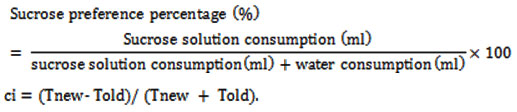
Assessment of relative weight of the adrenal glands was performed after removing the adipose tissue from the retroperitoneal connective tissue on the kidneys. The ratio of each rat’s total body weight in grams to the relative weight of its adrenal glands ( mg per pair of dry glands is divided by weight of each rat’) was computed.20
Statistical analysis
Mean ± SEM (n = 6/group) was used to express all values. Graph pad prism 10 software has been utilized to analyze data by ANOVA(one-way analysis of variance) followed by Tukey test for repeated pairwise comparisons between the different treated groups. P less than 0.05 values have been considered as statistically significant.
Results
Effect of L- theanine, Vitamin D₃, and the Combination on Behavioural tests
Behavioural tests were assessed on 2nd week, 0 week, 4thweek and 6th week of the CUS protocol.
Effect of L- theanine, Vitamin D₃, and the Combination on preference of consumption of Sucrose solution
The Figure 1 below represents sucrose preference by each group from 0 week to 6 week. Stress control rats showed significantly decreased preference towards sucrose over the period of Six weeks and the treatment groups showed significantly increased preference towards sucrose when compared with stress control group.
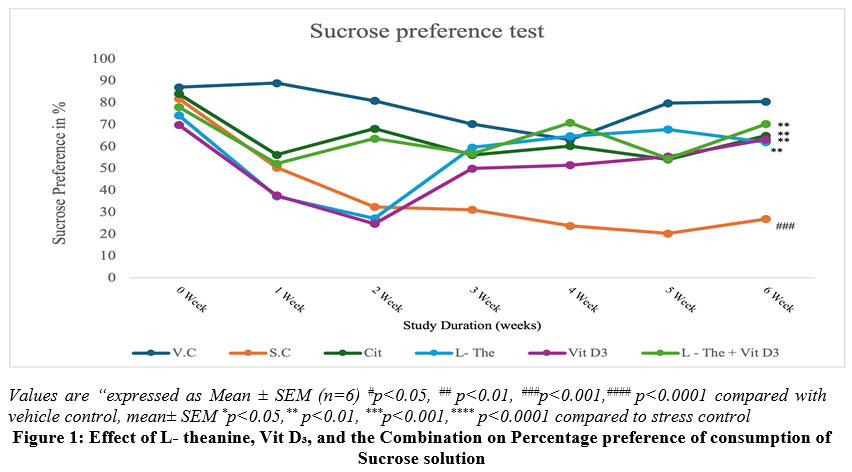 |
Figure 1: Effect of L- theanine, Vit D₃, and the Combination on Percentage preference of consumption of Sucrose solution
|
Effect of L- theanine, Vitamin D₃, and the Combination on Time spent in central square and Total no.of Entries
As shown in Figure 2, Stress control group showed decreased inclination to enter the central square over the period of Six weeks, when compared with baseline values and vehicle control group. By sixth week, there were fewer entries in the central square of stress control than in the vehicle control group. By the end of Sixweek Standard group and Treatment groups L – Theanine, Vitamin D3 and L – Theanine + Vitamin D3 showed significant and progressive increase activity in central square demonstrating the effectiveness of the treatment in reducing the anxiety and enhancing exploratory behaviour at the Six week when compared to the stress control.
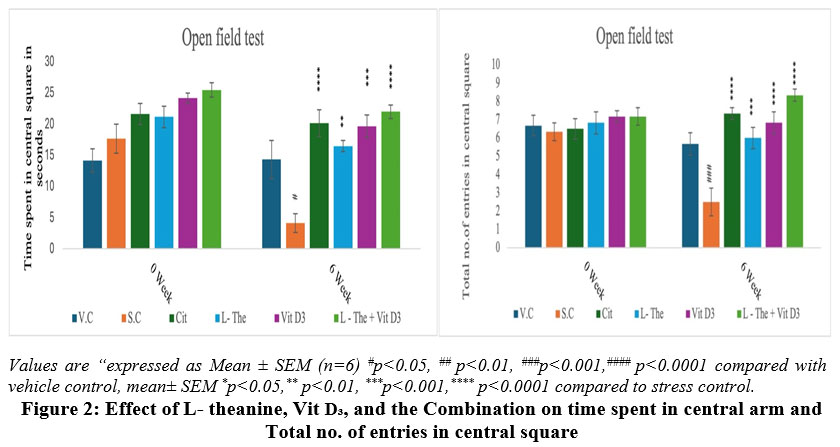 |
Figure 2: Effect of L- theanine, Vit D₃, and the Combination on time spent in central arm and Total no. of entries in central square
|
Effect of L- theanine, Vit D₃, and the Combination on Coat State score
The Table1 below represents coat state score of all groups over the period of Six weeks. Rats exposed to the CUS protocol showed a markedly reduced self-care behaviour at the end of the 6-week CUS protocol, with unclean coats only being seen at weeks two, four and six in comparison to vehicle control group, as per coat state results. Citalopram, L- The, Vitamin D3 and L- The + Vitamin D3 groups exhibited similar coat state as that of vehicle control group with clean coat.
Table 1: Effect of L- theanine, Vit D₃, and the Combination on Coat State score
| Groups | Coat test Scores | |||
| 0 Week | 2 Week | 4 Week | 6 Week | |
| Vehicle control | 0.00 | 0.00 | 0.00 | 0.00 |
| Stress control | 0.00 | 0.17±0.17 | 1.17±0.48## | 2.67±0.49#### |
| Cit | 0.00 | 0.00 | 0.00 | 0.00 |
| L – The | 0.00 | 0.00 | 0.00 | 0.00 |
| Vit D₃ | 0.00 | 0.00 | 0.00 | 0.00 |
| L – The + Vit D₃ | 0.00 | 0.00 | 0.00 | 0.00 |
Values are “expressed as Mean ± SEM (n=6) #p<0.05, ## p<0.01, ###p<0.001,#### p<0.0001 compared with vehicle control, mean± SEM *p<0.05,** p<0.01, ***p<0.001,**** p<0.0001 compared to stress control”.
Effect of L- theanine, Vit D₃, and the Combination on Grooming latency
Figure 3 below displays average of grooming latency of all groups over the period of six weeks. Stress control group exhibited significantly high grooming latencies over the sixweek period owing to effectiveness of the protocol by confirming the presence of stress or depressive-like symptoms. Treatment groups L – Theanine, Vitamin D3 and L – Theanine + Vitamin D3 showed a marked and significant decrease in grooming latency over time when compared to stress control. The standard group showed a decrease latency by sixth week when compared with the baseline values, stress control.
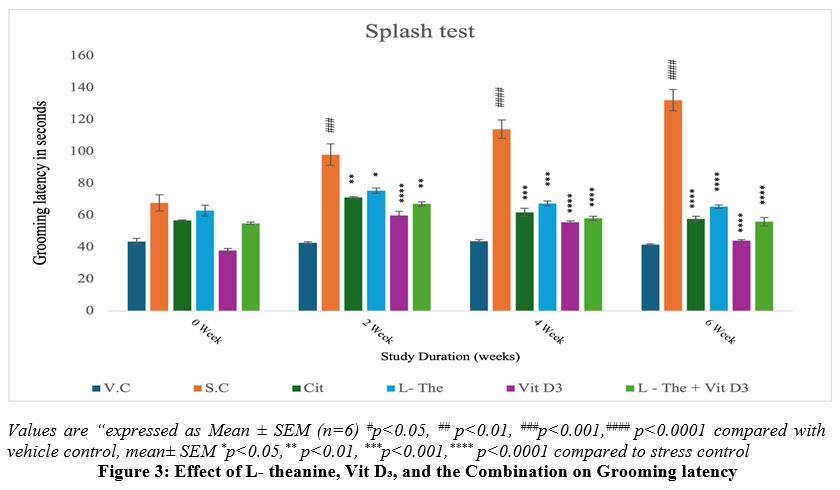 |
Figure 3: Effect of L- theanine, Vit D₃, and the Combination on Grooming latency
|
Effect of L- theanine, Vitamin D₃, and the Combination on Immobility time
The figure 4 below displays average immobility time of all groups over the period of six weeks in FST. Stress control group showed a marked increase in immobility time over sixweek period and increase in immobility time has been observed when associated to baseline value. When compared to the vehicle control group, the stress control group’s immobility time increased significantly throughout the course of the sixweek period. Treatment groups L – Theanine, Vitamin D3 and L – Theanine + Vitamin D3 exhibited pronounced reduction in immobility time after treatment when associated with baseline values and stress control respectively. The combination group especially showed a substantial decrease(64.70% ) in immobility time comparable with that of standard treatment(65.8%).
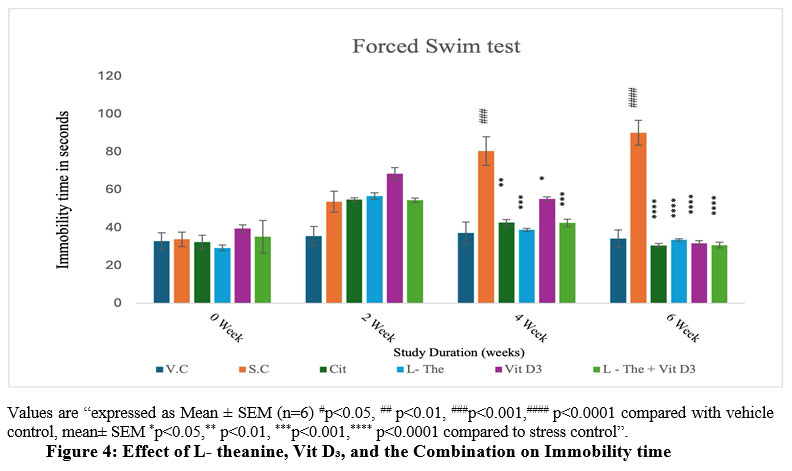 |
Figure 4: Effect of L- theanine, Vit D₃, and the Combination on Immobility time
|
Effect of L- theanine, Vitamin D₃, and the Combination oncognitive index
The figure 5 below displays average cognitive index of all groups over the period of six weeks. Stress control group showed decreased cognitive index for familiar over the time of six weeks whereas treatment groups exhibited an increase in the cognitive index. The L- Theanine + Vitamin D3 group showed a significant elevate in cognitive index from the second week over the sixweek period compared to any other treatment group.
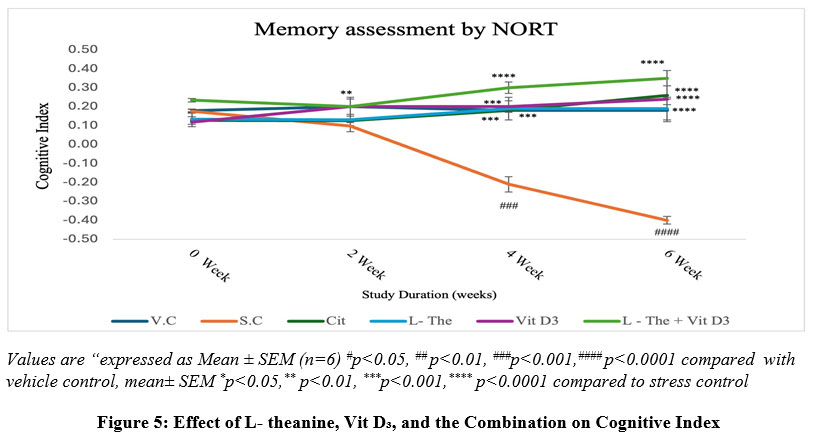 |
Figure 5: Effect of L- theanine, Vit D₃, and the Combination on Cognitive Index
|
Effect of L- theanine, Vitamin D₃, and the Combination on Transfer latencies
The figure 6 below displays average transfer latency(TL) of all groups over the period of six weeks. The Stress control group showed decreased transfer latency on EPM over the period of six weeks. Before CUS induction all the groups showed decreased second day transfer latencies on EPM. After CUS protocol there is a significant increase in transfer latency validating the appropriate CUS induction and 6 weeks of treatment with stand and and test drugs significantly reduced the Transfer latency indicating their potential in inhibiting stress induced cognitive impairment.
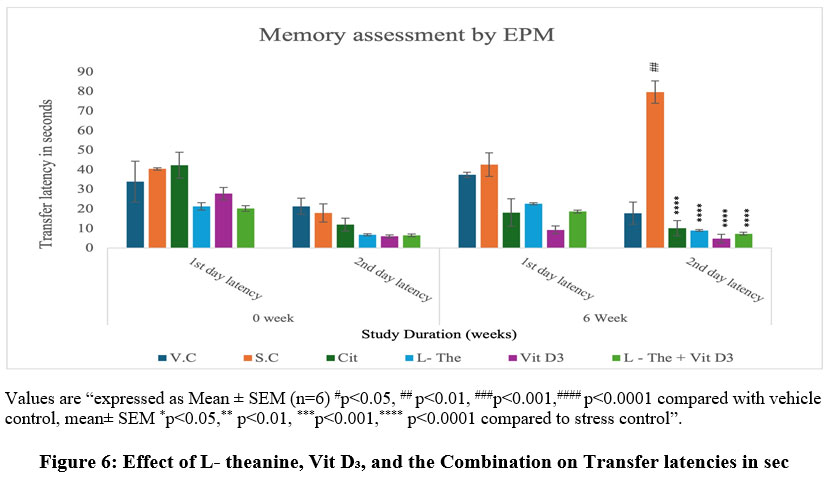 |
Figure 6 Effect of L- theanine, Vit D₃, and the Combination on Transfer latencies in sec
|
Effect of L- theanine, Vitamin D₃, and the Combination on Biochemical parameters
Effect of L- theanine, Vitamin D₃, and the Combination on Glucose levels, Total cholesterol and Triglyceride levels
Glucose levels were estimated on the 6thweek of the CUS protocol, and levels of glucose were raised in stress control group. But the elevation is statistically insignificant. The L- theanine + Vit D₃ treatment significantly reduced serum glucose levels. The triglycerides levels of stress control have been found to be significantly higher than vehicle control group. The citalopram treated standard group and treatment groups L – Theanine, Vit D₃ and L – Theanine + Vit D₃ triglyceride levels were found to be significantly lower when related to stress control group. It was discovered that the stress control group’s Total Cholesterol levels were significantly greater than those of the vehicle control group. Total cholesterol levels were observed to be considerably lower in the L-theanine, Vit D₃, and L-theanine + Vit D₃ and regular citalopram treatment groups than in the stress control group. Especially L – Theanine + Vit D₃ combination significantly reduced the cholesterol and LDL levels.
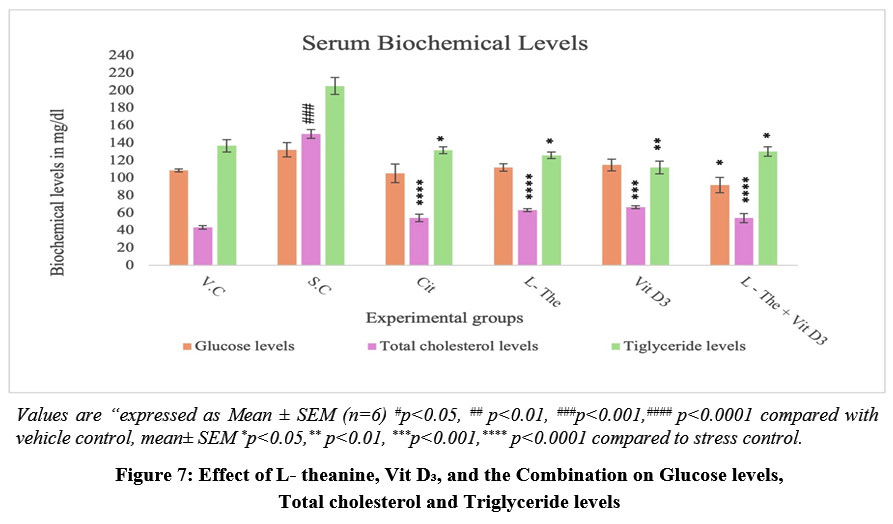 |
Figure 7: Effect of L- theanine, Vit D₃, and the Combination on Glucose levels, Total cholesterol and Triglyceride levels
|
Effect of L- theanine, Vitamin D₃, and the Combination on Serum cortisol levels and Adrenal glands
The table 2 below shows serum cortisol levels of allgroups on the sixth week. The cortisol levels of stress control were found to be significantly higher compared to vehicle control group. Whereas the cortisol levels of the treatment groups are significantly lower than stress control group.
Table 2: Effect of L- theanine, Vit D₃, and the Combination on Serum cortisol levels
| Groups | Cortisol levels (ng/ml) |
| Vehicle control | 1.83±0.03 |
| Stress control | 3.60±0.04#### |
| Cit | 2.90 ±0.03**** |
| L – The | 3.28±0.04**** |
| Vit D₃ | 3.12±0.06**** |
| L – The + Vit D₃ | 2.95±0.02**** |
Values are “expressed as Mean ± SEM (n=6) #p<0.05, ## p<0.01, ###p<0.001,#### p<0.0001 compared with vehicle control, mean± SEM *p<0.05,** p<0.01, ***p<0.001,**** p<0.0001 compared to stress control.
Effect of L- theanine, Vitamin D₃, and the Combination on Relative weight of adrenal glands
The proportional weight of the adrenal glands after six weeks is shown in the Figure 8 below.The Stress control group showed increased weight of the adrenal glandwhen related with the vehicle control. By the end of sixth week, stress control showed significant increase in the adrenal gland weight when compared to the vehicle control group. All the treatment groups showed a reduction in Adrenal gland weight compared to stress control group. However L – Theanine and Vitamin D3 combination showed highest reduction in average adrenal gland weight compared to either of individual treatments.
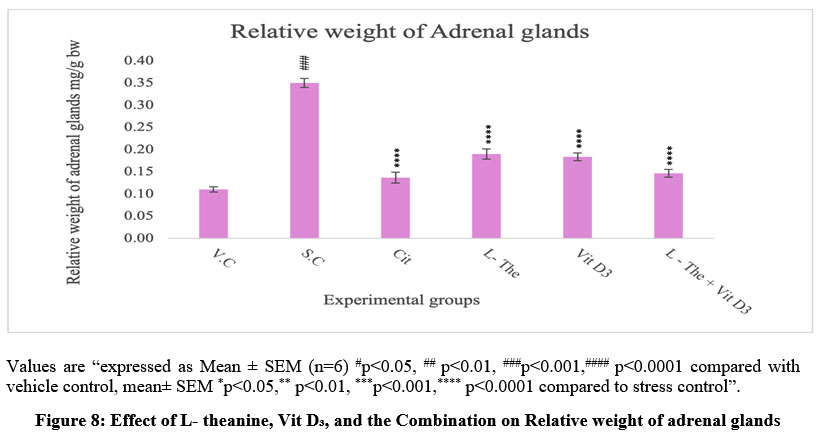 |
Figure 8: Effect of L- theanine, Vit D₃, and the Combination on Relative weight of adrenal glands
|
Discussion
The Sucrose Preference Test measures anhedonia, a depression core symptom characterized by a loss of interest in pleasurable activities. Rodents exposed to CUS typically show a reduced preference for sucrose solution compared to controls, indicating anhedonia. This reduction reflects the negative effect of chronic stress on reward processing systems in the brain, particularly involving dopaminergic pathways.21The increase in the sucrose preference of L- theanine can be due to the ability to increase the monoamine levels such as dopamine, serotonin and Treatment with Vit D 10,000 IU enhanced the sucrose preference 9,25and the combination of both drugs could be the reason for improved performance of the combination group which was found to be consistent with earlier research.
Open Field Test evaluates anxiety-related behaviours as well as overall locomotor activity. In this test, rodents subjected to CUS often exhibit increased anxiety and depression, evidenced by decreased exploration of open field centre and elevated time spent in periphery. Neurotransmitter imbalances and altered HPA(hypothalamic-pituitary-adrenal) axis function that were associated to these behavioural abnormalities.26 Citalopram administered group showed significantly increase in time spent in central square activity in the model rats as previously reported.27 L – theanine significantly increased the time in central square due to the antidepressant activity of L – theanine . Treatment with Vit D₃ enhanced the performance of rats in an OFT setting which can be due to antidepressant like effect of Vit D₃which were found to be compatible with earlier research. 9,28
Coat State Test examines the physical condition and grooming behaviour of rodents. A deterioration in coat condition, such as increased fur matting and poor grooming, is often seen in rodents exposed to CUS. This physical neglect reflects decreased self-care and an overall decline in physical and mental health, providing a visible marker of the depressive-like state induced by chronic stress. Groups administered with Citalopram, L-theanine, Vitamin D3 have a similar Coat state as that of the vehicle control group due to the antidepressant impact of the compounds and can be attributed to the serotonergic involvement.5,29,30
Behavioural despair, a defining feature of depressive-like behaviour, is assessed using Forced Swim Test. In the FST, rats given CUS often show longer periods of immobility, indicating a sense of helplessness, which was also observed in this study. This behaviour correlates with decreased serotonergic and noradrenergic neurotransmission, mirroring the neurochemical changes observed in depression.30 The combination of L Theanine and Vitamin D3 significantly reduced the immobility time, since L-theanine treatment can raise levels of NE, 5-HT, DA, it was highly effective in reducing depressive-like behaviour and greatly decreased immobility time in forced swim test.5,7 Moreover addition of Vit D₃ treatment has enhanced the performance of rats in FST, which contributed to less floating time, highly effective in mitigating depressive like behaviour.8,26
The Novel Object Recognition Test evaluates recognition memory in particular. Rodents experiencing CUS typically show impairments in this test, as indicated by reduced exploration of a novel object compared to a familiar one. This cognitive decline is often linked to stress-induced alterations in hippocampal plasticity and neurotransmitter dysregulation, affecting learning and memory processes.19,20 The increase of cognitive index of the groups administered with Vitamin D3 and L theanine administered group was found to be in accordance with earlier research can be attributed to increased BDNF levels in the brain by Vitamin D3 and L- Theanine.9,21,22,23,24 A deficiency in the BDNF levels leads to dementia.34By modulating GABAergic neurotransmission L theanine improves memory.35,36,37,50
Rats’ memory was assessed using the elevated plus-maze, which has two open and two enclosed arms. In animal models, the shortened TL has been proposed as a measure of how memory retention affects cognitive processes. The decreased latency of the treatment groups L – theanine and Vit D₃ can be due to increased levels of neurotransmitters 35,38 which were found by the earlier research and the shorter latencies of the combination group of L- theanine + Vitamin D3 can be due to the synergistic action.
Chronic stress conditions significantly influence sustained increases in cholesterol levels over time.38Taking Vitamin D could lower levels of total cholesterol, LDL and triglycerides in the blood.39According to the previous research that taking Vit D₃ could lower serum total cholesterol, LD Land triglyceride levels.40 L- Theanine promotes lipolysis and inhibits fat formation.41
Cortisol rises in reaction to chronic stress. The adrenal cortex releases cortisol when HPA(hypothalamic-pituitary-adrenal) axis is activated during stress. Current CUS model shows how prolonged, unpredictable stress situations increase HPA axis activity and cortisol as the body copes with stress.41 L-Theanine and Vitamin D3 synergistically reduced stress reactions, as shown by a substantial reduction from both stress control. L – theanine and Vit D₃ have the capacity to reduce cortisol levels, which might have been the reason in the reduction of cortisol levels, which are in line with earlier research.43,44,45Corticotropin-releasing hormone neurones in the hypothalamic paraventricular nucleus are involved in stress reactions on HPA axis. Paraventricular nucleus then transports peptide toanterior pituitary, where corticotrophs release adrenocorticotrophic hormone, increasing the production of glucocorticoids.44 Memory impairment is closely associated with decreased neurogenesis, the brain’s process of producing new neurons.46 Increased cortisol levels and inflammation have frequently been reported in patients with depression.47 Rats under chronic stress typically show adrenal enlargement, suggesting that chronic stress also influences the periphery limb of the HPA axis.48Administration of L -Theanine is found to reduce psychosocial stress and might be the reason to reduce the adrenal gland weight as found in earlier research.49,50 Combined supplementation of Vitamin D and L-theanine has demonstrated superior behavioural and neurochemical recovery in stress models compared with monotherapy, indicating multimodal and potentially synergistic mechanisms of action.51 In addition to neurotransmitter modulation, the observed effects may also involve non-neurochemical mechanisms such as attenuation of neuroinflammation, oxidative stress, HPA axis dysregulation, and modulation of neurotrophic pathways associated with chronic stress.
Conclusion
The present study evaluated the effects of combined L-theanine and Vit D₃ supplementation in a chronic unpredictable stress (CUS) model and demonstrated significant protection against stress-induced behavioural and cognitive impairments. L-theanine and Vit D₃ combination effectively prevented anhedonia and depressive-like behaviours while improving anxiety-related responses and cognitive performance. These findings suggest a modulatory effect of the combination on stress-responsive neurobiological pathways beyond symptomatic relief. Collectively, the results indicate that L-theanine and Vit D₃ may represent a promising adjunctive approach for managing chronic stress–associated disorders. Future studies should elucidate underlying molecular mechanisms and validate these effects in clinical settings.
Acknowledgement
We are thankful to Principal and Management of RBVRR Women’s College of Pharmacy for supporting and encouraging us to carry out this research.
Funding Sources
The author(s) received no financial support for the research, authorship, and/or publication of this article.
Conflicts of Interest
The authors declare no conflict of interest regarding the publication of this article.
Data Availability Statement
The manuscript incorporates all datasets produced or examined throughout this research study.
Ethics Statement
All experimental procedures were conducted in accordance with the guidelines of the Committee for the Control and Supervision of Experiments on Animals (CCSEA), Government of India. The study protocol was reviewed and approved by the Institutional Animal Ethics Committee of Osmania University (Protocol No. RBVRR/1328/02/2024). Every effort was made to minimize animal suffering and to use only the number of animals necessary to obtain reliable scientific data.
Informed Consent Statement
This study did not involve human participants, and therefore, informed consent was not required.
Clinical Trial Registration
This research does not involve any clinical trials.
Permission to reproduce material from other sources
Not Applicable
Authors’ Contribution
Indu Ghooli: Methodology, Investigation, Data Curation, Formal Analysis, Writing – Original Draft, Visualization.
Archana Jorige: Conceptualization, Supervision, Validation, Writing – Review & Editing.
Tejasri Talloju : Data Collection, Writing – Review & Editing.
References
- Graybeal C, Kiselycznyk C, Holmes A. Stress-induced deficits in cognition and emotionality: a role for glutamate. In: Behavioral Neurogenetics. Springer; 2012:189–207.https://doi.org/10.1007/7854_2011_193
CrossRef - Chu B, Marwaha K, Sanvictores T, Awosika AO, Ayers D. Physiology, stress reaction. In: StatPearls [Internet]. StatPearls Publishing; 2024.https://www.ncbi.nlm.nih.gov/books/NBK541120/
- Rozanski A, Blumenthal JA, Davidson KW, Saab PG, Kubzansky L. The epidemiology, pathophysiology, and management of psychosocial risk factors in cardiac practice: the emerging field of behavioral cardiology. J Am Coll Cardiol. 2005;45(5):637–651. https://doi.org/10.1016/j.jacc.2004.12.005
CrossRef - Sequeira-Cordero A, Salas-Bastos A, Fornaguera J, Brenes JC. Behavioural characterisation of chronic unpredictable stress based on ethologically relevant paradigms in rats. Sci Rep. 2019;9(1):17403.https://doi.org/10.1038/s41598-019-53624-1
CrossRef - Shen M, Yang YI, Wu Y, et al. L-theanine ameliorates depressive-like behavior in a chronic unpredictable mild stress rat model via modulating monoamine levels in limbic–cortical–striatal–pallidal–thalamic circuit brain regions. Phytother Res. 2019;33(2):412–421. https://doi.org/10.1002/ptr.6237
CrossRef - Trivedi MK, Branton A, Trivedi D, Mondal S, Jana S. Vitamin D3 supplementation improves spatial memory, muscle function, pain score, and modulates physiological biomarkers in vitamin D3 deficiency diet-induced rats. BMC Nutr. 2023;9(1):108. https://doi.org/10.1186/s40795-023-00767-0
CrossRef - Bae D, Kim J, Oh DR, et al. Multifunctional antistress effects of standardized aqueous extracts from Hippophae rhamnoides Anim Cells Syst. 2016;20(6):369–383. https://doi.org/10.1080/19768354.2016.1250816.
CrossRef - Yin C, Gou L, Liu Y, et al. Antidepressant-like effects of L-theanine in the forced swim and tail suspension tests in mice. Phytother Res. 2011;25(11):1636–1639. https://doi.org/10.1002/ptr.3456
CrossRef - Bakhtiari-Dovvombaygi H, Izadi S, Zare M, et al. Vitamin D3 administration prevents memory deficit and alteration of biochemical parameters induced by unpredictable chronic mild stress in rats. Sci Rep. 2021;11(1):16271. https://doi.org/10.1038/s41598-021-95850-6
CrossRef - Bakhtiari-Dovvombaygi H, Izadi S, Zare Moghaddam M, et al. Beneficial effects of vitamin D on anxiety- and depression-like behaviors induced by unpredictable chronic mild stress by suppression of brain oxidative stress and neuroinflammation in rats. Naunyn Schmiedebergs Arch Pharmacol. 2021;394(4):655–667.https://doi.org/10.1007/s00210-020-02002-0
CrossRef - Burstein O, Doron R. The unpredictable chronic mild stress protocol for inducing anhedonia in mice. J Vis Exp. 2018;(140):e58184. doi:10.3791/58184.
CrossRef - Monteiro S, Roque S, de Sá-Calçada D, Sousa N, Correia-Neves M, Cerqueira JJ. An efficient chronic unpredictable stress protocol to induce stress-related responses in C57BL/6 mice. Front Psychiatry. 2015 Feb 2;6:6. doi:10.3389/fpsyt.2015.00006. PMID:25698978; PMCID:PMC4313595.
CrossRef - Valenzuela RL, Velasco RI, Umerez DC, Urgena CR, Uy JA, Valdez MA, Villanueva-Uy LM, Vinasoy NA, Yu DI, Dasig DA. A comparative study on depression and anxiety of mice (Mus musculus) on a prebiotic-supplemented diet versus a standard diet during unpredictable chronic mild stress (UCMS). Acta Med Philipp. 2020.
- Zhu H, Tao Y, Wang T, Zhou J, Yang Y, Cheng L, Zhu H, Zhang W, Huang F, Wu X. Long-term stability and characteristics of behavioral, biochemical, and molecular markers of three different rodent models for depression. Brain Behav. 2020 Feb;10(2):e01508. doi:10.1002/brb3.1508.
CrossRef - Hu C, Luo Y, Wang H, Kuang S, Liang G, Yang Y, Mai S, Yang J. Re-evaluation of the interrelationships among the behavioral tests in rats exposed to chronic unpredictable mild stress. PLoS One. 2017 Sep 20;12(9):e0185129. doi:10.1371/journal.pone.0185129.
CrossRef - Wu T, Li X, Li T, Cai M, Yu Z, Zhang J, Zhang Z, Zhang W, Xiang J, Cai D. Apocynum venetum leaf extract exerts antidepressant-like effects and inhibits hippocampal and cortical apoptosis of rats exposed to chronic unpredictable mild stress. Evid Based Complement Alternat Med. 2018 Jan 16;2018:5916451. doi:10.1155/2018/5916451. PMID:29576796; PMCID:PMC5822797.
CrossRef - Li F, Wang Y, Wang X, Zhao Y, Xie F, Qian LJ. Dynamic effects of chronic unpredictable mild stress on the hippocampal transcriptome in rats. Mol Med Rep. 2022 Apr;25(4):110.doi:10.3892/mmr.2022.12626.
CrossRef - Sharma AC, Kulkarni SK. Evaluation of learning and memory mechanisms employing elevated plus-maze in rats and mice. Prog Neuropsychopharmacol Biol Psychiatry. 1992;16(1):117-125. doi:10.1016/0278-5846(92)90014-6.
CrossRef - Bhuvanendran S, Kumari Y, Othman I, Shaikh MF. Amelioration of cognitive deficit by embelin in a scopolamine-induced Alzheimer’s disease-like condition in a rat model. Front Pharmacol. 2018 Jun 25;9:665.doi:10.3389/fphar.2018.00665.
CrossRef - Blossom V, Gokul M, Kumar NA, et al. Chronic unpredictable stress-induced inflammation and quantitative analysis of neurons of distinct brain regions in Wistar rat model of comorbid depression. Vet World. 2020;13(9):1870–1877. doi:10.14202/vetworld.2020.1870-1874
CrossRef - Pepino MY, Eisenstein SA, Bischoff AN, et al. Sweet dopamine: sucrose preferences relate differentially to striatal D2 receptor binding and age in obesity. 2016;65(9):2618–2623.https://doi.org/10.2337/db16-0407
CrossRef - Elbaz EM, Ibrahim SM, Rashad E, Yasin NAE, Ghaiad HR, Mehana NA. Therapeutic role of L-theanine in mitigating cognitive dysfunction and neuropathology in scopolamine-treated mice. ACS Chem Neurosci. 2025;16(13):2528-2545. doi:10.1021/acschemneuro.5c00351.
CrossRef - Chandrasekhar BVS, Elango P, Maheswari SU, Rajukumar D. A focus on the effect of L-theanine on improving depression and cognition in C57BL/J male mice subjected for chronic stress induced neuroinflammation. Biomed Pharmacol J. 2017;10(2):1015-1027. doi:10.13005/bpj/1199.
CrossRef - Tian X, Sun L, Gou L, Ling X, Feng Y, Wang L, Yin X, Liu Y. Protective effect of L-theanine on chronic restraint stress-induced cognitive impairments in mice. Brain Res. 2013;1503:24-32. doi:10.1016/j.brainres.2013.01.048.
CrossRef - Al-Ramadhan FR, Abulmeaty MM, Alquraishi M, Razak S, Alhussain MH. Effect of vitamin D3 on depressive behaviors of rats exposed to chronic unpredictable mild stress. 2023;11(8):2112. https://doi.org/10.3390/biomedicines11082112
CrossRef - Packard AE, Egan AE, Ulrich-Lai YM. HPA axis interaction with behavioral systems. Compr Physiol. 2016;6(4):1897–1934.https://doi.org/10.1002/j.2040-4603.2016.tb00722.x
CrossRef - Yang J, Pei Y, Pan YL, et al. Enhanced antidepressant-like effects of electroacupuncture combined with citalopram in a rat model of depression. Evid Based Complement Alternat Med. 2013;2013:107380. https://doi.org/10.1155/2013/107380
CrossRef - da Silva Souza SV, da Rosa PB, Neis VB, et al. Effects of cholecalciferol on behavior and production of reactive oxygen species in female mice subjected to a corticosterone-induced model of depression. Naunyn Schmiedebergs Arch Pharmacol. 2020;393:111–120.https://doi.org/10.1007/s00210-019-01714-2
CrossRef - Bezchlibnyk-Butler K, Aleksic I, Kennedy SH. Citalopram: a review of pharmacological and clinical effects. J Psychiatry Neurosci. 2000;25(3):241–254.
- Neis VB, Werle I, Moretti M, et al. Involvement of serotonergic neurotransmission in the antidepressant-like effect elicited by cholecalciferol in the chronic unpredictable stress model in mice. Metab Brain Dis. 2022;37(5):1597–1608.https://doi.org/10.1007/s11011-022-00979-6
CrossRef - Bogdanova OV, Kanekar S, D’Anci KE, Renshaw PF. Factors influencing behavior in the forced swim test. Physiol Behav. 2013;118:227–239. https://doi.org/10.1016/j.physbeh.2013.05.012
CrossRef - Guzmán-Ramos K, Moreno-Castilla P, Castro-Cruz M, et al. Restoration of dopamine release deficits during object recognition memory acquisition attenuates cognitive impairment in a triple transgenic mouse model of Alzheimer disease. Learn Mem. 2012;19(10):453–460. doi:10.1101/lm.026070.112
CrossRef - Chang PK, Chu J, Tsai YT, et al. Dopamine D3 receptor and GSK3β signaling mediate deficits in novel object recognition memory within dopamine transporter knockdown mice. J Biomed Sci. 2020;27:1–12.https://doi.org/10.1186/s12929-019-0613-y
CrossRef - Kuźma E, Soni M, Littlejohns TJ, et al. Vitamin D and memory decline: two population-based prospective studies. J Alzheimers Dis. 2016;50(4):1099–1108. doi:3233/JAD-150811
CrossRef - Williams NT. The role of L-theanine in reducing stress and anxiety. Am J Lifestyle Med. 2016;10(6):439-447. doi:10.1177/1559827614561855.
- Yamada T, Terashima T, Kawano S, et al. Theanine, γ-glutamylethylamide, modulates neurotransmitter concentrations in the brain striatum interstitium in conscious rats. Amino Acids. 2009;36:21–27.https://doi.org/10.1007/s00726-007-0020-7
CrossRef - Nguyen BT, Sharma N, Shin EJ, et al. Theanine attenuates memory impairments induced by klotho gene depletion in mice. Food Funct. 2019;10(1):325–332. DOI: 10.1039/C8FO01577E
CrossRef - Kasatkina LA, Tarasenko AS, Krupko OO, et al. Vitamin D deficiency induces excitation–inhibition brain imbalance and a proinflammatory shift. Int J Biochem Cell Biol. 2020;119:105665. https://doi.org/10.1016/j.biocel.2019.105665
CrossRef - Devaki M, Nirupama R, Yajurvedi HN. Chronic stress-induced oxidative damage and hyperlipidemia are accompanied by atherosclerotic development in rats. 2013;16(2):233–243. https://doi.org/10.3109/10253890.2012.719052
CrossRef - Dibaba DT. Effect of vitamin D supplementation on serum lipid profiles: a systematic review and meta-analysis. Nutr Rev. 2019;77(12):890–902. https://doi.org/10.1093/nutrit/nuz037
CrossRef - Dai H, Chen X, He J, et al. Dietary L-theanine supplementation improves antioxidant capacity and lipid metabolism in finishing pigs. J Funct Foods. 2023;110:105831. https://doi.org/10.1016/j.jff.2023.105831
CrossRef - Knezevic E, Nenic K, Milanovic V, Knezevic NN. The role of cortisol in chronic stress, neurodegenerative diseases, and psychological disorders. 2023;12(23):2726. https://doi.org/10.3390/cells12232726
CrossRef - Al-Dujaili EA, Munir N, Iniesta RR. Effect of vitamin D supplementation on cardiovascular disease risk factors and exercise performance in healthy participants. Ther Adv Endocrinol Metab. 2016;7(4):153–165. https://doi.org/10.1177/204201881665335
CrossRef - Herman JP, McKlveen JM, Ghosal S, et al. Regulation of the hypothalamic–pituitary–adrenocortical stress response. Compr Physiol. 2016;6(2):603–621. https://doi.org/10.1002/j.2040-4603.2016.tb00694.x
CrossRef - White DJ, De Klerk S, Woods W, et al. Anti-stress, behavioural and magnetoencephalography effects of an L-theanine-based nutrient drink: a randomized, double-blind, placebo-controlled, crossover trial. 2016;8(1):53. https://doi.org/10.3390/nu8010053
CrossRef - Geigenmüller JN, Tari AR, Wisloff U, Walker TL. The relationship between adult hippocampal neurogenesis and cognitive impairment in Alzheimer disease. Alzheimers Dement. 2024;20(10):7369–7383.https://doi.org/10.1002/alz.14179
CrossRef - Amasi-Hartoonian N, Sforzini L, Cattaneo A, Pariante CM. Cause or consequence? Understanding the role of cortisol in the increased inflammation observed in Curr Opin Endocr Metab Res. 2022;24:100356.https://doi.org/10.1016/j.coemr.2022.100356
CrossRef - Ulrich-Lai YM, Figueiredo HF, Ostrander MM, et al. Chronic stress induces adrenal hyperplasia and hypertrophy in a subregion-specific manner. Am J Physiol Endocrinol Metab. 2006;291(5):E965–E973. https://doi.org/10.1152/ajpendo.00070.2006
CrossRef - Unno K, Hara A, Nakagawa A, et al. Anti-stress effects of drinking green tea with lowered caffeine and enriched theanine, epigallocatechin, and arginine on psychosocial stress-induced adrenal hypertrophy in mice. 2016;23(12):1365–1374. https://doi.org/10.1016/j.phymed.2016.07.006
CrossRef - Wang L, Brennan M, Li S, Zhao H, Lange KW, Brennan C. How does the tea L-theanine buffer stress and anxiety. Food Sci Hum Wellness. 2022 May 1;11(3):467–475. doi:10.1016/j.fshw.2021.12.004.
CrossRef - Hussain HK, Rasheed N, Rehman Z, Hanif S, Ashraf W, Anjum SMM, Mushtaq RMZ, Akhtar N, Alqahtani F, Imran I. Nutritional co-therapy with vitamin D and L-theanine reduces unpredictable mild chronic stress (UCMS) in aged mice by restoring alpha-oscillations, dopamine levels and behavioral improvement. Exp Gerontol. 2025 Oct 15;210:112881. doi: 10.1016/j.exger.2025.112881. Epub 2025 Sep 1. PMID: 40902457.
CrossRef
Accepted on: 30-01-2026
Second Review by: Dr. Shahin Vahora
Final Approval by: Dr. Wagih Ghannam