Bioactive Constituents of Pentas lanceolata and Their Mechanistic Role in Diabetes, Cancer and Immune Regulation: Balancing Pro- and Anti-Inflammatory Signalling
 , Aparna Bura, Kishor Otari and Ajay Kale
Department of Pharmacology, Navashyadri Institute of Pharmacy, Naigaon, Maharashtra, India
Corresponding Author’s E-mail: pritikhilare123@gmail.com
Download this article as:
ABSTRACT:Diabetes mellitus, cancer, and chronic inflammation are all linked conditions with similar molecular causes, such as oxidative stress, dysregulated cytokine signalling, metabolic imbalance, and modified cell survival pathways. Despite the fact that medicinal plants have been extensively studied for their potential anti-inflammatory, anti-diabetic, or anti-cancer properties, most evaluations that have been done so have only looked at these effects separately, with little mechanistic integration across disease states. The Rubiaceae family of medicinal plants includes Pentas lanceolata (Forssk.) Deflers, which has long been used to treat wound healing, inflammation, infections, and metabolic abnormalities. Its bioactive components, including phenolics, flavonoids, quinones, and iridoid glycosides, have been shown in experiments to have a variety of pharmacological effects in both in-vitro and in-vivo scenarios. The available phytochemical and pharmacological data on Pentas lanceolata are critically integrated in this review, with an emphasis on common mechanistic pathways related to cancer, diabetes, and inflammation. Cytokine modulation, oxidative stress regulation, insulin sensitisation, β-cell protection, activation of apoptosis, and suppression of angiogenesis and cell proliferation are highlighted. There is also discussion of translational difficulties, research gaps, and toxicological issues. Pentas lanceolata has significant potential as a multi-target natural candidate for the modulation of inflammation-associated chronic illnesses, including as diabetes and cancer, according to the body of phytochemical and mechanistic evidence.
KEYWORDS:Cancer; Diabetes mellitus; Inflammation; Mechanistic pathways; Natural product drug discovery; Pentas lanceolata; Phytochemicals
Introduction
Together, diabetes mellitus, cancer, and inflammation are significant global health issues that contribute significantly to morbidity and mortality. It is becoming more well acknowledged that metabolic inefficiency and tumour development have a common pathogenic denominator: chronic inflammation. In addition to promoting tumour start, development, and metastasis, sustained inflammatory signalling also contributes to insulin resistance and pancreatic β-cell dysfunction. The growing incidence of cancer and diabetes, especially in low- and middle-income nations, highlights the critical need for safer and more efficient long-term treatment approaches.1,2
Inadequate efficacy and safety concerns continue to limit accessible therapy alternatives, despite notable breakthroughs in the pharmaceutical management of many illnesses. Long-term use of non-steroidal anti-inflammatory drugs is associated with gastrointestinal, renal, and cardiovascular side effects, even though regularly used antidiabetic therapies often fail to treat the inflammation and oxidative stress that drive diabetes progression. In a similar vein, systemic toxicity, the emergence of resistance, and decreased quality of life constrain several anticancer treatments.3,4
In this context, there has been a growing interest in plant-based therapies that have the ability to simultaneously modulate multiple molecular targets. Among the structurally varied bioactive substances present in medicinal plants are flavonoids, phenolic acids, quinones, and iridoids. These chemicals have been proven in animal models to have antioxidant, anti-inflammatory, antidiabetic, and anticancer effects. These pleiotropic effects may provide extra or alternate alternatives to existing therapies and are congruent with recently discovered multi-target pharmacological techniques.5
The Rubiaceae family member Pentas lanceolata (Forssk.) Deflers has long been used to treat wounds, infections, inflammatory diseases, and metabolic abnormalities. This plant’s varied phytochemical makeup is largely responsible for the wide range of pharmacological actions identified in recent experimental investigations. Nevertheless, the body of research on the subject is still dispersed, with little synthesis of the mechanisms underlying its impacts on cancer, diabetes, and inflammation.6
Methodology and Search Strategy
A systematic literature search was performed using PubMed, Scopus, Web of Science, ScienceDirect, and Google Scholar for studies published from 2000 to 29 September 2026, the date of the last search (the initial search was performed on 15 August 2026 and was updated at the revision stage). Keywords such as “Pentas lanceolata”, “phytochemistry”, “anti-inflammatory”, “anti-diabetic”, “anti-cancer”, “oxidative stress”, “cytokines”, “apoptosis”, and “angiogenesis” were used with Boolean operators.
Peer-reviewed English articles reporting phytochemical, pharmacological, and mechanistic studies (in-vitro and in-vivo) were included. Non-English papers, abstracts, and studies lacking mechanistic relevance were excluded. The selected literature was critically analysed to identify shared molecular pathways linking inflammation, diabetes, and cancer. Where Pentas lanceolata-specific data were unavailable, data from congeneric species (P. longiflora, P. bussei, P. parvifolia, P. schimperi and P. micrantha) were used as structural frameworks and are explicitly labelled by species of origin.
Botanical Description and Ethnopharmacological Background of Pentas Lanceolata
Taxonomy and Geographical Distribution
Pentas lanceolata (Forssk.) Deflers is a member of the Gentianales order and the Rubiaceae family. The plant is a perennial shrub with glabrous stems, terminal clusters of star-shaped flowers, and opposite, lanceolate leaves. It is indigenous to the Arabian Peninsula and East Africa, with reports of natural occurrences in Ethiopia, Kenya, Tanzania, and Yemen. P. lanceolata is now commonly grown in tropical and subtropical countries, including portions of Africa, Asia, and the Middle East, due to its adaptability and aesthetic appeal.7
Traditional Medicinal Uses Across Cultures
Pentas lanceolata is widely used in traditional African medicine, according to ethnobotanical surveys. Wounds, fever, inflammatory diseases, gastrointestinal issues, malaria, lymphatic swellings, and parasite infections are all treated using different plant components, especially roots and leaves. Depending on the condition and regional customs, preparations are frequently used as topical treatments, infusions, or decoctions.8,9
Relevance to Modern Pharmacology
The scientific study of Pentas lanceolata has been justified by its long-standing traditional use. Experimental research examining its pharmacological qualities has been directed by ethnomedical expertise, resulting in claims of antioxidant, antibacterial, anti-inflammatory, wound-healing, and metabolic regulating activities. Despite the fact that these results corroborate conventional wisdom, there is still no systematic integration of ethnopharmacological data with mechanistic and translational research, underscoring the necessity of thorough assessment within a contemporary pharmacological framework.10,11
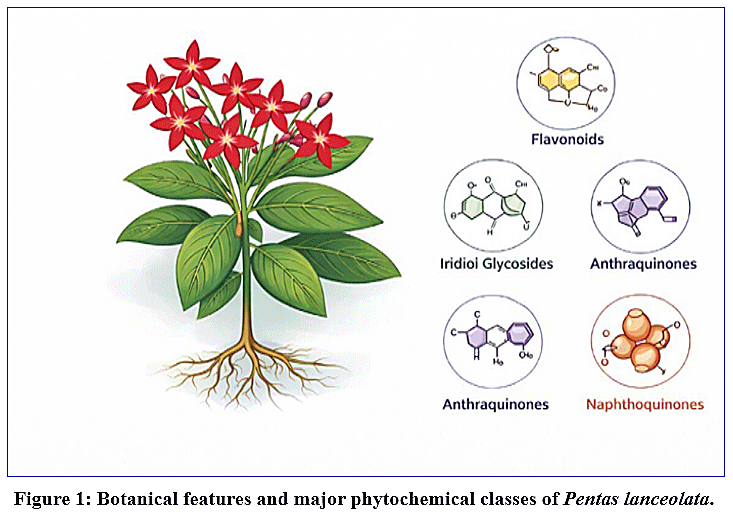 |
Figure 1: Botanical features and major phytochemical classes of Pentas lanceolata. Click here to View Figure |
Phytochemical Profile of Pentas Lanceolata
Pentas lanceolata varied secondary metabolites are intimately associated with its medicinal significance. Numerous significant classes of bioactive compounds, such as phenolics, flavonoids, quinones, iridoid glycosides, and minor constituents, have been discovered through phytochemical studies of Pentas species and other members of the Rubiaceae family. Together, these substances support the plant’s documented biological functions.12-14
Flavonoids
Flavonoids, which are well known for their antioxidant properties, are among the phenolic compounds found in many medicinal plants. By scavenging free radicals and altering redox-sensitive signalling pathways, these compounds aid Pentas lanceolata in lowering oxidative stress. These effects are relevant to inflammatory and metabolic disorders and reinforce the plant’s traditional use in wound healing and inflammation-related ailments. Specifically, the simple phenolics 4-hydroxycinnamic acid and thymol have been identified in the stipule colleters of P. lanceolata, and the flavonol diglycoside kaempferol-3-O-robinobioside has been isolated from the leaf iridoid-rich fraction.47,48 Flavonoids and Phenolic Compounds.15,16
Naphthoquinones and Naphthohydroquinones
Numerous Pentas species have been shown to contain naphthoquinones and similar derivatives, which have chemotaxonomic relevance within the Rubiaceae family. These substances have shown cytotoxic, antibacterial, and antiplasmodial properties, mostly through disruption of cellular energy metabolism and redox-mediated pathways. Their biological profile suggests that they may be useful in applications relating to cancer and infectious disorders.17-19 It should be noted, however, that the naphthoquinones isolated so far come from congeners rather than from P. lanceolata roots. The pyranonaphthoquinones pentalongin and psychorubrin, together with the naphthalene derivative mollugin, were obtained from the roots of P. longiflora, and busseihydroquinones A-D from the roots of P. bussei, whereas mollugin has also been detected in P. lanceolata stipule colleters. These congeneric structures are therefore used below as frameworks for the structure-activity relationship (SAR) discussion and are labelled by species of origin.47,49
Anthraquinones
Another noteworthy class of secondary metabolites connected to Pentas species are anthraquinones. According to pharmacological research, these substances have cytotoxic and antibacterial qualities. They have also been shown to have impacts on inflammatory mediator modulation and apoptosis induction. Their existence offers pharmacological backing for P. lanceolata‘s ethnomedical application in inflammatory and infectious diseases.20 In the roots of P. lanceolata, eight anthraquinones have been isolated and characterised: tectoquinone, rubiadin, rubiadin-1-methyl ether, nordamnacanthal, damnacanthal, lucidin-ω-methyl ether, damnacanthol and the new compound 5,6-dihydroxydamnacanthol; the glycoside rubiadin-1-methyl ether-3-O-β-primeveroside has also been reported from the roots and leaves.47,49
Iridoid Glycosides
Iridoid glycosides are found throughout the Rubiaceae family and are one of the most physiologically significant components found in Pentas lanceolata. These substances have been linked to genoprotective, antioxidant, and anti-inflammatory properties. According to experimental results, iridoid-rich fractions may lessen oxidative damage and guard against chemically induced genotoxicity, highlighting their potential importance in the treatment of chronic illnesses.21 Structurally, the iridoids reported from P. lanceolata include asperuloside, asperulosidic acid, deacetylasperulosidic acid, tudoside, loganin and the gaertneroside-type glucosides (gaertneroside, 13R–epi-gaertneroside, 13R–epi-epoxygaertneroside and 13R/13S-methoxy-epi-gaertneroside), obtained from the aerial parts, leaves and stipule colleters. The leaf iridoid-rich fraction used in the pharmacological studies cited below contained 94.6 mg/g extract of total iridoids, expressed as aucubin equivalents.47,48,50-52
Other Secondary Metabolites
Pentas lanceolata has secondary elements such terpenoids and simple glycosides in addition to the major phytochemical classes. Despite their lower concentrations, these substances might work in concert to enhance the plant’s overall pharmacological profile. The idea that P. lanceolata represents a multi-component medicinal system rather than a single-compound source is supported by this phytochemical diversity.22 Reported constituents include the triterpenoids oleanolic and ursolic acids, the sterols campesterol and β-stigmasterol, the sesquiterpene caryophyllene and the oxindole alkaloid speciophylline.47
Structure-Activity Relationship (SAR) Considerations
Species-specific SAR data for P. lanceolata are scarce because most constituents have been tested within crude extracts or fractions; congeneric compounds therefore provide the structural framework (Table 1). In the antiplasmodial assays of Endale et al.,49 the pyranonaphthoquinones pentalongin and psychorubrin (P. longiflora) inhibited chloroquine-resistant (W2) and chloroquine-sensitive (D6) strains of Plasmodium falciparum with IC50 values of 0.27 and 0.23 µg/mL and 0.91 and 0.82 µg/mL, respectively, whereas the P. lanceolata anthraquinones were weaker (IC50 5-31 µg/mL) and the non-quinonoid naphthalene mollugin was only marginally active.49
Table 1: Major Phytochemical Classes Reported in Pentas lanceolata and Their Reported Biological Relevance
|
Phytochemical class |
Representive compounds (reported in Rubiaceae Pentas spp.) | Plant part reported | Key biological relevance |
| Phenolics | 4-Hydroxycinnamic acid, thymol47 | Stipule colleters |
Antioxidant activity; modulation of ROS and redox pathways.12, 13,14, 15,16 |
|
Flavonoids |
Kaempferol-3-O-robinobioside48 | Leaves | Anti-inflammatory, wound healing, cytokine modulation.15,16 |
| Naphthoquinones / Naphthohydroquinones | Pentalongin, psychorubrin, isagarin, mollugin (P. longiflora); busseihydroquinones A-D (P. bussei); mollugin (P. lanceolata colleters)47,49 | Roots (congeners); colleters (P. lanceolata) |
Cytotoxic, antimicrobial, redox cycling, antiproliferative.17,18,19 |
|
Anthraquinones |
Damnacanthal, damnacanthol, nordamnacanthal, rubiadin, rubiadin-1-methyl ether, lucidin-ω-methyl ether, tectoquinone, 5,6-dihydroxydamnacanthol47,49 | Roots | Apoptosis induction, antimicrobial, anti-inflammatory.20 |
| Iridoid glycosides | Asperuloside, asperulosidic acid, deacetylasperulosidic acid, tudoside, loganin, 13R–epi-gaertneroside, 13R–epi-epoxygaertneroside, 13R/13S-methoxy-epi-gaertneroside47,48,50,51 | Aerial parts, leaves; whole plant |
Genoprotective, antioxidant, anti-inflammatory.21 |
These observations indicate that the fused pyranonaphthoquinone scaffold confers higher potency than the anthraquinone or non-quinonoid naphthalene scaffolds, which is compatible with the redox-cycling mechanism proposed for quinones.
Within the anthraquinone class, damnacanthal, damnacanthol and rubiadin-1-methyl ether share the same 1-methoxy-3-hydroxyanthraquinone core and differ in the C-2 substituent (CHO, CH2OH and CH3, respectively). Damnacanthal (isolated from P. schimperi) was active against CCRF-CEM leukaemia cells (IC50 3.12 µM) and drug-resistant MDA-MB-231-BCRP breast cancer cells (IC50 7.02 µM) through reactive oxygen species generation and loss of mitochondrial membrane potential, whereas rubiadin-1-methyl ether and busseihydroquinones C and E (P. bussei, P. parvifolia) were considerably less potent against MDA-MB-231 cells (IC50 48.4-62.3 µM).53,54 Because these values derive from different cell lines and laboratories, the influence of the C-2 substituent is a working hypothesis that should be verified in a single cell-line panel.
For iridoids, no SAR has yet been established within the plant. However, in the rotenone study, 13R-methoxy-epi-gaertneroside was the only isolate that significantly induced BDNF expression in Caco-2 cells (and also NGF expression in 1321N1 human astrocytoma cells), whereas its non-methoxylated analogue 13R-epi-gaertneroside was inactive in both assays, suggesting that C-13 substitution may influence neurotrophic activity.48
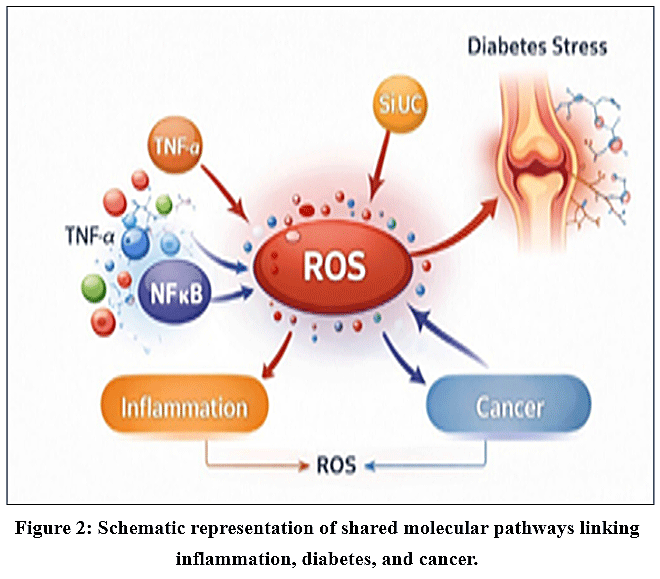 |
Figure 2: Schematic representation of shared molecular pathways linking inflammation, diabetes, and cancer. Click here to View Figure |
Pharmacological Activities: Experimental Evidence
Pentas lanceolata traditional medicinal use has been somewhat validated by experimental studies utilising in-vitro, in-vivo, and preclinical models. The plant’s pharmacological significance has been supported by the wide range of biological activities that its extracts and bioactive fractions have shown.23
In-vitro Studies
Pentas lanceolata demonstrates antioxidant potential by scavenging reactive oxygen species and lowering oxidative stress indicators, according to in vitro tests. While cytotoxicity tests utilising cultured cell lines showed dose-dependent loss of cell viability, indicating the presence of substances with antiproliferative potential, antimicrobial screening has demonstrated inhibitory activities against various dangerous pathogens.24 Species-specific in vitro data are strongest for the antiplasmodial activity of root extracts (IC50 1.3-2.6 µg/mL against the W2 and D6 strains of Plasmodium falciparum),49 whereas cell-line cytotoxicity has been characterised mainly for congeneric quinones in MDA-MB-231 and MDA-MB-231-BCRP breast cancer cells and CCRF-CEM leukaemia cells (Table 2).53,54
In-vivo and Preclinical Evidence
Pentas lanceolata extracts have been shown in animal experiments to have anti-inflammatory and wound-healing properties, including less oedema, better wound contraction, and improved tissue repair. These effects are linked to the enhancement of endogenous antioxidant defences and the regulation of inflammatory mediators. Preclinical assessments also point to genoprotective and cytoprotective benefits against oxidative damage caused by chemicals. However, the lack of controlled clinical data and the prevalence of studies based on crude extracts restrict direct translational applicability, underscoring the need for additional research.25 Quantitatively, an ethanolic flower extract (150 mg/kg/day, orally, for 10 days) improved excision-wound healing in rats,55 and an iridoid-rich leaf fraction (100-300 mg/kg, orally, for 5 days) was non-mutagenic and reduced 5-fluorouracil-induced chromosomal and sperm damage in male mice.52 In a rotenone model, the same type of fraction (50 and 100 mg/kg/day for 21 days) normalised striatal IL-1β, TNF-α and MCP-1 in male mice.48 Immunostimulant activity of ethyl acetate and n-butanol extracts and of 13R–epi-gaertneroside has been shown in chickens vaccinated against Newcastle disease.56
Mechanistic Role in Inflammation
Cytokines, enzymes, transcription factors, and redox-sensitive pathways are all involved in the closely controlled biological reaction known as inflammation. According to available experimental data, Pentas lanceolata bioactive components may have anti-inflammatory effects via reducing oxidative stress, inhibiting inflammatory signalling pathways, and modifying cytokine release.26,27
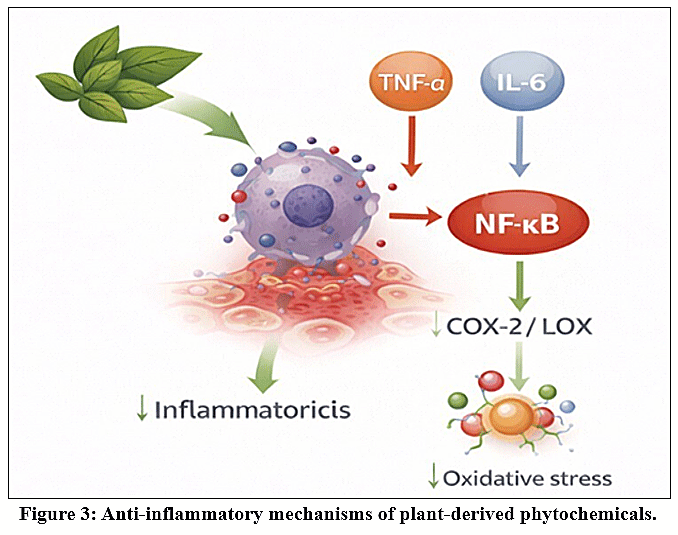 |
Figure 3: Anti-inflammatory mechanisms of plant-derived phytochemicals. Click here to View Figure |
Modulation of Pro-Inflammatory Cytokines
TNF-α, IL-1β, and IL-6 are examples of pro-inflammatory cytokines that are essential for maintaining inflammatory reactions and causing tissue damage. Experimental models have demonstrated that phytochemicals found in Pentas lanceolata, such as phenolics and iridoids, reduce excessive cytokine synthesis, hence decreasing inflammatory amplification and cellular infiltration at injury sites.28 In male mice with rotenone-induced neuroinflammation, oral administration of a P. lanceolata iridoid-rich fraction (50 and 100 mg/kg/day for 21 days) returned elevated striatal IL-1β, TNF-α and MCP-1 to control levels,48 which is, to our knowledge, the most direct species-specific evidence of cytokine modulation currently available.28
Regulation of COX, LOX, and NF-κB Pathways
Pro-inflammatory eicosanoids are produced by the enzyme’s cyclooxygenase and lipoxygenase, and NF-κB is a crucial transcriptional regulator of inflammatory genes. Reduced production of COX-2 and LOX has been linked to inhibition of NF-κB signalling, which attenuates inflammatory reactions.
Available evidence suggests that phytochemicals associated with P. lanceolata may influence these pathways; however, direct molecular validation in P. lanceolata remains limited.29
Antioxidant-Mediated Anti-Inflammatory Effects
Inflammation is exacerbated by oxidative stress because it triggers redox-sensitive signalling cascades. By scavenging reactive oxygen species and boosting endogenous antioxidant defences, antioxidant components found in medicinal plants can reduce inflammation. Therefore, Pentas lanceolata observed antioxidant activity may indirectly reduce inflammatory signalling, demonstrating its significance in chronic inflammatory diseases.30
Mechanistic Role in Diabetes Mellitus
Impaired glucose regulation, insulin resistance, pancreatic β-cell dysfunction, and persistent low-grade inflammation are all components of diabetes mellitus, a complicated metabolic disease. According to experimental data, bioactive substances derived from plants can alter a number of pathways linked to the development of diabetes. Pentas lanceolata contains phytochemicals that may have antidiabetic effects by regulating glucose metabolism, enhancing insulin sensitivity, protecting β-cell function, and lowering inflammation and oxidative stress.31
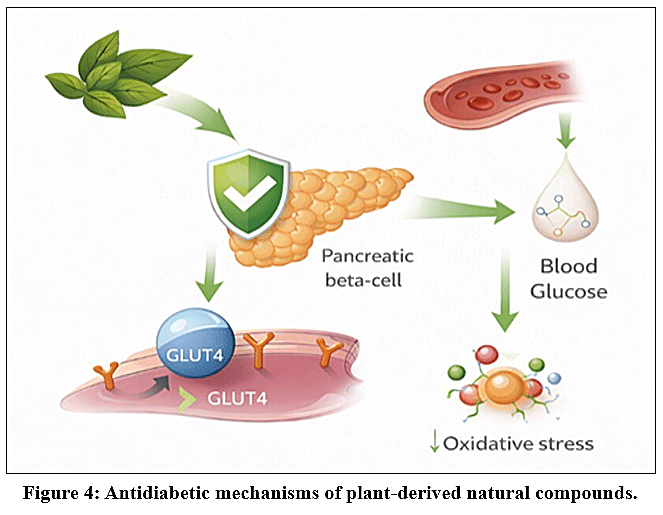 |
Figure 4: Antidiabetic mechanisms of plant-derived natural compounds. Click here to View Figure |
Regulation of Glucose Metabolism
Balanced intestinal glucose absorption, hepatic glucose production, and peripheral glucose utilisation are necessary for maintaining glucose homeostasis. Persistent hyperglycemia is caused by dysregulation of several mechanisms. It has been demonstrated that phenolics, flavonoids, and iridoids, which are frequently present in medicinal plants, inhibit enzymes that hydrolyse carbohydrates and increase cellular glucose absorption, improving glycaemic control.32
Insulin Sensitization and β-Cell Protection
The two main characteristics of type 2 diabetes mellitus are increasing β-cell failure and insulin resistance. According to experimental research, phytochemicals may improve glucose transporter activity and insulin signalling in tissues that respond to insulin. Additionally, antioxidant and anti-inflammatory substances may shield pancreatic β-cells from damage caused by lipotoxicity and glucotoxicity, preserving their ability to secrete insulin.33
Oxidative Stress and Inflammatory Cross-Talk
Inflammation and oxidative stress are linked to the development of β-cell malfunction and insulin resistance. Overproduction of reactive oxygen species upsets the redox balance of cells and triggers inflammatory signalling pathways. Medicinal herbs have antioxidant components that can reduce oxidative damage and inhibit inflammatory mediators, promoting better metabolic homeostasis. Pentas lanceolata phytochemicals may lessen problems related to diabetes through this integrated process.34
Mechanistic Role in Cancer
Dysregulated apoptosis, unchecked cell division, angiogenesis, and metastatic dissemination are all factors in the progression of cancer. According to experimental data, bioactive substances originating from plants can disrupt these processes by focussing on several molecular pathways. Pentas lanceolata phytochemical components may have anticancer effects by suppressing angiogenic and metastatic signalling, inducing programmed cell death, and preventing cell cycle progression.35
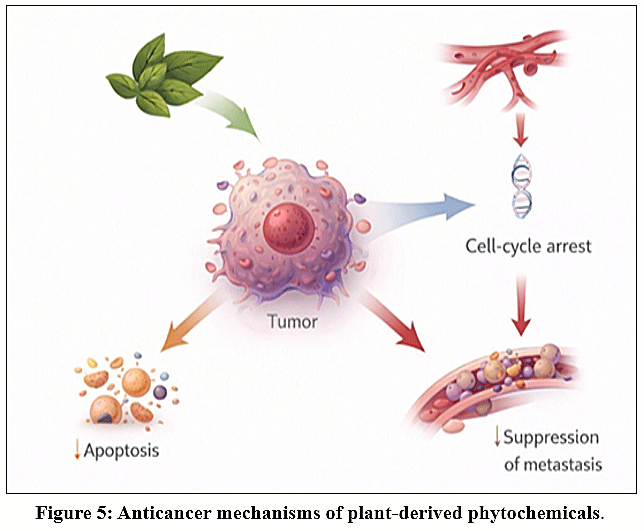 |
Figure 5: Anticancer mechanisms of plant-derived phytochemicals. Click here to View Figure |
Induction of Apoptosis
One of the main ways cancer cells survive is by avoiding apoptosis. It has been demonstrated that a number of substances produced from plants, such as phenolics, quinones, and iridoids, can reactivate apoptotic pathways by encouraging caspase activation and mitochondrial malfunction. These methods highlight their therapeutic value by facilitating controlled cancer cell death while limiting harm to normal cells.36
Cell Cycle Arrest and Anti-Proliferative Effects
A characteristic of cancer is unchecked cell division, which is frequently linked to dysregulation of cyclins and cyclin-dependent kinases. By modifying cell cycle regulators and growth-promoting signalling pathways, phytochemicals from medicinal plants have been shown to be able to induce cell cycle arrest and reduce cancer cell proliferation, hence reducing tumour formation.37
Anti-Angiogenic and Anti-Metastatic Mechanisms
Angiogenesis, extracellular matrix breakdown, and increased cell motility are all necessary for tumour growth and metastasis. By slowing the epithelial-mesenchymal transition, downregulating pro-angiogenic proteins, and decreasing the invasive behaviour of cancer cells, bioactive plant chemicals have been shown to reduce angiogenesis and metastatic progression. Pentas lanceolata phytochemicals may help slow the growth of tumours through these methods.38,39
Table 2: Summary of Experimental Pharmacological Studies on Pentas lanceolata †Congeneric or class-level evidence, included where P. lanceolata-specific data are unavailable; animal strains are given as reported in the cited studies.
|
Extract/Fraction |
Experimental model | Observed activity | Proposed mechanism |
| Root extract (dichloromethane/methanol, 1:1) and isolated anthraquinones | In vitro; Plasmodium falciparum W2 (chloroquine-resistant) and D6 (chloroquine-sensitive) strains | Extract IC50 1.3-2.6 µg/mL; isolated anthraquinones IC50 5-31 µg/mL |
Anthraquinone-associated; mechanism not defined.49 |
|
Ethanolic flower extract, 150 mg/kg/day p.o. for 10 days |
Rats (strain to be confirmed from ref. 55); excision wound model | Increased wound contraction, granulation tissue weight, tensile strength, hydroxyproline and glycosaminoglycan content | Increased collagen deposition, alignment and maturation.55 |
| Leaf iridoid-rich fraction (IFPL), 100, 200 and 300 mg/kg p.o. for 5 days | Male mice (strain to be confirmed from ref. 52); 5-FU (75 mg/kg i.p.)-induced genotoxicity: bone-marrow micronucleus, chromosomal aberration and sperm-morphology assays | Non-mutagenic; dose-dependent reduction of 5-FU-induced chromosomal damage; significant sperm protection at 300 mg/kg |
Genoprotection attributed to iridoid constituents; mechanism not directly tested.52 |
|
Leaf iridoid-rich fraction (PIRF), 50 and 100 mg/kg/day p.o. for 21 days |
Male mice; rotenone (1.5 mg/kg s.c., three times weekly for 3 weeks)-induced Parkinsonism; Caco-2 and 1321N1 (human astrocytoma) cells for BDNF/NGF expression | Restored striatal IL-1β, TNF-α and MCP-1 to control levels; reduced MDA and NO, restored GSH; improved motor performance |
Anti-inflammatory and antioxidant effects; 13R-methoxy-epi-gaertneroside up-regulated BDNF/NGF expression in vitro.48 |
Toxicological and Safety Considerations
For plant-derived chemicals to be used therapeutically, toxicological safety must be assessed. Despite the fact that medicinal plants are frequently thought to be harmless, their biological effects vary depending on the dosage, length of exposure, and preparation technique. Therefore, determining Pentas lanceolata safety profile requires evaluating its genotoxic potential and dose-dependent toxicity.40
Genotoxicity and Protective Effects
Damage to genetic material that could result in mutations or the development of cancer is known as genotoxicity. Certain phytochemicals can selectively kill cancerous cells while shielding healthy cells through redox-stabilizing and antioxidant processes, according to experimental research on plant extracts. By scavenging reactive oxygen species and boosting endogenous defence systems, antioxidant-rich components may lessen DNA damage, underscoring the need of differentiating genoprotective effects from nonspecific toxicity.41 In male mice, the iridoid-rich fraction of P. lanceolata leaves (100-300 mg/kg, orally, for five consecutive days) was non-mutagenic in the bone-marrow micronucleus, chromosomal-aberration and sperm-morphology assays and gave dose-dependent protection against 5-fluorouracil (75 mg/kg, i.p.).52
Dose-Dependent Safety Profile
Dosage and length of exposure have a significant impact on herbal safety. Doses of plant extracts that are pharmacologically beneficial may become toxic at higher exposures, and acute and sub-chronic toxicity studies in animals are used to define safe dose limits and target organs. For P. lanceolata, the available quantitative data are limited to oral doses of 100-300 mg/kg b.w. of the leaf iridoid-rich fraction given for five consecutive days to male mice, which showed no mutagenic effect in the micronucleus, chromosomal-aberration and sperm-morphology assays.52 Pharmacologically active oral doses in other studies fall in a similar range: 50-100 mg/kg/day for 21 days as an iridoid-rich fraction in mice and 150 mg/kg/day for 10 days as an ethanolic flower extract in rats.48,55 In the literature searched, no LD50 or no-observed-adverse-effect level (NOAEL), and no data for doses above 300 mg/kg b.w. or for exposures longer than 21 days, were identified. The safe range should therefore be read as up to 300 mg/kg b.w. for short-term oral exposure in mice, not as an established therapeutic window. Acute (OECD 423) and 28-day repeated-dose (OECD 407) oral toxicity studies with target-organ histopathology are needed to close this gap.41 Therefore, before Pentas lanceolata-based formulations are clinically translated, standardised dose and thorough toxicity investigation are necessary.42
Challenges, Research Gaps, and Future Perspectives
Pentas lanceolata pharmacological potential is increasingly supported by experimental data, but its advancement towards evidence-based treatments is hampered by a number of scientific and translational issues. To enable successful clinical and pharmaceutical development, these issues—which are prevalent in phytopharmacological research—must be resolved.43,44
Lack of Clinical Evidence
The lack of well-designed clinical studies assessing Pentas lanceolata safety and effectiveness in people is a significant research drawback. The majority of the data that is currently available originates from in-vitro tests and animal models, which are unable to accurately forecast clinical outcomes because of interindividual variability, pharmacokinetics, and long-term safety issues. Therefore, to confirm preclinical results and determine therapeutic relevance, randomised and controlled clinical trials are crucial.45
Standardization and Bioavailability Challenges
The absence of phytochemical standardisation presents another significant obstacle. Biological activity can be greatly impacted by differences in plant source, harvesting circumstances, and extraction techniques. Furthermore, due to their quick metabolism, poor solubility, and inadequate absorption, many bioactive chemicals originating from plants have limited bioavailability. Finding marker chemicals, creating standardised extracts, and refining formulation techniques to enhance pharmacokinetic profiles are all necessary to address these problems.46
Formulation Strategies to Overcome Solubility and Bioavailability Limitations
The solubility and permeability limits noted above may be addressed with delivery systems matched to the physicochemical properties of the principal constituents. The lipophilic, poorly water-soluble anthraquinones and quinones (e.g., damnacanthal, rubiadin and their congeners) are candidates for nanoemulsions or self-nanoemulsifying drug delivery systems (SNEDDS), solid lipid nanoparticles and nanostructured lipid carriers, liposomes, polymeric (e.g., PLGA) nanoparticles and cyclodextrin inclusion complexes, which can improve dissolution and protect the compounds from degradation. The hydrophilic iridoid glycosides (e.g., asperuloside and the gaertneroside-type glucosides), whose polarity is expected to limit membrane permeation, may be better served by phospholipid complexes (phytosomes), liposomes or chitosan-based nanoparticles that enhance permeability and mucosal residence time. For the wound-healing indication, extract-loaded hydrogels, nanoemulgels or nanofibre dressings could provide sustained local delivery of the flower extract. Such systems have been reviewed for phytochemicals in general,7 but, to our knowledge, none has yet been reported for P. lanceolata; each would need to be developed around standardised extracts with defined marker compounds (for example, damnacanthal and asperuloside) and evaluated for encapsulation efficiency, release profile, stability, in vivo pharmacokinetics and safety.
Discussion
The available evidence suggests that Pentas lanceolata has potential as a multi-target medicinal plant due to its diverse phytochemical constituents and reported antioxidant, anti-inflammatory, antidiabetic, and anticancer activities. These effects may be interconnected through common mechanisms involving oxidative stress, inflammatory signalling, insulin regulation, apoptosis, and cell proliferation.
The reviewed studies indicate that phenolics, flavonoids, quinones, and iridoid glycosides may contribute to these pharmacological effects. However, much of the available evidence is based on in-vitro and animal studies, with several findings derived from crude extracts. Therefore, the specific contribution of individual compounds and their molecular targets remain insufficiently established.
A major limitation is the lack of well-designed clinical studies and standardized preparations of P. lanceolata. Differences in plant source, extraction methods, phytochemical composition, and dosage may influence the observed biological effects. Further studies should therefore focus on identifying active constituents, validating their mechanisms, establishing standardized extracts, evaluating safety, and conducting clinical investigations.
Conclusion
Based on experimental data and ethnopharmacological expertise, Pentas lanceolata (Forssk.) Deflers is a medicinal plant of increasing pharmacological interest. Its extensive phytochemical profile, which includes phenolics, flavonoids, quinones, and iridoid glycosides, is highlighted in this study. Together, these compounds have antioxidant, anti-inflammatory, antidiabetic, and anticancer properties. Crucially, these effects are linked across chronic disease states by common molecular pathways, including control of oxidative stress, inflammatory mediators, insulin signalling, apoptosis, and cell proliferation. However, the majority of the information currently available is derived from preclinical models and crude extracts, which limits its translational applicability. Compound isolation, mechanistic validation, standardised formulations, including nano-formulations (e.g., nanoemulsions, liposomes and polymeric or lipid nanoparticles) designed to overcome the poor solubility of lipophilic anthraquinones and the limited permeability of iridoid glycosides, and clinical evaluation should be given top priority in future research. All things considered, Pentas lanceolata is a promising multi-target candidate for drug discovery based on natural products.
Acknowledgement
The authors would like to acknowledge the Department of Pharmacology, Navsahyadri Institute of Pharmacy, Naigaon, Maharashtra, for providing the necessary facilities and academic support for the preparation of this review.
Funding Sources
The author(s) received no financial support for the research, authorship, and/or publication of this article.
Conflict of Interest
The authors do not have any conflict of interest.
Data Availability Statement
This statement does not apply to this article.
Ethics Statement
This research did not involve human participants, animal subjects, or any material that requires ethical approval.
Informed Consent Statement
This study did not involve human participants, and therefore, informed consent was not required.
Clinical Trial Registration
This research does not involve any clinical trials.
Permission to reproduce material from other sources
Not Applicable.
Author Contributions
- Priti Khilare: Conceptualization, methodology, investigation, data analysis, and manuscript preparation.
- Aparna Bura: Assistance with literature collection, data compilation, and manuscript review.
- Kishor Otari: Methodological guidance, validation, and critical review of the manuscript.
- Ajay Kale: Supervision, project administration, and final review and approval of the manuscript.
References
- World Health Organization. Global report on noncommunicable diseases. Geneva, Switzerland: WHO Press; 2023.
- International Diabetes Federation. IDF diabetes atlas. 10th ed. Brussels, Belgium: International Diabetes Federation; 2021.
- Newman DJ, Cragg GM. Natural products as sources of new drugs over nearly four decades from 01/1981 to 09/2019. J Nat Prod. 2020;83(3):770-803. doi:10.1021/acs.jnatprod.9b01285
CrossRef - Salehi B, Sharifi-Rad J, Capanoglu E, et al. Therapeutic potential of flavonoids in inflammation and chronic diseases. Pharmacol Res. 2020;154:104550. doi:10.1016/j.phrs.2020.104550
- Heinrich M, Barnes J, Gibbons S, Williamson EM. Fundamentals of pharmacognosy and phytotherapy. 3rd ed. London, UK: Elsevier; 2018.
- Ekalu A. Medicinal uses, phytochemistry, and pharmacological activities of Mitracarpus species (Rubiaceae): a review. Sci Afr. 2021;12:e00692. doi:10.1016/j.sciaf.2020.e00692
CrossRef - Patra JK, Das G, Fraceto LF, et al. Nano-based drug delivery systems for phytochemicals. J Nanobiotechnol. 2018;16:71. doi:10.1186/s12951-018-0392-8
CrossRef - Fraga CG, Croft KD, Kennedy DO, Tomás-Barberán FA. The effects of polyphenols on human health. Food Funct. 2019;10(2):514-528. doi:10.1039/C8FO01997E
CrossRef - Dinarello CA. Overview of the IL-1 family in innate inflammation. Immunol Rev. 2018;281(1):8-27. doi:10.1111/imr.12621
CrossRef - Lawrence T. The nuclear factor NF-κB pathway in inflammation. Cold Spring Harb Perspect Biol. 2018;10(12):a033407. doi:10.1101/cshperspect.a033407
- Carneiro BA, El-Deiry WS. Targeting apoptosis in cancer therapy. Nat Rev Clin Oncol. 2020;17(7):395-417. doi:10.1038/s41571-020-0341-y
CrossRef - Pfeffer CM, Singh ATK. Apoptosis: a target for anticancer therapy. Int J Mol Sci. 2018;19(2):448. doi:10.3390/ijms19020448
CrossRef - Hanahan D. Hallmarks of cancer: new dimensions. Cancer Discov. 2022;12(1):31-46. doi:10.1158/2159-8290.CD-21-1059
CrossRef - Malumbres M, Barbacid M. Cell cycle, CDKs and cancer: a changing paradigm. Nat Rev Cancer. 2020;20(10):553-567. doi:10.1038/s41568-020-0284-7
- Lugano R, Ramachandran M, Dimberg A. Tumor angiogenesis: causes, consequences, challenges and opportunities. Cell Mol Life Sci. 2020;77(9):1745-1770. doi:10.1007/s00018-019-03351-7
CrossRef - Fares J, Fares MY, Khachfe HH, Salhab HA, Fares Y. Molecular principles of metastasis: a hallmark of cancer revisited. Signal Transduct Target Ther. 2020;5(1):28. doi:10.1038/s41392-020-0134-x
CrossRef - Li CK, Lim SC. Natural naphthoquinones and their bioactivities: an update. 2018;23(9):2190. doi:10.3390/molecules23092190
CrossRef - Navarro-Tovar G, Rosas-Lemus M, López-Muñoz H, et al. 1,4-naphthoquinones: antimicrobial and antitumoral molecules. Pharmaceutics. 2023;15(4):496. doi:10.3390/pharmaceutics15040496
CrossRef - Durán AG, Santana AI, Pérez-Sánchez A, et al. Biological activity of naphthoquinone derivatives in medicinal chemistry. Toxins (Basel). 2023;15(5):348. doi:10.3390/toxins15050348
CrossRef - Elgorashi EE, McGaw LJ. Medicinal plants used to treat cancer. J Ethnopharmacol. 2019;241:111977. doi:10.1016/j.jep.2019.111977
CrossRef - Salehi B, Calina D, Docea AO, et al. Herbal medicines and toxicity. Pharmacol Res. 2020;156:104809. doi:10.1016/j.phrs.2020.104809
CrossRef - Yuan H, Ma Q, Ye L, Piao G. The traditional medicine and modern medicine from natural products. 2016;21(5):559. doi:10.3390/molecules21050559
CrossRef - Salehi B, Sharifi-Rad J, Quispe C, et al. Insights into the therapeutic potential of medicinal plants and their active constituents: a review. Phytother Res. 2019;33(9):2210-2236. doi:10.1002/ptr.6413
CrossRef - Fahmy MA, Abd-Alla HI, Hassan EE, Hassan ZM, Gabr MM. Protective effects against oxidative stress. Environ Toxicol Pharmacol. 2019;68:1-8. doi:10.1016/j.etap.2019.03.003
CrossRef - Wink M. Plant secondary metabolites in medicine. Curr Med Chem. 2018;25(14):1-14. doi:10.2174/0929867324666170920150635
- Chen L, Deng H, Cui H, et al. Inflammatory responses and inflammation-associated diseases in organs. 2018;9(6):7204-7218. doi:10.18632/oncotarget.23208
CrossRef - Furman D, Campisi J, Verdin E, et al. Chronic inflammation in the etiology of disease across the life span. Nat Med. 2019;25(12):1822-1832. doi:10.1038/s41591-019-0675-0
CrossRef - Zhang JM, An J. Cytokines, inflammation and pain. Int Anesthesiol Clin. 2018;56(3):1-13. doi:10.1097/AIA.0000000000000186
CrossRef - Calina D, Docea AO, Petrakis D, et al. Multi-target effects of natural compounds. Front Pharmacol. 2020;11:125. doi:10.3389/fphar.2020.00125
CrossRef - Russo M, Spagnuolo C, Tedesco I, et al. Antioxidant and anti-inflammatory mechanisms. Oxid Med Cell Longev. 2018;2018:6059079. doi:10.1155/2018/6059079
- Yaribeygi H, Atkin SL, Simental-Mendía LE, Sahebkar A. Molecular mechanisms by which oxidative stress and inflammation contribute to insulin resistance and β-cell dysfunction in diabetes. Biomed Pharmacother. 2019;109:212-218. doi:10.1016/j.biopha.2018.10.051
CrossRef - Domínguez Avila JA, Rodrigo García J, González Aguilar GA, de la Rosa LA. The antidiabetic mechanisms of polyphenols related to increased glucose uptake and inhibition of carbohydrate-hydrolyzing enzymes. Food Chem. 2019;285:324-334. doi:10.1016/j.foodchem.2019.01.195
CrossRef - American Diabetes Association. Pathophysiology of type 2 diabetes mellitus. Diabetes Care. 2018;41(suppl 1):S13-S27. doi:10.2337/dc18-S002
CrossRef - Greenwell M, Rahman PKSM. Medicinal plants: their use in anticancer treatment. Int J Pharm Sci Res. 2018;9(10):4103-4112. doi:10.13040/IJPSR.0975-8232.9(10).4103-12
- Fulda S. Targeting apoptosis for anticancer therapy. Int J Mol Sci. 2018;19(2):448. doi:10.3390/ijms19020448
CrossRef - Siegel RL, Miller KD, Jemal A. Cancer statistics. CA Cancer J Clin. 2020;70(1):7-30. doi:10.3322/caac.21590
CrossRef - Miller KD, Nogueira L, Mariotto AB, et al. Cancer treatment and survivorship statistics, 2019. CA Cancer J Clin. 2019;69(5):363-385. doi:10.3322/caac.21565
CrossRef - Aggarwal BB. Targeting inflammation in cancer therapy. Biochem Pharmacol. 2018;145:1-3. doi:10.1016/j.bcp.2017.08.003
CrossRef - Gupta SC, Patchva S, Aggarwal BB, et al. Therapeutic roles of curcumin: lessons learned from clinical trials. Cancer Lett. 2013;332(1):1-14. doi:10.1016/j.canlet.2012.12.009
CrossRef - Prasad S, Aggarwal BB. Turmeric and cancer prevention. Cancer Res Treat. 2014;46(1):1-15. doi:10.4143/crt.2014.46.1.1
CrossRef - Organisation for Economic Co-operation and Development. Guidance on acute toxicity testing. Paris, France: OECD Publishing; 2018. doi:10.1787/9789264075801-en
- Parasuraman S. Toxicological screening. J Pharmacol Pharmacother. 2018;9(1):1-2. doi:10.4103/jpp.JPP_5_18.
- Calixto JB. The role of ethnopharmacology in drug discovery. J Ethnopharmacol. 2019;242:112045. doi:10.1016/j.jep.2019.112045
CrossRef - European Medicines Agency. Assessment of genotoxicity of herbal substances. London, UK: European Medicines Agency; 2018.
- Parasuraman S, Thing GS, Dhanaraj SA. Clinical evaluation of herbal medicines. J Clin Diagn Res. 2015;9(7):FE01-FE04. doi:10.7860/JCDR/2015/13993.6204
- Calina D, Docea AO, Petrakis D, et al. Safety and efficacy of phytochemicals. Food Chem Toxicol. 2020;142:111455. doi:10.1016/j.fct.2020.111455
CrossRef - Sweelam HM, Abd-Alla HI, Abdelwahab AB, Gabr MM, Kirsch G. Secondary metabolites and biological activity of Pentas species: a minireview. J Adv Res. 2018;10:21-30. doi:10.1016/j.jare.2017.12.003
CrossRef - Afifi AH, Sweelam HM, El-Shamarka ME, et al. Chemical composition and studying the possible neuroprotective effect of iridoids-rich fraction from Pentas lanceolata leaves using rotenone model of Parkinson’s disease in mice. 2024;32(6):3953-3971. doi:10.1007/s10787-024-01509-9
CrossRef - Endale M, Alao JP, Akala HM, et al. Antiplasmodial quinones from Pentas longiflora and Pentas lanceolata. Planta Med. 2012;78(1):31-35. doi:10.1055/s-0031-1280179
CrossRef - Schripsema J, Caprini GP, van der Heijden R, Bino R, de Vos R, Dagnino D. Iridoids from Pentas lanceolata. J Nat Prod. 2007;70:1495-1498. doi:10.1021/np070116+
CrossRef - Venditti A, Guarcini L, Ballero M, Bianco A. Iridoid glucosides from Pentas lanceolata (Forssk.) Deflers growing on the island of Sardinia. Plant Syst Evol. 2015;301:685-690. doi:10.1007/s00606-014-1106-9
CrossRef - Fahmy MA, Abd-Alla HI, Hassan EE, Hassan ZM, Sweelam HM. Genotoxicity and sperm defects induced by 5-FU in male mice and the possible protective role of Pentas lanceolata-iridoids. Mutat Res Genet Toxicol Environ Mutagen. 2020;850-851:503145. doi:10.1016/j.mrgentox.2020.503145
CrossRef - Abdissa N, Pan F, Gruhonjic A, et al. Naphthalene derivatives from the roots of Pentas parvifolia and Pentas J Nat Prod. 2016;79:2181-2187. doi:10.1021/acs.jnatprod.6b00178
CrossRef - Kuete V, Donfack ARN, Mbaveng AT, Zeino M, Tane P, Efferth T. Cytotoxicity of anthraquinones from the roots of Pentas schimperi towards multi-factorial drug-resistant cancer cells. Invest New Drugs. 2015;33:861-869. doi:10.1007/s10637-015-0268-9
CrossRef - Nayak BS, Vinutha B, Geetha B, Sudha B. Experimental evaluation of Pentas lanceolata flowers for wound healing activity in rats. 2005;76(7-8):671-675. doi:10.1016/j.fitote.2005.08.007
CrossRef - Abd-Alla HI, Sweelam HM, Mohamed TA, Gabr MM, El-Safty MM, Hegazy MEF. Efficacy of extracts and iridoid glucosides from Pentas lanceolata on humoral and cell-mediated immune response of viral vaccine. Med Chem Res. 2017;26:2196-2204. doi:10.1007/s00044-017-1935-5
CrossRef
Abbreviations
COX-2: Cyclooxygenase-2
GLUT4: Glucose Transporter-4
IL-1β: Interleukin-1 beta
IL-6: Interleukin-6
LOX: Lipoxygenase
NF-κB: Nuclear Factor kappa-B
ROS: Reactive Oxygen Species
TNF-α: Tumor Necrosis Factor-alpha
Accepted on: 30-09-2026
Second Review by: Dr. Charumathy M
Final Approval by: Dr. Wagih Ghannam