Green Formulation Strategy for Herbal Topical Anti-Inflammatory Gel Using Caesalpinia bonducella
 , Aditi Mangesh Metkar, Ritesh Sandeep Morankar, Sneha Krishna Poojari, , Siddhant Vijaykumar Wani, Unmesh Gulabrao Bhamare and Sunil Vilas Amrutkar
 Department of Pharmaceutics, GES’s Sir Dr. M. S. Gosavi College of Pharmaceutical Education and Research, Nashik, India
Corresponding author E-mail: choudhariyash1113@gmail.com
Download this article as:
ABSTRACT:The goal of this study was to create and assess a topical herbal gel containing Caesalpinia bonducella (Roxb.) Flem. seed extract and aloe vera as a natural base. The gel was prepared using Carbopol 940 as the gelling agent, and its physicochemical and analytical characteristics were assessed. Two formulations were developed and evaluated, of which Gel 1 was identified as the optimum formulation owing to its superior stability, homogeneity, spreadability, and uniformity. Preformulation studies, including solubility and organoleptic characterization, were conducted prior to formulation. The pH, homogeneity, spreadability, microbial growth, and stability of the improved gel were further assessed. Analytical characterization was performed utilizing ultraviolet-visible (UV-Vis) spectrophotometry and Fourier Transform Infrared (FTIR) spectroscopy. The UV spectrum exhibited maximum absorption at approximately 227 nm, confirming the presence of active organic phytoconstituents. FTIR analysis confirmed functional groups including hydroxyl, carbonyl, and alkyl groups, demonstrating compatibility among excipients without significant interactions. The optimized formulation (Gel 1) demonstrated a skin-compatible pH of 5.6, satisfactory spreadability, and remained physically and chemically stable under ambient conditions over three months. The results indicate that the developed herbal topical gel is stable and suitable for topical administration, with potential anti-inflammatory applications that warrant further investigation.
KEYWORDS:Aloe vera; Caesalpinia bonducella; Carbopol 940; FTIR spectroscopy; Herbal gel; Stability studies; Topical formulation
Introduction
Gels are semi-solid preparations in which a three-dimensional network of solid particles entraps a liquid phase, conferring properties of both liquids and solids.1 Due to their ease of application, non-greasy texture, and cooling sensation, gels are extensively used in pharmaceutical, cosmetic, and personal care formulations. In herbal preparations, gel bases serve as effective vehicles for delivering active phytoconstituents such as turmeric, neem, and aloe vera to the skin.2,3
Topical drug delivery systems have evolved considerably, with herbal gels gaining increasing recognition in both medicinal and cosmetic applications due to their biocompatibility, reduced adverse effects, and sustainability.4,5 The growing interest in plant-based remedies, particularly within the frameworks of Ayurveda and traditional herbal medicine, has driven research into novel herbal gel formulations incorporating plants such as Aloe vera, Azadirachta indica, and Curcuma longa.6-8
Caesalpinia bonducella (Roxb.) Flem., a member of the Caesalpiniaceae family, is a medicinally significant plant found in tropical regions of India, Sri Lanka, and the Andaman and Nicobar Islands.9-11 The plant has long been used in the treatment of fever, edema, rheumatism, and abdominal pain. Its anti-inflammatory, anthelmintic, and antidiabetic qualities are widely recorded in Ayurvedic literature. Phytochemical investigations have reported that the aqueous extract of C. bonducella nuts contains secondary metabolites such as tannins, flavonoids, alkaloids, saponins, coumarins, quinones, and phenols, which collectively contribute to its pharmacological activities.
Carbopol 940 is a high molecular weight polyacrylic acid polymer commonly employed as a gelling agent in pharmaceutical and cosmetic formulations, owing to its biodegradability, bioadhesiveness, biocompatibility, and excellent gelling properties.12-15 The goal of the current study was to create and assess a herbal topical gel that included C. bonducella seed extract using Carbopol 940 as the gelling agent and aloe vera as a natural base, with the objective of developing a stable, effective, and safe herbal preparation suitable for topical anti-inflammatory use.16,17
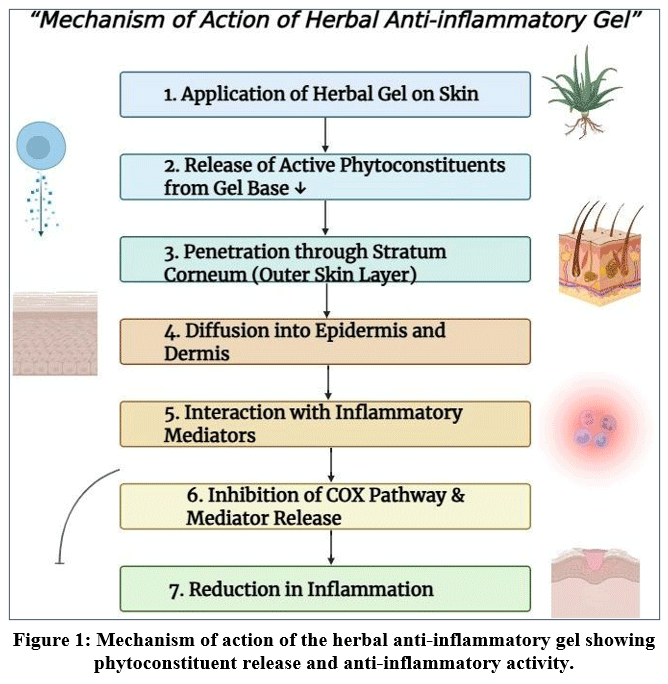 |
Figure 1: Mechanism of action of the herbal anti-inflammatory gel showing phytoconstituent release and anti-inflammatory activity.
|
Materials and Methods
Plant Material and Chemicals
Fresh nuts (containing seeds and shells) from Caesalpinia bonducella were procured from a local herbal supplier.18-20 Carbopol 940 (Lubrizol, USA), aloe vera gel, glycerin, citric acid, peppermint oil, and preservatives of pharmaceutical grade were obtained from standard suppliers. Merck (India) supplied the reagents used for qualitative phytochemical analysis, including those particular to tannins, flavonoids, alkaloids, saponins, and phenols.21,22 Throughout the investigation, distilled water was utilized.23
Preformulation Studies
Organoleptic Characterization
The organoleptic properties of the C. bonducella seed extract were assessed by visual examination and sensory evaluation for appearance, color, and odor.24,25
Table 1: Organoleptic Properties of C. bonducella Seed Extract
| Sr. No. | Organoleptic Parameter | Observation |
| 1 | Color | Whitish green to pale yellow |
| 2 | Odor | Unpleasant |
| 3 | Taste | Bitter |
Solubility Study
Solubility was determined according to the standard procedure of the Indian Pharmacopoeia (IP). The approximate volume (mL) of solvent (ethanol) required to dissolve 1 part (mL) of the extract was estimated.26-28
FTIR Analysis
A Bruker Alpha-II FTIR instrument was used to perform infrared spectroscopy. Samples were kept at room temperature (25 °C ± 2 °C) and relative humidity (RH) of 60% ± 5%.29,30 To verify the authenticity and purity of the sample, spectra were taken in the 3500–100 cm⁻¹ region and compared with standard reference spectra of the pure herbal extract and individual excipients. The reference spectra confirmed characteristic functional group absorptions consistent with the identified phytoconstituents, thereby validating the authenticity of the sample.31-33
Preparation of Aqueous Extract
Fresh C. bonducella nuts were gathered, cleaned, and dried. After removing the outer shell, the seeds were separated.34,35 The shells and seeds were finely pulverized. After mixing 100 g of the powdered substance with 1 L of distilled water, the mixture was brought to a boil for 30 minutes. To obtain the clear aqueous extract, the mixture was allowed to cool and subsequently filtered through muslin cloth followed by filter paper.36,37
Preparation of Gel Base
To avoid agglomeration, 60 mL of demineralized water was used to gently dissolve Carbopol 940 while stirring constantly for an hour.38 A clear, uniform gel base was achieved by stirring the mixture for an additional ten minutes.39
Preparation of Gel Formulations
Formulations for topical gels were made using the ethanol seed extract of C. bonducella and Carbopol 940 (1.5%) as the gelling agent. Two formulations (Gel 1 and Gel 2) were prepared with varying proportions of ingredients; details are provided in Tables 2 and 3. The final optimized composition of Gel 1 is presented in Table 4.
Table 2: Comparative Formulation of Aloe Vera-Based Gel
| Ingredients | Formula 1 (%) | Formula 2 (%) |
| Aloe vera | 55.0 | 48.0 |
| Herbal extract | 10.0 | 10.0 |
| Carbopol 940 | 1.0 | 1.2 |
| Glycerin | 6.0 | 4.0 |
| Preservative | 0.5 | 0.5 |
| Citric acid buffer | 0.2 | 0.2 |
| Peppermint oil | 0.3 | 0.1 |
| Distilled water | 27.0 | 27.0 |
Table 3: Comparative Formula for Cream Formulation
| Ingredients | Formula 1 (%) | Formula 2 (%) |
| Coconut oil | 35.0 | 20.0 |
| Herbal extract | 3.0 | 3.0 |
| Beeswax | 7.0 | 5.0 |
| Stearic acid | 5.0 | 5.0 |
| Glycerin | 5.0 | 5.0 |
| Aloe vera gel | 4.5 | 2.0 |
| Vitamin E | 0.5 | 0.5 |
| Distilled water | 40.0 | 60.0 |
Table 4: Final Optimized Gel Formula (Gel 1) Quantities per 20 g Batch
| Ingredients | Percentage (%) | Weight (g/mL) |
| Aloe vera | 55.0 | 11.0 g |
| Herbal extract | 10.0 | 2.0 g |
| Carbopol 940 | 1.0 | 0.2 g |
| Glycerin | 6.0 | 1.2 g |
| Preservative | 0.5 | 0.1 g |
| Citric acid buffer | 0.2 | 0.04 mL |
| Peppermint oil | 0.3 | 0.06 mL |
| Distilled water | 27.0 | 5.4 mL |
Evaluation Parameters
Organoleptic Evaluation
The prepared gel formulations were assessed for physical appearance by visual observation, evaluating color, odor, texture, and clarity.40
pH Determination
One gram of the gel was accurately weighed and dispersed in 100 mL of distilled water.
The pH of the resulting dispersion was measured using a calibrated digital pH meter.41,42
Spreadability
Spreadability is a critical quality attribute for topical formulations, influencing both therapeutic efficacy and patient compliance.43,44 On a 20 × 20 cm glass plate, 0.5 g of gel was positioned inside a pre-marked circle with a diameter of 1 cm to evaluate spreadability. After covering the gel with a second glass plate, a 500 g weight was applied for five minutes. The diameter of the gel spread was measured and recorded.45 The formula for calculating spreadability (S) is S = m × l / t, where m is the weight (20 g) applied to the upper slide, l is the glass slide’s length (7.5 cm), and t is the time in seconds.46
Homogeneity
After transfer into containers, the gel formulations were examined visually for homogeneity, assessing for lumps, aggregates, or phase separation.47
Microbial Growth Test
The gel formulation was tested for microbial contamination using the streak plate method. Nutrient agar plates were inoculated with the formulation and incubated for 24 hours at 37 °C. After that, plates were checked for microbial growth and compared with a control.48,49
Stability Studies
Stability was evaluated by storing the gel formulations under ambient conditions for three months. Drug content and physical appearance were assessed at the end of the 1st, 2nd, and 3rd months.50
UV-Visible Spectrophotometry
UV-visible spectrophotometric analysis was conducted to determine the absorption profile of the herbal gel. Compounds were analyzed in the wavelength range of 200–800 nm using ethanol as the solvent, which efficiently dissolves most herbal constituents and exhibits minimal UV absorption, serving as an effective blank. Absorbance values were recorded at concentrations of 2, 4, 6, and 8 ppm.
Table 5: UV-Visible Spectrophotometric Data at Different Concentrations
| Concentration (ppm) | Wavelength (nm) | Absorbance |
| 2 | 227 | 0.16 |
| 4 | 227 | 0.37 |
| 6 | 227 | 0.41 |
| 8 | 227 | 0.67 |
FTIR Spectroscopy
The FTIR spectrum of the final optimized gel formulation (Gel 1) was recorded using a Bruker Alpha-II instrument at room temperature (25 °C ± 2 °C) and relative humidity (RH) of 60% ± 5% (procedure described above under Preformulation Studies). The analytical method employed reference spectra of individual excipients and the herbal extract for comparison. O–H stretching was indicated by a broad absorption peak at about 3340 cm⁻¹, which is consistent with the presence of water, alcohols, and phenolic compounds from the herbal extract and aloe vera. Additional characteristic peaks were also observed, corresponding to other functional groups present in the formulation components.
Results
Preformulation studies revealed that the C. bonducella extract was whitish green to pale yellow in color, with an unpleasant odor and bitter taste (Table 1). The extract demonstrated satisfactory solubility in ethanol. FTIR analysis of the extract confirmed the presence of characteristic functional groups and showed no significant incompatibilities.
Two gel formulations (Gel 1 and Gel 2) were successfully prepared with Carbopol 940 as the gelling agent. Gel 1, containing 55% aloe vera and 1% Carbopol 940, was identified as the optimum formulation based on comparative evaluation across all physicochemical parameters. The results of the physicochemical evaluation of the optimized formulation (Gel 1) are compiled in Table 6.
Table 6: Evaluation Results of Optimized Gel (Gel 1)
| Sr. No. | Parameter | Observation / Result |
| 1 | Appearance | Smooth, clear, and uniform |
| 2 | Color | Light pale yellow |
| 3 | Odor | Pleasant (peppermint) |
| 4 | pH | 5.6 (skin compatible) |
| 5 | Homogeneity | Homogeneous; no lumps |
| 6 | Spreadability | Good (easily spreadable) |
| 7 | Consistency | Smooth and semi-solid |
| 8 | Washability | Easily washable with water |
| 9 | Microbial Growth | No growth observed |
| 10 | Stability (3 months) | Stable under ambient conditions |
UV-visible spectrophotometric analysis showed maximum absorption at approximately 227 nm across all concentrations tested (2, 4, 6, and 8 ppm), with absorbance values of 0.16, 0.37, 0.41, and 0.67, respectively (Table 5). Absorbance increased in accordance with Beer-Lambert’s law, confirming the linearity of the analytical method. In line with the phytochemical profile of the herbal extract, FTIR spectroscopy of the gel formulation showed distinctive peaks corresponding to O–H stretching (~3340 cm⁻¹), C–H stretching (alkyl), C=O stretching (carbonyl), and C–O stretching (ether). There were no discernible peak shifts or disappearances, indicating that there were no drug-excipient interactions. Microbial analysis using the streak plate method showed no discernible microbial growth. Stability studies conducted over three months under ambient conditions demonstrated that both drug content and physical appearance of the gel remained unchanged throughout the study period.
Discussion
The preformulation findings confirmed the suitability of C. bonducella extract for incorporation into a gel system. The compatible pH of 5.6 recorded for the optimized gel is well within the physiological range of human skin (4.5–6.5), indicating that the formulation would cause minimal irritation upon topical application.
The superior performance of Gel 1 over Gel 2 is attributable to the higher proportion of aloe vera (55%) and glycerin (6%), which together enhance skin feel, hydration, and spreadability. Carbopol 940 at 1% concentration was found to impart adequate viscosity and stability to the formulation, consistent with previously reported optimal gelling concentrations (0.5–2.5%) for this polymer.46,47 Carbopol 940 has been reported to exhibit stronger gelling properties compared to Carbopol 934, which is in agreement with the present findings.
The conformity of absorbance data with Beer-Lambert’s law validated the UV-visible spectrophotometric method as reliable for quantification of active phytoconstituents in the formulation. The FTIR data confirmed physicochemical compatibility among all formulation ingredients, as evidenced by the absence of new peaks or significant peak shifts.
The absence of microbial growth in the streak plate assay demonstrated the effectiveness of the preservation system employed. Long-term stability over three months under ambient conditions further supports the suitability of the formulation for pharmaceutical use. It is acknowledged that the current study is limited to in vitro physicochemical and analytical characterization; in vitro and in vivo anti-inflammatory validation studies are warranted to substantiate the therapeutic claims of the formulation. Future studies should also compare the formulation against standard anti-inflammatory preparations to establish clinical relevance. Caesalpinia bonducella is known to contain bioactive compounds with demonstrated anti-inflammatory properties, including inhibition of COX-2 and TNF-α pathways, which support the therapeutic rationale for its incorporation into a topical anti-inflammatory gel.43-45 The resulting formulation therefore represents a viable candidate for topical medicinal and cosmetic applications.
Conclusion
The present study successfully developed a herbal topical gel incorporating Caesalpinia bonducella seed extract employing the gelling agent Carbopol 940. Among the formulations prepared, Gel 1 demonstrated the best overall performance, exhibiting excellent spreadability, consistency, homogeneity, and appearance. Evaluation parameters including pH, microbial testing, and stability studies confirmed the safety and suitability of the formulation for skin application. FTIR and UV-visible spectroscopic analyses confirmed the presence of active phytoconstituents and the compatibility of formulation ingredients without significant interactions. The gel remained stable under ambient conditions for three months. Overall, the prepared herbal gel represents a promising, stable, and effective topical preparation with potential anti-inflammatory and therapeutic applications, warranting further investigation through in vitro and in vivo pharmacological studies.
Acknowledgement
The authors are grateful to GES’s Sir Dr. M.S. Gosavi College of Pharmaceutical Education and Research, Nashik, for providing laboratory facilities and instrumentation.
Funding Sources
The author(s) received no financial support for the research, authorship, and/or publication of this article.
Conflict of interest
The authors do not have any conflict of interest.
Data Availability Statement
This statement does not apply to this article.
Ethics Statement
This research did not involve human participants, animal subjects, or any material that requires ethical approval.
Informed Consent Statement
This study did not involve human participants, and therefore, informed consent was not required.
Clinical Trial Registration
This research does not involve any clinical trials.
Permission to reproduce material from other sources
Not Applicable.
Author Contributions:
- Yash Sonaram Choudhari: Conceptualization, Methodology, Experimental Work, Data Collection, Writing – Original Draft, Corresponding Author
- Aditi Mangesh Metkar: Experimental Work, Data Collection, Writing – Review & Editing
- Ritesh Sandeep Morankar: Experimental Work, Data Collection, Writing – Review & Editing
- Sneha Krishna Poojari: Experimental Work, Data Collection, Analysis
- Samiksha Shantaram Lokhande: Experimental Work, Data Collection, Analysis
- Siddhant Vijaykumar Wani: Experimental Work, Data Collection, Analysis
- Unmesh Gulabrao Bhamare: Supervision, Guidance, Project Administration
- Sunil Vilas Amrutkar: Supervision, Resources, Validation, Administrative Support
References
- Bhuyan C, Saha D, Rabha B. A brief review on topical gels as drug delivery system. J Pharm Res Int. 2021;33(41A):152-162.
CrossRef - Ahmed EM. Hydrogel: Preparation, characterization, and applications: A review. J Adv Res. 2015;6(2):105-121.
CrossRef - Calo E, Khutoryanskiy VV. Biomedical applications of hydrogels: A review of patents and commercial products. Eur Polym J. 2015;65:252-267.
CrossRef - Bhattarai N, Gunn J, Zhang M. Chitosan-based hydrogels for controlled, localized drug delivery. Adv Drug Deliv Rev. 2010;62(1):83-99.
CrossRef - Hamedi H, Moradi S, Hudson SM, Tonelli AE. Chitosan based hydrogels and their applications for drug delivery in wound dressings: A review. Carbohydr Polym. 2018;199:445-460.
CrossRef - Kumar L, Verma R. In vitro evaluation of topical gel prepared using natural polymer. Int J Drug Deliv. 2010;2(4):58-63.
CrossRef - Pandey SS, Subramanian S, Bhattacharya S. Herbal cosmetics and cosmeceuticals: An overview. Nat Prod Chem Res. 2013;1(3):1-7.
- Surjushe A, Vasani R, Saple DG. Aloe vera: A short review. Indian J Dermatol. 2008;53(4):163-166.
CrossRef - Rates SMK. Plants as source of drugs. Toxicon. 2001;39(5):603-613.
CrossRef - Ahmed EM. Hydrogel: Preparation, characterization, and applications: A review. J Adv Res. 2015.
CrossRef - Rowe RC, Sheskey PJ, Quinn ME. Handbook of Pharmaceutical Excipients. 6th ed. London: Pharmaceutical Press; 2009.
- Bhuyan, C., Saha, D., & Rabha, B. Topical gel: A review. J Pharm Res Int. 2021; 33(47A), 344–357.
https://doi.org/10.9734/jpri/2021/v33i47A33020
CrossRef - Peppas NA, Bures P, Leobandung W, Ichikawa H. Hydrogels in pharmaceutical formulations. Eur J Pharm Biopharm. 2000;50(1):27-46.
CrossRef - Buwalda SJ, Boere KWM, Dijkstra PJ, Feijen J, Vermonden T, Hennink WE. Hydrogels in a historical perspective: From simple networks to smart materials. J Control Release. 2014;190:254-273.
CrossRef - Hiemenz PC, Rajagopalan R. Principles of Colloid and Surface Chemistry. 3rd ed. New York: CRC Press; 1997.
- United States Pharmacopeia (USP). United States Pharmacopeia. 43rd ed. Rockville, MD: USP; 2020.
- Patel RP, Patel MM. Formulation and evaluation of topical gel preparations. International Journal of Pharmaceutical Sciences Review and Research. 2009;5(3):67–73.
- Singhvi G, Singh M. Review: In-vitro drug release characterization models. Int J Pharm Stud Res. 2011;2(1):77-84.
- Bhowmik D, Gopinath H, Kumar BP, Duraivel S, Kumar KPS. Recent advances in novel topical drug delivery system. Pharmacol Pharm. 2012;3(2):92-97.
- Dureja H, Kaushik D, Gupta M, Kumar V, Lather V. Cosmeceuticals: An emerging concept. Indian J Pharmacol. 2005;37(3):155-159.
CrossRef - Ekor M. The growing use of herbal medicines: Issues relating to adverse reactions and challenges in monitoring safety. Front Pharmacol. 2014;4:177.
CrossRef - Subapriya R, Nagini S. Medicinal properties of neem leaves: A review. Curr Med Chem. 2005;5(2):149-156.
CrossRef - Hoffman AS. Hydrogels for biomedical applications. Adv Drug Deliv Rev. 2012;64:18-23.
CrossRef - Boateng JS, Matthews KH, Stevens HNE, Eccleston GM. Wound healing dressings and drug delivery systems: A review. J Pharm Sci. 2008;97(8):2892-2923.
CrossRef - Draelos ZD. Cosmeceuticals: What is real, what is not. Dermatol Clin. 2009;27(4):337-344.
CrossRef - Patra JK, Das G, Fraceto LF. Nano based drug delivery systems: Recent developments and future prospects. J Nanobiotechnology. 2018;16(1):71.
CrossRef - Li J, Mooney DJ. Designing hydrogels for controlled drug delivery. Nat Rev Mater. 2016;1(12):16071.
CrossRef - Williams AC, Barry BW. Penetration enhancers. Adv Drug Deliv Rev. 2012;64:128-137.
CrossRef - Aulton ME, Taylor KMG. Aulton’s Pharmaceutics: The Design and Manufacture of Medicines. 5th ed. Edinburgh: Elsevier; 2018.
- Flory PJ. Principles of Polymer Chemistry. Ithaca: Cornell University Press; 1953.
- Martin A. Martin’s Physical Pharmacy and Pharmaceutical Sciences. 5th ed. Baltimore: Lippincott Williams & Wilkins; 2006.
- Principles of Colloid and Surface Chemistry. 3rd ed. New York: CRC Press; 1997.
- Ansel HC. Pharmaceutical Dosage Forms and Drug Delivery Systems. 9th ed. Baltimore: Lippincott Williams & Wilkins; 2011.
- Remington JP. Remington: The Science and Practice of Pharmacy. 22nd ed. London: Pharmaceutical Press; 2012.
- Bairagi J, Verma P, Raghuvanshi S, Malviya S, Kharia A. A review on herbal emulgels. World J Pharm Res. 2017;6(16):1296-1307.
- Biswas K, Chattopadhyay I, Banerjee RK, Bandyopadhyay U. Biological activities and medicinal properties of neem. Curr Sci. 2002;82(11):1336-1345.
- Allen LV. Pharmaceutical Dosage Forms and Drug Delivery Systems. 9th ed. Baltimore: Lippincott Williams & Wilkins; 2011.
- Torchilin VP. Multifunctional nanocarriers. Adv Drug Deliv Rev. 2012;64:302-315.
CrossRef - Barry BW. Dermatological Formulations: Percutaneous Absorption. New York: Marcel Dekker; 1983.
- Elias PM. Stratum corneum defensive functions: An integrated view. J Invest Dermatol. 2005;125(2):183-200.
CrossRef - Rang HP, Ritter JM, Flower RJ, Henderson G. Rang & Dale’s Pharmacology. 8th ed. Edinburgh: Elsevier; 2016.
- Ricciotti E, FitzGerald GA. Prostaglandins and inflammation. Arterioscler Thromb Vasc Biol. 2011;31(5):986-1000.
CrossRef - Vane JR, Botting RM. Mechanism of action of anti-inflammatory drugs. Am J Med. 1998;104(3A):2S-8S.
CrossRef - Tripathi KD. Essentials of Medical Pharmacology. 7th ed. New Delhi: Jaypee Brothers Medical Publishers; 2013.
CrossRef - Smolen JS, Aletaha D, McInnes IB. Rheumatoid arthritis. Lancet. 2016;388(10055):2023-2038.
CrossRef - Katzung BG. Basic & Clinical Pharmacology. 14th ed. New York: McGraw-Hill; 2018.
- Singh JA, Saag KG, Bridges SL Jr. 2015 American College of Rheumatology guideline for the treatment of rheumatoid arthritis. Arthritis Rheumatol. 2016;68(1):1-26.
CrossRef - Wallace JL. Mechanisms, prevention and clinical implications of NSAID-induced gastrointestinal damage. World J Gastroenterol. 2013;19(12):1861-1876.
CrossRef - Laine L. Approaches to nonsteroidal anti-inflammatory drug use in the high-risk patient. Gastroenterology. 2001;120(3):594-606.
CrossRef - Strehl C . Glucocorticoids in rheumatic diseases. Nat Rev Rheumatol. 2016;12(5):296-306.
Accepted on: 09-06-2026
Second Review by: Dr. Shahin Vahora
Final Approval by: Dr. Imran Ali