Traditional Uses, Ethnobotanical Importance, and Modern Pharmacological Validation of Trichopus zeylanicus, an Indigenous and Endemic Medicinal Herb of the Western Ghats
 , Janani Senthil Kumaran, Monisha Senthamarai and Saravanan Kaliyaperumal*
 Corresponding Author Email: kaliyaperumalsaravanan72@gmail.com
DOI : http://dx.doi.org/10.13005/bbra/3451
Download this article as:

Arogyapacha (Trichopus zeylanicus Gaertn.) is an endemic medicinal herb of the Western Ghats. The Kani tribe worships it because of the amazing rejuvenating and adaptogenic effects and long-standing ethnomedicinal value. The review is a critical compilation of the existing evidence on the phytochemical composition and bioactive compounds by GC-MS of Trichopus zeylanicus. It has been shown in several studies that these compounds have a variety of biological activities thus scientifically explaining the traditional use of this endemic western ghats plant in medicinal practice. Its adaptogenic, hepatoprotective, antidiabetic, anti-ulcer, aphrodisiac, and cardioprotective properties are also supported by experimental research and are achieved by regulating the oxidative stress, inflammation, and endocrine balance. Toxicological analyses indicate that it is safe and can be used and incorporated in the polyherbal formulation Jeevani, which can be used as a model to share benefits fairly with indigenous communities. The pharmacological and ethnomedical potential of the plant highlights its importance in the development of formal pharmacopoeia and sustainable therapeutic development, where it is important to have integrative conservation measures to conserve such a valuable species of the Western Ghats.
KEYWORDS:Arogyapacha; Ethnopharmacology; Phytochemistry; Trichopus zeylanicus; Western Ghats
Introduction
Western Ghats of India, a world heritage site and biodiversity hotspot, boasts of a unique collection of endemic medicinal plants that form the basis of the traditional healthcare systems in the region. One of them, Trichopus zeylanicus Gaertn (Family: Dioscoreaceae), has a deep ethnobotanical relevance and an upcoming pharmacological potential. The Kani tribal community of the Agasthyamalai hills, who have long been using the leaf and fruit of the plant as a refreshing tonic to promote stamina, endurance, and vitality on lengthy forest treks, have long been aware of this, calling the plant locally Arogyapacha, meaning green of health.1–3 This traditional knowledge based on generations of empirical investigation led to a series of scientific studies that discovered T. zeylanicus as a pool of heterogeneous bioactive compounds with adaptogenic, antioxidant, immunomodulatory, and antistress effects. Recent genome sequencing of the species also has elucidated molecular pathways related to the production of secondary metabolites, which create new bioprospecting and metabolic engineering prospects.4 It is on this background that the current review presents a unified synthesis of conventional and scientific understanding of T. zeylanicus, including its ethnobotanical history, phytochemical structure and pharmacological confirmations. It also describes the current studies in the field of genomics and conservation, existing gaps in knowledge, and suggests the future perspectives of utilizing this culturally and biologically important medicinal herb sustainably and translational.
Botanical description and Distribution
The T. zeylanicus is a rhizomatous, evergreen, small, herb belonging to the family Dioscoreaceae. It grows in shadowy, moist wood under story in the riparian areas. T. zeylanicus is a small perennial herb that has slender stems (525 cm long) emerging out of a nodose rhizome, each having a single terminal leaf. The leaves are dark brownish to grey-purple, broadly ovate to triangular with cordate base and acute or obtuse apex and have anomocytic stomata. Flowers are small and bisexual those grow in clustering at the base of the leaves. The fruit is a triangular winged indehiscent cardamom-like berry, with a sweet kernel in its immaturity which becomes hard on ripening. The seeds are ovate, rugose and ruminate with a cartilaginous endosperm and small and straight embryo.1 Out of the five known subspecies spread across Sri Lanka and India, T. zeylanicus ssp. travancoricus is also endemic to the Agasthyamalai hills, including the Neyyar, Peppara and Shendurney sanctuaries.3,5,6 It thrives in soils with high organic content (pH 5.5 – 6.0) and relies on mycorrhizal associations to absorb nutrients.7 Natural populations are very fragmented and have poor reproductive success because they have very low pollen viability, low seed set, and fruit predation. The population density is also dwindled due to overharvesting and habitat degradation and the species is now Vulnerable in the regional red-list ratings.7,8
Ethnobotanical history and translation of products
Tribal uses
Ethnobotanist field studies found that the Kani tribe used to chew on fresh fruits and leaves of T. zeylanicus to obtain immediate energy and stamina when they were on expeditions to the forest. The plant is considered as a tonic that revitalizes and aphrodisiac.9,10 These ethnomedical observations came to be the main catalyst behind the interest and the research by scientists that followed. Pushpangadan et al.1 argue that the Kani people believed that T. zeylanicus was a health-giving plant, and these plants could restore life when the other sources of food were unavailable. Its application as a restorative, aphrodisiac, adaptogenic, hepatoprotective and antioxidant agent in tribal medicine was also reported.2,3 Therefore, the vintage use of T. zeylanicus created a critical ethnobotanical tip that catalyzed massive phytochemical and pharmacological research. The later result of this indigenous knowledge being transposed to formal scientific research is one of the first effective instances of community-based ethnomedicinal collaboration taking place in India.9
Tribal lead to product: Jeevani
This ethnobotanical discovery made by the Kani tribe was turned into a commercialized herbal extract called Jeevani, and this included T. zeylanicus as well as other herbs including Withania somnifera, Piper longum and Evolvulus alsinoides. This formulation was created by JNTBGRI in the early Nineties and commercially introduced under license to Arya Vaidya Pharmacy (AVP) in Coimbatore sometime around 1995.3,9 Jeevani is marketed as an all-purpose tonic and invigorator in cases of exhaustion, fatigue, post-illness drink and stress.3
Phytochemistry and Bioactive Compound Profiling of T. zeylanicus
Several researchers have assessed phytochemical composition of T. zeylanicus and have found it is a complex range of bioactive metabolites responsible of causing its multifaceted pharmacological activities. Early phytochemical screening of various extracts methanol, ethanol, hexane, and aqueous indicate the existence of various classes of secondary metabolites, which include alkaloids, flavonoids, glycosides, saponins, terpenoids, steroids, phenolics, and tannins.11,12 Molecular name, molecular forumala and structure of the compounds of T. zeylanicus are illustrated in Table 1. These are the basic components of the plant in terms of adaptogenic, antioxidant, and immunomodulatory action and help in its ethnopharmacological use as a tonic to the Kani tribes.
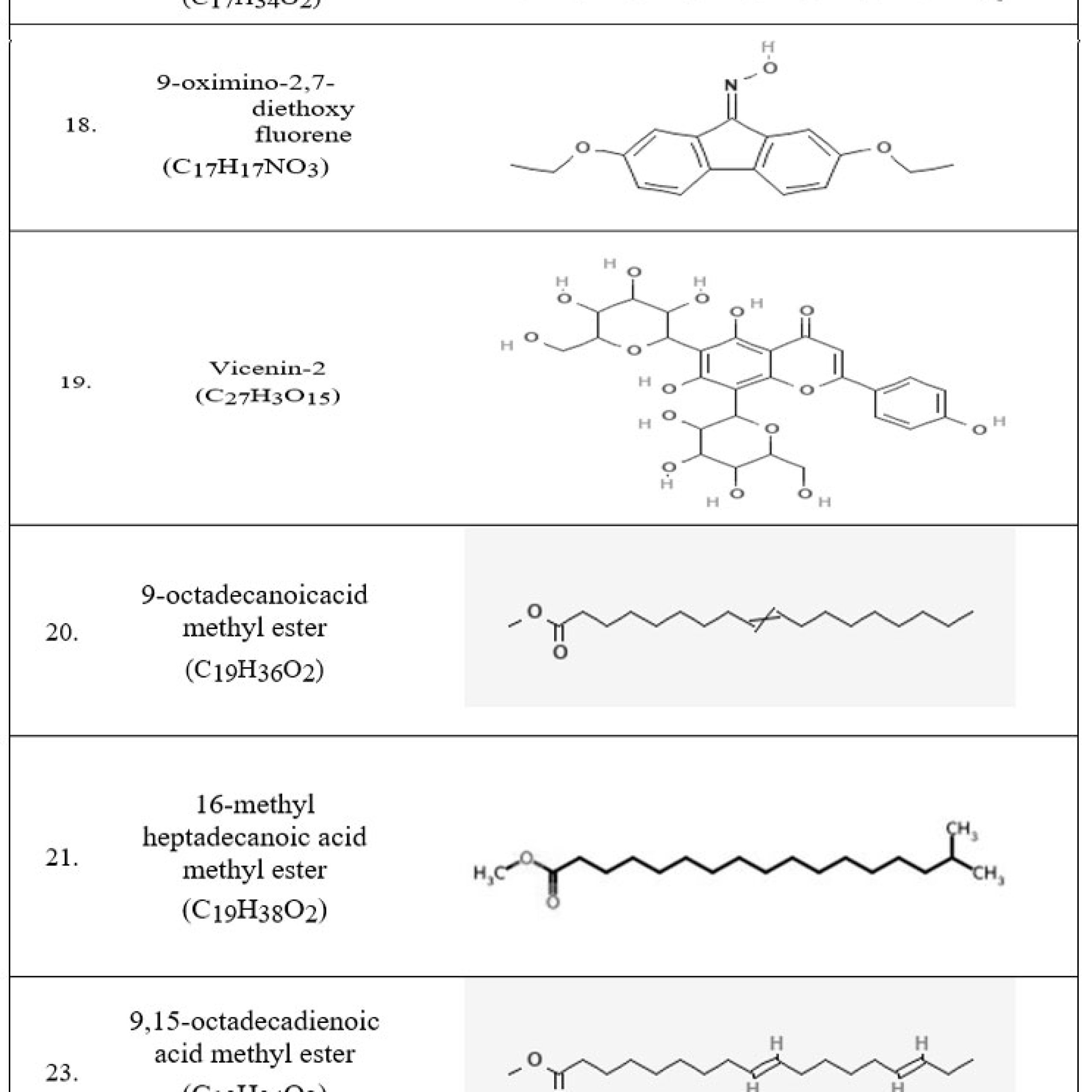 |
Table 1: Chemical structure of bioactive compounds of T. Zeylanicus
|
The main Phytochemical Constituents
Mass spectrometry of the ethanolic extracts of T. zeylanicus subsp. travancoricus has detected more than 21 bioactive compounds, including such compounds as 4,4a,5,8-tetrahydro-5,8-dimethyl-5,8-epoxy-3H-2-benzopyran, 9-acetylphenanthrene, and 2,13-octadecadien-1-ol, along with methyl hexadecanoate, 3H-2-ben.13,14 Most of them are phytochemical groups of flavonoids, phenolics, fatty acid esters, alkaloid derivatives, and chromenes. Those compounds have been identified to have antioxidant, anti-inflammatory and metabolic regulating effects. It is worth noting that quinic acid, coumaran, and ascorbic acid 2, 6-dihexadecanoate were also identified, which supports the idea of the redox-modulating potential of the plant further (Narayanan and Muthuswamy, 2020). Major biological compounds of T. zeylanicus and their validated molecular targets are presented in table 2.
Phenolic compounds and Flavonoids
Phenolic compounds and flavonoids are known to exhibit potential anticancer and antioxidant activities. Vicenin-2 and vitexin are flavonoid glycosides and are some of the key components of T. zeylanicus. These molecules have been shown to have radical scavenging and anti-inflammatory effect by regulating enzyme processes like lipoxygenase, cyclooxygenase.15
The presence of phenolic compounds such as vanillin, isovanillic acid, and coumaran can be attributed to the fact that they help the plant to neutralize the effects of reactive oxygen species and inhibit lipid peroxidation.12 This polyphenolic composition is the basis of the adaptogenic effects and hepatoprotective effects of the plant.
Saponins, Terpenoids and Steroids.
Isolated saponins of rhizomes and leaves of T. zeylanicus have great importance in their antistress, antiulcer and immunomodulatory properties. Saponin fraction (SFTZ) has been found to act upon gastric secretions and prevent ulcerations of the stomach caused by ethanol and stress.16 Triterpenoid and steroidal compounds such as DHC, estriol, and estrone are part of the cardioprotective and lipid-lowering effects of experimental models.17 Furthermore, terpenoids have been estimated to play a major role in adaptogenic processes, enhancing cell survival during stress.
Table 2: Major Biological Compounds of Trichopus zeylanicus and Their Predicted / Validated Molecular Targets
|
Compound / metabolite |
Chemical class |
Primary molecular targets / pathways |
Mechanistic role / predicted pharmacological effect |
Source / identification method |
Current research or translational status |
|
Vanillin |
Phenolic aldehyde |
CA2 (Carbonic Anhydrase II), ERN1 (Endoplasmic Reticulum to Nucleus Signalling 1), TTR (Transthyretin), SNCA (Alpha-synuclein) |
Neuroprotection via ER-stress modulation; antioxidant; anti-inflammatory; anti-amyloid aggregation |
Identified via LC–MS / Network pharmacology (leaf extract) |
Target-validated in silico; in vivo neuroprotective assays needed12 |
|
Isovanillic acid |
Phenolic acid |
ERN1, SNCA |
Reduces oxidative stress and protein misfolding; potential anti-Parkinsonian effect |
Network pharmacology and molecular docking |
Early computational validation; experimental pending32 |
|
Ascorbic acid derivatives |
Vitamin C analogues |
Nrf2/ARE pathway, SOD, CAT, GSH |
Antioxidant defense activation; reduces lipid peroxidation |
GC–MS of ethanolic extract |
Confirmed antioxidant in vitro; clinical correlation pending14 |
|
Phytol |
Diterpene alcohol |
PPARα, LXR |
Lipid metabolism regulation, anti-inflammatory signaling |
GC–MS (methanol extract) |
In silico validation and animal evidence in related species42 |
|
n-Hexadecanoic acid (Palmitic acid) |
Saturated fatty acid |
COX-2, LOX, NF-κB pathways |
Anti-inflammatory via down-regulation of pro-inflammatory enzymes |
GC–MS (fruit extract) |
Widely reported bioactive fatty acid; non-specific14 |
|
γ-Hydroxy-isoeugenol |
Phenylpropanoid |
TNF-α, IL-1β, MAPK signalling |
Anti-inflammatory, anti-ulcerogenic |
GC–MS (root extract) |
Marker for future drug screening14 |
|
Triterpenoid saponins |
Saponin glycosides |
H⁺/K⁺-ATPase, PGE₂ synthetase |
Cytoprotection of gastric mucosa; anti-ulcer activity |
Isolated saponin fraction |
Pharmacologically validated in rats; extract standardization ongoing43 |
|
Glycolipids / peptidoglycolipids |
Glycosidic lipids |
Mitochondrial oxidative enzymes, AMPK |
Adaptogenic energy modulation, anti-fatigue |
Crude extract (ethanol) – early biochemical screening |
Non-specific adaptogenic marker; needs molecular characterization26 |
|
Chromones & Flavonoids |
Polyphenolics |
NF-κB, COX-2, Nrf2 signalling |
Anti-oxidant and anti-inflammatory activities |
LC-MS and spectroscopic profiling |
Multi-target potential; systems-pharmacology support40 |
|
Coumarins |
Benzopyrones |
CYP2E1, ROS pathways |
Hepatoprotection via phase II enzyme induction |
Phytochemical screening (methanol extract) |
Linked to liver protection mechanisms44 |
|
Long-chain alkanes (tetradecane, hexadecane) |
Hydrocarbon fraction |
Membrane lipid stabilisation |
Antibacterial and hydrophobic membrane integrity modulation |
GC–MS of fruit extract |
Reported as minor bioactive with membrane stabilizing role14 |
|
β-Sitosterol |
Phytosterol |
HMG-CoA reductase, LDL receptors |
Lipid-lowering; cardioprotective |
LC–MS analysis |
Well-validated in other plants; likely synergistic component17 |
|
Uncharacterized secondary metabolites |
Terpenoid, flavonoid, phenolic pathways |
KEGG pathway mapping from 713 Mb draft genome |
Biosynthetic routes for adaptogenic and stress modulation compound |
Genome annotation |
Metabolic engineering and molecular breeding efforts40 |
Fatty Acids, Alkaloids and Glycosides.
A number of fatty acid methyl esters were found to have anti-inflammatory and membrane-stabilizing effects (9-octadecenoic acid methyl ester and 15-methyl heptadecanoic acid methyl ester).18 Alkaloid extracts of T. zeylanicus showed analgesic, anti-inflammatory, immunomodulatory effects by cytokine regulation and inhibition of prostaglandin synthesis19. Glycosids and quinic acid analogs are most probably also a part of the hypoglycemic and antioxidant effects of the plant, affecting glucose metabolism and insulin sensitivity.
Genomic Understanding and Biosynthetic Guidelines.
Recent assemblies of the T. zeylanicus genome in high quality (713.4 Mb) identified more than 34,000 protein-coding genes, most of which are linked to secondary metabolite biosynthetic pathways.20 This genomic resource offers more information about biosynthesis of major phytoconstituents like saponins, flavonoids and alkaloids allowing the discovery of prospective biosynthetic gene clusters in stress adaptation and drug activity. The metabolomic correlations provided in this paper also indicate that adaptogenic activity of the plant results of the coordinated regulation of glycosidic and phenolic biosynthetic pathways.
Phytochemical diversity of T. zeylanicus predetermines the selection of this plant as a pharmacologically active species with potential to be used in the production of nutraceutical and phytotherapeutic products. Its multifaceted therapeutic effects such as antioxidative, hepatoprotective, antistress, immunomodulatory and cardioprotective effects are probably mediated by the synergistic effect of its flavonoids, saponins and alkaloid fractions. The combination of phytochemical profiling and genomic and metabolomic technologies is one of the approaches to standardizing, controlling the quality of this culturally and biologically important plant and bioprospecting. The network-linked compounds suggest that T. zeylanicus acts via polypharmacology, influencing stress, immune, and metabolic pathways concurrently.21 The validated targets (CA2, ERN1, SNCA, TTR) connect adaptogenic activity to neuro-endocrine and ER-stress axes, providing mechanistic grounding for its traditional “rejuvenative” reputation.
Pharmacological validation of T. zeylanicus
T. zeylanicus has been studied pharmacologically and its potential has been widely proved in a number of experimental studies. George et al.3 provided one of the earliest comprehensive validations of T. zeylanicus pharmacology, confirming its adaptogenic, cardioprotective, hepatoprotective, immunomodulatory, and antifatigue properties, thereby substantiating the traditional therapeutic claims of the Kani tribe. Chellappan et al22 expanded upon these findings, highlighting additional pharmacological activities such as antioxidant, anti-inflammatory, antidiabetic, and antihyperlipidemic effects, attributed to bioactive compounds including flavonoids, saponins, and glycopeptidolipids. More recently, Jishnu and Behera12 emphasized the plant’s comprehensive therapeutic potential, integrating traditional knowledge with modern pharmacological evidence and underscoring its role in combating metabolic, oxidative, and stress-related disorders. Collectively, these studies establish T. zeylanicus as a scientifically validated adaptogenic and metabolic regulatory herb. A summary of the pharmacological activities, experimental models, mechanisms of action, and translational status is presented in table 3.
Table 3: Comparative Ethnopharmacology and Traditional Uses of Trichopus zeylanicus
|
Region / Tradition |
Local name(s) |
Plant parts used |
Traditional preparation / mode of use |
Therapeutic indications / beliefs |
Pharmacological correlation (modern validation) |
|
Kani Tribe, Kerala (India) |
Arogyapacha (“green of health”) |
Fruits, leaves, rhizomes |
Fresh fruits chewed during forest treks; decoction of leaves for energy and immunity |
Stamina booster, fatigue relief, fever, skin ailments, male potency |
Adaptogenic, antioxidant, antifatigue, immunomodulatory1,3 |
|
Ayurveda (Kerala/Tamil Nadu) |
Varahi / Jeevani Dravya (correlated) |
Whole plant |
Powder or paste used in Rasayana (rejuvenative therapy); part of polyherbal formulation Jeevani |
Rasayana, rejuvenator, aphrodisiac, vitality enhancer |
Confirmed adaptogenic, aphrodisiac and antioxidant effects; Jeevani clinically marketed3,41 |
|
Siddha System (Tamil Nadu) |
Arokya Pacha Cheddi |
Leaves, fruits |
Decoction with milk or ghee |
“Kayakalpa” (anti-ageing) tonic, energy restoration, mental alertness |
Correlates with anti-stress, hepatoprotective and neuroprotective activity12,22 |
Adaptogenic and Antistress Activity
The first pharmacological experiments found that alcoholic extracts of T. zeylanicus seeds have strong adaptogenic activity, which increases the stress-resistance of various experimental animals in rats and mice. The extract administration raised swimming endurance and had a great impact in reducing stress-induced gastric ulceration and leucocytosis.23 The antistress effect was similar to conventional adaptogenic plants like Panax ginseng and Withania somnifera, which means that it also has the ability to regulate the hypothalamic-pituitary-adrenal (HPA) axis and enhance physiological resilience24. Rishikesh et al.25 demonstrated that the saponin fraction of T. zeylanicus exhibited significant anxiolytic effects in mice, as evidenced by increased open-arm entries and time spent in light areas in behavioral tests. Additionally, doses of 75, 150, and 300 mg/kg showed notable antidepressant activity by significantly altering immobility time in forced swim and tail suspension tests. Singh et al.26,27 reported that the glyco-peptidolipid fraction from the alcoholic extract of T. zeylanicus exhibited significant dose-dependent adaptogenic and anti-stress activity against various experimentally induced stress models.
Hepatoprotective and Choleretic Effects.
Methanolic leaf extract (100mg/kg) and crude leaf suspension (1000mg/kg) of T. zeylanicus had shown high hepatoprotective activity against paracetamol-induced liver damage on rats. The therapy normalized serum transaminases (AST, ALT), hepatic histology, and lipid peroxidation, which indicated the existence of powerful antioxidant and membrane-stabilizing actions.28–30 The extract also had choleretic activity, which is considered to stimulate bile secretion and hepatic detoxification, mediated probably by presence of saponins, flavonoids and triterpenoids.
Immunomodulatory Properties
T. zeylanicus has been proven to have immunomodulatory properties in crude and fractionated extracts. Early reports indicated that there was higher proliferation of thymocytes, splenic lymphocytes and peritoneal macrophages in the presence of aqueous suspensions and improved delayed-type hypersensitivity (DTH) response to sheep red blood cells.31,32 Most recently, the alkaloid fraction (AFTZ) of the methanolic extract had a strong dose-dependent effect on neutrophil adhesion (maximum 54.2%), total white blood cell count, and hemoglobin levels, and reversed myelosuppression in cyclophosphamide-treated mice (75-300 mg/kg, p.o.).33 These effects elicit immune system by both humoral and cell-mediated process which depicts the adaptogenic and cytoprotective properties of this plant.
Aphrodisiac Effect and Reproductive Health Effect
A pathfinder investigation showed that T. zeylanicus leaves extracts containing ethanol increased male sexual performance in mice increasing the number of mounts and the success rates of copulation in a dose- and time-dependent fashion.34 The thermo-labile nature of the active constituents was confirmed by the fact that this activity was abolished upon heat treatment. Repeat dosage (200mg/kg in six days) was more effective in aphrodisiac effects compared to a single dose, without altering fertility, fetal development or sex ratio of offspring. The results are consistent with old assertions that Arogyapacha is a rejuvenating and fertility promoting tonic amongst tribal users.
Anti-Ulcer and Gastroprotective Effect
T. zeylanicus leaves that contain saponin have significant anti-ulcer properties in different experimental ulcer models, such as pylorus ligation, ethanol-induced, and stress-induced ulcers.16 Further, this treatment decreased gastric volume, acidity and ulcer index and increased mucin and antioxidant enzyme (SOD, CAT, GSH) activities. Saponins, particularly those of the triterpene type such as glycyrrhetinic acid and carbenoxolone, have been reported to exhibit potent anti-ulcer activity by promoting the formation of protective mucus on the gastric mucosa.35 The presence of saponins in T. zeylanicus is therefore considered responsible for its significant gastroprotective effects observed in ethanol-induced, pylorus-ligated, and stress-induced ulcer models in rats. Pushpangadan et al.31 evaluated the effect of T. zeylanicus on gastrointestinal motility in mice using the charcoal meal test. Mice treated with two different doses of T. zeylanicus showed a dose-dependent reduction in intestinal motility, with the higher dose (1 ml/mouse) causing about a 30% decrease in charcoal movement, while the lower dose (0.5 ml/mouse) produced only a slight reduction compared to the control.
Antidiabetic and Metabolic Regulation
Ethanolic extracts of T. zeylanicus have shown significant antidiabetic effects in streptozotocin-induced diabetic rats. Oral administration (200 mg/kg) led to reduced fasting blood glucose, increased serum insulin levels, and restoration of hepatic glycogen content36. Histological analysis revealed regeneration of pancreatic β-cells, indicating potential insulinotropic effects. The antidiabetic action may involve modulation of oxidative stress pathways and glucose metabolism through bioactive compounds such as flavonoids, saponins, and alkaloids.
Antihyperlipidemic activity
Hyperlipidemia, a state of abnormally high concentrations of lipids and lipoproteins in blood, is a significant risk factor of coronary heart disease because it is significantly related to atherosclerosis. The pharmacological studies have shown that T. zeylanicus has a great antihyperlipidemic potential in different experimental models. In a study, Vishnuvarthan et al. (2014) indicated that the methanolic extract of T. zeylanicus significantly decreased the serum total cholesterol, triglycerides, LDL and VLDL levels and increased the levels of HDL in high-fat diet and Triton induced hyperlipidemic rats and with effects comparable to lovastatin. On the same note, Rajprakash et al37 noted that the administration of the leaf extract in diabetic rats induced by alloxan led to significant improvements in lipid profiles, lipid peroxidation, antioxidant, and glutathione levels. The results indicate that the lipid-lowering and antioxidative properties of T. zeylanicus can be ascribed to its bioactive constituents especially flavonoids, saponins and terpenoids.
Cardioprotective Effects
Recent studies revealed that ethanolic extracts of T. zeylanicus confer cardioprotection against isoproterenol-induced myocardial ischemia in rats by normalizing serum CK-MB and LDH levels, reducing oxidative stress, and restoring myocardial architecture.17
Antitumor Activity
Tumors are cell formations which are irregular and may turn to malignancy and other tissues. Natural products are useful sources of anticancer agents since they contain bioactive compounds. In this regard T. zeylanicus has been of promising antitumor interest. Pushpangadan et al31 revealed that administration of a 2% whole plant suspension of T. zeylanicus (0.5 ml/mouse) prior to and post Ehrlich Ascitic Carcinoma (EAC) induction inhibited the development of tumor in 60% of the mice whereas others exhibited a significant decrease of tumor cells. There was also a higher level of leukocyte and macrophages, which pointed to the possibility that the antitumor effect was mediated by immune-activation.
Antimicrobial activity
T. zeylanicus has general antimicrobial activity against a wide range of bacterial and fungus. Manza and Saj (2013) had reported that the methanolic leaf extract was a potent, dose-dependent, inhibitor of Gram-positive and Gram-negative bacteria such as Staphylococcus aureus, Bacillus subtilis, and Escherichia coli, and fungi including Aspergillus niger and Candida albicans. The extracts in hexane and chloroform demonstrated moderate inhibitory they had on the selected bacterial and fungal strains. Also, Chellappan et al22 discovered that fresh leaf oil of T. zeylanicus had a potent activity against Gram-negative staphylococcus bacterial species and Gram-positive staphylococcal bacteria like Klebsiella pneumoniae and Pseudomonas aeruginosa and fungi such as Candida glabrata and C. albicans, which validates its high antimicrobial potential. Besides, fresh leaf paste topical application is also used by the Kani and Kanikkar tribes in the treatment of skin infections, scabies, and the ringworm, further affirming the multipurpose ethnomedicinal utility of the plant.38
Analgesic and Anti-inflammatory Activity
Analgesics are painkillers that do not render any unconsciousness and anti-inflammatory agents are used to reduce inflammation which may cause chronic ailments. In experimental models T. zeylanicus has demonstrated either or both of these properties. Sambath Kumar et al19 also discovered that its alkaloid fraction (AFTZ) had a significant analgesic effect on mice by inhibiting acetic acid-induced writhing and raising pain threshold. Subramoniam et al39 have noticed the mast cell stabilization and Singh et al27 reported that a glycol-peptidolipid fraction inhibited the carrageenan-induced paw edema in rats. It was also found that anti-inflammatory activity of AFTZ was similar to that of diclofenac sodium making T. zeylanicus a worthy natural analgesic and anti-inflammatory agent.
Other Pharmacological Activities
In addition to its main areas of therapeutic use, T. zeylanicus has an antioxidant and neuroprotective effect. NADH and sulfhydryl-containing metabolites inhibit lipid peroxidation and DNA damage by reactive oxygen, which are caused by extracts.29
Molecular analogs of these various bioactivities have been provided by the recent discovery of secondary metabolites including b-sitosterol, vicenin-2, vitexin, and 6- acetyl-7-hydroxy-8-methoxy-2, 2-dimethyl 3, 4-dihydro-2H-1- benzopyran. The compounds that are associated with the network are speculated to work through polypharmacology, affecting stress, immune pathways, and metabolic pathways simultaneously.
In geographical areas, T. zeylanicus is always linked to health, stamina, and revitalization, and the concept of this is consistent with the Rasayana and Kayakalpa Indian medicine. Its antioxidant, adaptogenic, aphrodisiac, hepatoprotective, and other types of modern validation support these ancient assertions, making it evident that the drug has an enduring pharmacological consistency across the whole world. All the pharmacological validation of T. zeylanicus proves the multifunctional adaptogenic profile of the product, which supports the ethnomedicinal assertion of the Kani tribe. The plant demonstrates overlapping antioxidant, immunomodulatory, anti-ulcer, and endocrine-stabilizing effects which represent a whole-system-like Rasayana-type of pharmacodynamics. Nevertheless, it still has limitations in clinical translation, active compounds standardization, and mechanistic elucidation, and integrative research involving phytochemistry, network pharmacology, and genomics is required.
Safety and Toxicological Studies on T. zeylanicus
Although T. zeylanicus (Arogyapacha) has been ethnomedically used long before scientific evidence, in the latter pharmacological research, scientific validation of the safety profile has been a crucial concern. Acute and sub-chronic toxicity tests, which have been performed using standardized extracts, have shown that T. zeylanicus is non-toxic and well-tolerated at the therapeutic dosages.
Acute and Sub-chronic Toxicity
Orally, ethanolic and aqueous extracts of T. zeylanicus at up to 2000 mg/kg body mass did not cause mortality, behavioral and signs of systemic toxicity in rodents in acute toxicity testing.16,28 Likewise, there was no effect of repeated dosing in 28 days on hematological or biochemical, which suggests that there was no hepatic, renal, or hematopoietic toxicity.29 Histopathological studies of various body organs such as liver, kidney, heart and testis showed that there was normal tissue architecture indicating its safety with chronic use.
Reproductive and Developmental Toxicity
Male mouse reproductive safety studies also revealed that T. zeylanicus extract could not have any effect on fertility, gestation length, and litter size or offspring viability even in the highest doses of the extract which showed aphrodisiac properties (200 mg/kg).34 No sign of teratogenic or embryotoxic effects was observed, which proved that the extract is not harmful to reproductive activity. This observation goes together with the classic arguments of it being used as a life giving and fertility booster by tribes.
Immunological safety and Hematological Safety
A comparison of alkaloid and saponin fractions of T. zeylanicus in the subacute immunomodulatory studies indicated improved immune responses but not immunotoxicity. No negative hematological changes and no leukocyte count decrease were observed at an increased dosage (300 mg/kg), indicating immune stimulation, but not immunosuppression33. Also, the serum protein and enzyme existences were within physiological ranges, which depict systemic homeostasis.
Cytotoxic and Genotoxic Evaluation
Cytotoxic and genotoxic effects of methanolic and aqueous extract on human fibroblast and lymphocyte cell lines have been tested and have not exhibited any visual effect up to 100 mg/mL.40 Its genomic safety is further confirmed by the fact that the chromosomal aberrations or fragmentation of DNA that were treated did not take place. These results are aligned with its adaptogenic property, which improves the physiological balance, without causing cell stress.
Safety in Traditional Use and Clinical Implications
The safety of the plant is ethnopharmacologically proven since the plant is regularly used by the Kani tribes that are known to consume its fruits and decoctions and remain safe on the long run. The formulation of the Jeevani, which included T. zeylanicus, was subjected to pharmacovigilance and was stated to be safe to human consumption, without any serious biochemical or hematological changes.41 This supports its use as a rejuvenative tonic in Ayurveda and enables its use as a regulatory nutraceutical ingredient.
Extensive toxicology studies confirm that, T. zeylanicus is non-toxic, biocompatible medicinal plant possessing a broad therapeutic index. Its safety when administered orally is supported by both preclinical and traditional usage data, no hepatotoxic, nephrotoxic, reproductive or genotoxic effects were found when administered at pharmacologically effective doses. However, additional standardized toxicokinetics and long-term exposure research is justified to determine its safety in long-term use and to develop future clinical products based on T. zeylanicus.
Conservation and Sustainable Utilization of T. zeylanicus
Ecological Conditions and Endangers
T. zeylanicus especially subspecies travancoricus, is a native and endangered medicinal herb only found in the evergreen and semi-evergreen forests of the southern Western Ghats, mostly in the Agasthyamalai Biosphere Reserve of Kerala and Tamil Nadu. The species grows in shaded and moist micro conditions at an altitude of 300-1400 m and reproduces slowly by means of rhizomes and seeds, thus making it ecologically sensitive. The fragmentation of its habitat, deforestation, and other anthropogenic pressures combined with unsustainable harvesting of its fruits and leaves as a source of local medicine have caused serious depletion of wild populations.3,12
The study of population structure indicates that there is low genetic diversity of wild populations which is due to clonal propagation and limited gene flow. Studies in the Agasthyamalai hills and Periyar areas showed that in the present T. zeylanicus exists in small isolated populations, which requires immediate conservation of the plant. In addition, the natural recovery of the plant has also been restricted by its preference to a specialized habitat and its lack of regenerative ability, which have led to its listing in regional Red Data Books of threatened species.
Conservation Strategies
Attempts to conserve T. zeylanicus have been on in situ conservation, ex situ conservation and biotechnological conservation. In situ conservation programs have been established in the Agasthyamalai and Kalakkad-Mundanthurai Tiger Reserve and the Kerala Forest Research Institute (KFRI) and Jawaharlal Nehru Tropical Botanic Garden and Research Institute (JNTBGRI) have conducted in situ conservation programs in Agasthyamalai hills and in the Kalakkad-Mundanthurai Tiger Reserve.41
The use of ex situ conservation in terms of tissue culture and micropropagation has been very successful. The shoot tip and rhizome explants can be cultivated in Murashige-Skoog (MS) media with cytokinins that allow an increase in the number of clones quickly and with genetic fidelity.40 Reintroduction of acclimatized plantlets into guarded forest areas has been successful with the survival rate more than 70 percent. These are not only methods of decreasing the pressure of harvesting wild populations, but also used as a sustainable source of pharmacological research and industrial use.
Another method that is being investigated in order to conserve genetic diversity is cryopreservation and seed germplasm conservation methods. The molecular marker-based research (RAPD, ISSR) has determined the various genetic groups of geographically isolated populations, which can provide useful information to develop effective breeding and restoration programs.40
Sustainable Utilization and Ethnobiological Stewardship
A breakthrough in the sustainable bioprospecting and resource use and community inclusion was the creation of the herbal formulation Jeevani, which is based on T. zeylanicus to some extent. This program, organized by JNTBGRI, was one of the first benefit-sharing deals with Kani tribal community and guaranteed equal sharing of profits and the indigenous intellectual property.41 The model was used as an ethical standard of biotrade and conservation-based livelihood generation.
Sustainable harvesting methods have since been standardized to include rotational harvesting, monitoring post-harvest regeneration and value-addition at the community level 3. Collaboration of the local knowledge with the contemporary conservation planning has enhanced awareness and facilitated participative management of the biodiversity among the tribal settlements in Kerala and Tamil Nadu.
Future Directions
In order to guarantee the survival and sustainable use of T. zeylanicus on the long-term scale, it is essential to adopt an integrated conservation strategy. Priority actions include:
Genetic diversity hotspots mapping to detect and conserve core populations in the Western Ghats.
Commercial production and distribution of germplasm and tissue culture and micropropagation.
The development of agro-technological packages to be used in shaded plantation and home gardens in domestication purposes.
Enhancement of community based conservation program to sustainable conservation of this species.
Combining information on genomic, metabolomic and ecology of this species to enable it to survive and adapt to climate change.
Conclusion
Arogyapacha (T. zeylanicus) is a unique endemic medicinal native plant of western ghats, which liaises between tribal ethnomedicine and modern pharmacology. The current review is a compilation of its evidence on its phytochemical profile and bioactive compounds identified by GC-MS, which are the basis of its adaptogenic, hepatoprotective, antidiabetic, anti-ulcer, aphrodisiac, cardioprotective, antioxidant, and immunomodulatory actions, which are mostly mediated by the regulation of oxidative stress, inflammation, and endocrine balance. Together, these results suggest that T. zeylanicus is a viable target to be incorporated into official pharmacopoeial systems and sustainable therapeutic development, and also indicate the significance of integrative conservation approaches to this valuable Western Ghats species and the potential of indigenous knowledge to aid in plant-based drug discovery in the 21st century.
Acknowledgement
The authors would like to thank the Management, the Principal, and the Head of the Department of Zoology at Nehru Memorial College (Autonomous), Puthanampatti, Tirchy for providing the essential facilities for the successful completion of this work.
Funding Sources
The author(s) received no financial support for the research, authorship, and/or publication of this article.
Conflict-of-interest Statement
The authors have declared no conflict of interest.
Data Availability Statement
This statement does not apply to this article.
Ethics Statement
This research did not involve human participants, animal subjects, or any material that requires ethical approval.
Informed Consent Statement
This study did not involve human participants, and therefore, informed consent was not required.
Clinical Trial. Clinical Trial Registration
This research does not involve any clinical trials.
Permission to reproduce material from other sources
Not Applicable
Author Contributions Statement
Ameena Begum Abdul Rajak: Investigation, formal analysis and writing original draft.
Janani Senthil Kumaran: Investigation, formal analysis and writing original draft. Monisha Senthamarai: Investigation, formal analysis and writing original draft.
Saravanan Kaliyaperumal: Conceptualization, Methodology, Writing and editing the paper.
References
- Pushpangadan P, Rajasekharan S, Ratheshkumar PK, et al. “Arogyappacha” (Trichopus zeylanicus gaerin), the “ginseng” of Kani tribes of Agashtyar hills (Kerala) for ever green health and vitality. Anc Sci Life. 1988;8(1):13-16.
- Saudagar R.B., Sambathkumar R., Bachhav R.S. An Ethnopharmacology of Trichopus zeylanicus Gaertn. Research J Pharmacognosy and Phytochemistry . 2013;5(5):258-262.
- George V, Ijinu TP, Chithra MA, Pushpangadan P. Can local health traditions and tribal medicines strengthen Ayurveda? Case study 2-Trichopus zeylanicus ssp. travancoricus Burkill ex Narayanan. Journal of Traditional and Folk Practices. 2016;04(2):1-14.
- Chellappan BV, Pk A, Nair AS, Biju C, Pr S, Rajan VS. Therapeutic Properties of Trichopus zeylanicus Subsp. travancoricus, a Rare, Endangered Medicinal Plant in South India: A Review. Endangered Medicinal Plant in South India: A Review Herb Med. 2019;5(1). doi:10.21767/2472-0151.100040
- Nair NC, Daniel P. Flora of Kerala.; 1997.
- Sasikala N, Ramasubbu R. Population status and floral biology of Trichopus zeylanicus ssp. travancoricus Burkill ex K. Narayanan (Dioscoreaceae), an important ethnomedicinal plant of the southern Western Ghats, India. J Threat Taxa. 2019;11(1):13156-13161. doi:10.11609/jott.3502.11.1.13156-13161
CrossRef - Angala M, Anto M, Anilkumar C. Ecology, distribution mapping and population structure of Trichopus zeylanicus subsp. travancoricus (Arogyapacha). Plant Science Today. 2025;12(2):1-9. doi:10.14719/pst.3414
CrossRef - Ravikumar K, Ved DK. 100 Red Listed Medicinal Plants of Conservation Concern in Southern India.; 2000.
- WIPO. WIPO-UNEP Study on the Role of Intellectual Property Rights in the Protection of Traditional Knowledge. Publication 769.; 2005. Accessed November 8, 2025. https://www.wipo.int/documents/d/igc/docs-en-ngo-iied_commrights.pdf
- Ayyanar M, Ignacimuthu S. Ethnobotanical survey of medicinal plants commonly used by Kani tribals in Tirunelveli hills of Western Ghats, India. J Ethnopharmacol. 2011;134(3):851-864. doi:10.1016/j.jep.2011.01.029
CrossRef - Maruthi Rajaguru KMS, Sridhar. S. Phytochemical analysis, in vitro evaluation of antioxidant and free radical scavenging activity of leaves of trichopus zeylanicus ssp travancoricus burkill ex k. Narayanan (trichopodaceae. Journal of Population Therapeutics and Clinical Pharmacology. 2022;29(04):664-674.
- Jishnu TK, Behera B. A Review of Arogya Pacha (Trichopus zeylanicus). Int J Res Ayurveda Pharm. 2024;15(5):147-151. doi:10.7897/2277-4343.155174
CrossRef - Nambi SK, Raju R. GC-MS analysis of n-Hexane Extract of Fruits of Trichopus zeylanicus ssp. travancoricus Burkill ex K. Narayanan. Pharmacognosy Journal. 2017;9(6s):s99-s102. doi:10.5530/pj.2017.6s.164
CrossRef - Athira Anilan, Ragunathan Muthuswamy. GC-MS analysis of ethanolic plant extract of Trichopus Zeylanicus ssp. Travancoricus Burkill Ex K. Narayanan. J Pharmacogn Phytochem. 2020;9(4):983-986.
- Sindhu C, Jose B. Evaluation of DPPH radical scavenging activity of the leaf, root and fruit extracts of Trichopus Zeylanicus from South India. World Journal of Pharmaceutical Research, 4, 1283-1292. 2015;4:1283-1292.
- Rishikesh S, Perumal P, Sambathkumar R. Anti-ulcer potential and toxicity profile of the saponin fraction of Trichopus zeylanicus. Pharmacognosy Journal. 2019;11(5):967-973.
- Velavan S, Selavrani S, Adhitan A. Cardioprotective and phytochemical evaluation of Trichopus zeylanicus extracts. Bangladesh J Pharmacol. 2023;4(2):185-191.
- Prabakaran R, Kirutheka E. GCMS, phytochemicals and antioxidant activities of in vitro callus extracts of Strobilanthes kunthiana (Nees) T. Anderson ex Benth: An endemic plant of Acanthaceae. Brazilian Journal of Biological Sciences. 2018;5(10):e322. doi:10.21472/bjbs.051015
CrossRef - Sambath Kumar R, Perumal P, Bachhav R, Shankar. Antinociceptive and Anti-inflammatory activity of alkaloid fraction of Trichopus zeylanicus Gaertn. International Journal of Pharmacy and Pharmaceutical Science. 2012;4(2):632-635.
- Chellappan BV, Shidhi PR, Vijayan S, Rajan VS, Sasi A, Nair AS. High Quality Draft Genome of Arogyapacha (Trichopus Zeylanicus), an Important Medicinal Plant Endemic to Western Ghats of India. Vol 9. Genetics Society of America; 2019. doi:10.1534/g3.119.400164
CrossRef - Mallari praveen, Swanti Gupta. Network Pharmacology of Trichopus Zeylanicus ssp. Travancoricus Burkill Ex K. Narayanan Leaf Extract Revealed CA2, ERN1, TTR, and SNCA as Inducible Genes. Letters in Applied NanoBioScience. 2024;13(3). doi:10.33263/LIANBS133.114
CrossRef - Chellappan BV, Pk A, Nair AS, Biju C, Pr S, Rajan VS. Therapeutic Properties of Trichopus zeylanicus Subsp. travancoricus, a Rare, Endangered Medicinal Plant in South India: A Review. Endangered Medicinal Plant in South India: A Review Herb Med. 2019;5(1). doi:10.21767/2472-0151.100040
- Avinas K, Sharma P, Pushpangadan C, Chopra S, Rajasekharan L, Sarada Amma. Adaptogenic activity of seeds of Trichopus zeylanicus Gaertn. The ginseng of Kerala. Anc Sci Life . 1989;8(3-4):212-219.
- Bhutani K K, Gupta D K, Jaggi B S, et al. A process for the isolation of a glycolipid fraction from Trichopus zeylanicus possessing adaptogenic activity. Published online 1999.
- Rishikesh B, Perumal, Sambathkumar R. Anxiolytic and antidepressant activity of saponin fraction of Trichopus zeylanicus Gaertn in mice. International Journal of Phytopharmacology. 2012;3(3):269-274.
- Singh B, Gupta D.K, Chandan BK. Adaptogenic activity of a fraction from the alcoholic extract of Gaertn. Phytomedicine. 2001;8(4):283-291. doi:10.1078/0944-7113-00038
CrossRef - Singh B, Chandan BK, Sharma N, Singh S, Khajuria A, Gupta DK. Adaptogenic activity of glyco-peptido-lipid fraction from the alcoholic extract of Trichopus zeylanicus Gaerten (part II). Phytomedicine. 2005;12(6-7):468-481. doi:10.1016/j.phymed.2005.01.009
CrossRef - Subramoniam A, Evans D, Rajasekharan S, Pushpangadan P. Hepatoprotective activity of Trichopus zeylanicus extract against paracetamol-induced hepatic damage in rats. Indian J Exp Biol. 1998;36(4):385-389.
- Bachhav RS. An Ethnopharmacology of Trichopus zeylanicus Gaertn. Research Journal of Pharmacognosy and Phytochemistry. 2013;5(5):258-262.
- Panchal NK, Swarnalatha P, Prince SE. Trichopus zeylanicus ameliorates ibuprofen inebriated hepatotoxicity and enteropathy: an insight into its modulatory impact on pro/anti-inflammatory cytokines and apoptotic signaling pathways. Inflammopharmacology. 2022;30(6):2229-2242. doi:10.1007/s10787-022-01052-5
CrossRef - Pushpangadan P, Rajasekharan S, Subramaniam A, Latha PG, Evans DA. Further on the pharmacology of Trichopus zeylanicus. Anc Sci Life . 1995;14:127-135.
- Bachhav RS, Saudagar RB, Sambathkumar R. An ethnopharmacology of Trichopus zeylanicus Gaertn. Research Journal of Pharmacognosy and Phytochemistry. 2013;5(5):258-262.
- Bachhav RS, Sambathkumar R. Evaluation of Immunomodulatory Activity of the Alkaloid Fraction of Trichopus zeylanicus Gaertn on Experimental Animals. Indian J Pharm Sci. 2016;78(1):161-166. doi:10.4103/0250-474x.180240
CrossRef - Subramoniam A, Madhavachandran V, Rajasekharan S, Pushpangadan P. Aphrodisiac property of Trichopus zeylanicus extract in male mice. J Ethnopharmacol. 1997;57(1):21-27. doi:doi.org/10.1016/S0378-8741(97)00040-08
CrossRef - Guaraldo L, Sertiè JAA, Bacchi EM. Antiulcer action of the hydroalcoholic extract and fractions of Davilla rugosa Poiret in the rat. J Ethnopharmacol. 2001;76(2):191-195. doi:10.1016/S0378-8741(01)00198-2
CrossRef - Rajan S T, Velmurugan V, Arunkumar S. Antidiabetic activity of ethanolic extract of Trichopus zeylanicus in streptozotocin induced diabetic rats. World J Pharm Sci. 2015;4:734-740.
- Rajprakash S, Soshna A, Chandra Packiavathy, RChandra Packiavathy. Hypolipidemic activity of Trichopus zeylanicus leaf extract against alloxan induced diabetes mellitus in male albino rats. Journal of Medical Science and Clinical Research. 2014;1:304-314.
- Mohan VR, Anitha B, Perumalsami Athi, Sutha S. Ethnomedicinal Plants used by the Kanikkars of Tirunelveli District,Tamilnadu, India, to treat skin disease. Ethnobotanical leaflets. 2008;12:171-180.
- Subramoniam A, Evans DA, Valsaraj R, Rajasekharan S, Pushpangadan P. Inhibition of antigen-induced degranulation of sensitized mast cells by Trichopus zeylanicus in mice and rats. . J Ethnopharmacol . 1999;68:137-143.
CrossRef - Biju VC, P.R. S, Vijayan S, et al. The Complete Chloroplast Genome of Trichopus zeylanicus , And Phylogenetic Analysis with Dioscoreales . Plant Genome. 2019;12(3). doi:10.3835/plantgenome2019.04.0032
CrossRef - Pushpangadan P, Rajasekharan S, Evans DA, Subramoniam A. Development of the herbal drug “Jeevani” from Trichopus zeylanicus Gaertn. Anc Sci Life. 1997;17(1):13-17.
- Vishnu-Vardhan RM, Rajani A, Nikitha S, Jincy-Thomas KH. Anti-hyperlipidemic activity of Trichopus zeylanicus leaves against high fat diet and triton x- 100 induced hyperlipidemia. World J Pharm Pharm Sci . 2014;3:1017-1025.
- Bachhav R, Saudagar R, Rishikesh SB, Sambath Kumar R, Ravindranath BS, Buchake Vaibhav V. Anti-Ulcer Potential of Saponin Fraction of Trichopus Zeylanicus on a Various Experimental Animal Models. Vol 11.; 2017. https://www.researchgate.net/publication/316256663
- Yadav S, Yadav BS, Chaudhary N, Kumar R, Yadav R, Pandey S. A review article on current pharmacological status of cardioprotective plant. Current Research in Pharmaceutical Sciences, . 2023;13(1):27-43.
CrossRef
 PlumX:
 Views: 3303 Views
  PDF Downloads:
802
PDF Downloads:
802 Accepted on: 25-12-2025
Second Review by: Dr. Saeed Kewedar
Final Approval by: Dr. Wagih Ghannam